



Apple Inc. (AAPL)















Blood Oxygen Measurements to Return to Some Apple Watches
The company said it will issue a software update to restart the technology, which was caught up in a patent dispute.
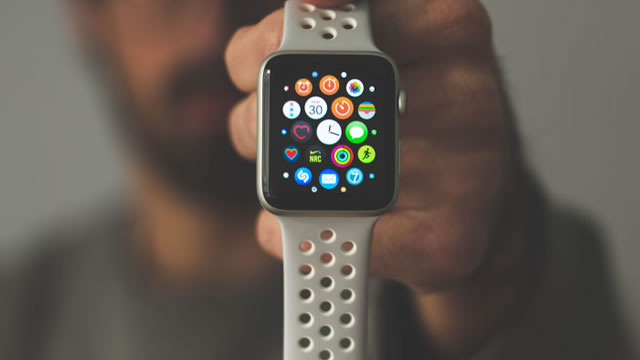
Apple Watch getting redesigned blood oxygen feature following legal dispute
Apple announced a redesigned blood oxygen feature is rolling out to some Apple Watch users. The company has been embroiled in a years-long intellectual property dispute with Masimo over the capability.

Apple to bring blood oxygen feature to some US watches with software update
Apple will bring a blood oxygen measurement feature to some of its watch models via a software update after receiving approval from the U.S. government amid a protracted legal dispute over the technology, it said on Thursday.
Apple Bets on Tabletop Robot, Lifelike Siri to Regain AI Edge
Apple is preparing an AI comeback anchored by a tabletop robot, a lifelike reboot of Siri and a new smart speaker with a display, Bloomberg reported, citing people familiar with the plans.
Apple Reportedly Planning AI Comeback, Complete With a Tabletop Robot
Home security cameras and a standalone smart display are also coming, the report says.
Joe Terranova buys more Apple
Joe Terranova, senior managing director for Virtus Investment Partners, joins CNBC's "Halftime Report" to explain why he's buying more Apple.
Small caps rally as Magnificent 7 stocks roll over in market rotation
The Russell 2000 rallied while the Magnificent 7 fell. Investors rotated to small stocks, turning away from the megacap technology stocks that have led the market in recent years.

Apple dismisses Elon Musk's claims that App Store favors OpenAI over other AI apps
Apple has rejected Elon Musk's accusations that its App Store is biased against AI apps that compete with OpenAI.
Apple Q3: Clearer Signs Of Long-Term Weakness Emerge
Apple's Q3 showed revenue growth, mainly from iPhone sales, but this was off a weak prior-year comparison and margins are declining. Margins are under pressure due to rising R&D and SG&A costs, with financial engineering masking underlying net margin weakness. Aggressive share buybacks are artificially supporting EPS and share price, but this is not a sustainable way to deliver shareholder value.

My Dividend Stock Portfolio: New July Dividend Record - 100 Holdings With 12 Buys
July saw strong market gains, especially in tech, but finding bargains is tough as indices approach all-time highs. I focused July investments on high-yield BDCs like OBDC, MFIC, and BXSL, maintaining a 7.9% yield on cost. Dividend income hit a July record, up 22% year-over-year, with BDCs set to play an even bigger role in the coming months.

How Big Tech is paying its way out of Trump's tariffs
In just the last few days, Nvidia and AMD agreed to pay 15% of revenues from chip sales to China to the U.S. government. Apple CEO Tim Cook, meanwhile, recently announced plans to increase the firm's U.S. investment to $600 billion over the next four years.




