


Aave
Aave Horizon to onboard fixed-income fund from Neuberger Berman and Securitize
Aave Horizon's integration of HINC signals a shift towards higher-risk, higher-yield assets, potentially attracting more institutional investors. Aave Horizon to onboard fixed-income fund from Neuberger Berman and Securitize.
Aave V3 captures 64% of tokenized US Treasuries used in DeFi, but that's a tiny slice of a $16B pie
Aave's dominance in tokenized Treasuries highlights DeFi's potential, yet regulatory and risk factors limit broader institutional adoption. Aave V3 captures 64% of tokenized US Treasuries used in DeFi, but that's a tiny slice of a $16B pie.

Aave TVL Remains 43% Below Pre-KelpDAO Hack Levels Four Months After $292M Exploit
The April 18, 2026 exploit of KelpDAO ranks as the most expensive DeFi hack of the year. North Korea's Lazarus Group executed the attack through a vulnerability in KelpDAO's LayerZero bridge integration.
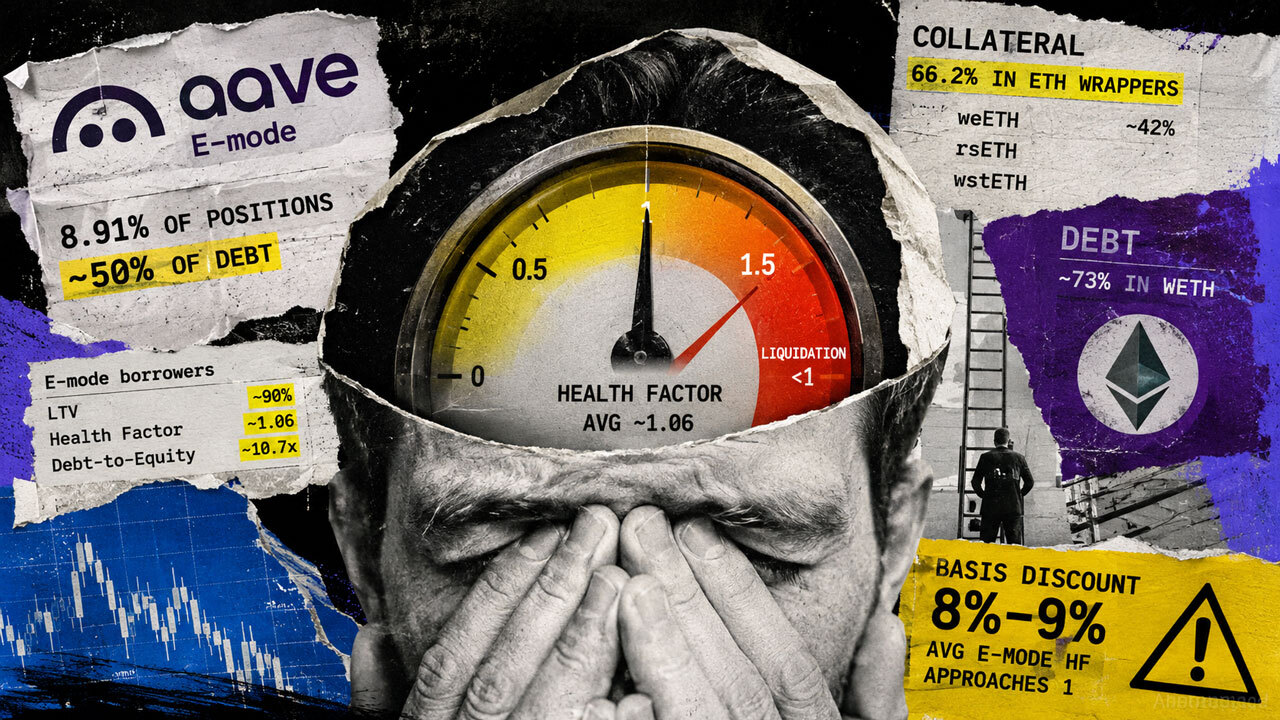
Half of Aave's debt sits in just 9% of positions built around one Ethereum correlation trade
Galaxy's Aug. 7 snapshot of Aave V3 Core found 19,073 loans on the protocol after applying standard filters. Fewer than 9% of those positions are using Aave's E-mode setting, account for roughly half of all outstanding debt on the platform, and show an Ethereum correlation trade.
Aave becomes the dominant DeFi venue for tokenized gold deposits
Aave's dominance in tokenized gold deposits highlights DeFi's evolving collateral strategies, potentially reshaping asset-backed lending dynamics. Aave becomes the dominant DeFi venue for tokenized gold deposits.
Aave V4 deposits surpass $400M, setting a new all-time high
Aave's V4 milestone highlights its strategic growth and adaptability, enhancing revenue streams and user flexibility in decentralized finance. Aave V4 deposits surpass $400M, setting a new all-time high.
Ether.fi adds tokenized stocks, metals and Aave-powered portfolio loans in latest ‘neobank' expansion
Etherfi noted its updated app is “less crypto-forward,” and aimed at attracting “a much broader audience.”
AAVE Price Forecast: Can This DEX Token Deliver 300% Gains Next?
AAVE price could crash 45% toward $50 if its 20-week EMA resistance holds, while a breakout may trigger an inverse head-and-shoulders rally toward $200.

AAVE Price Eyes Breakout as DeFi Activity Keeps Rising
The AAVE price chart has developed an interesting structure. After finding support around $60 in June 2026, the token has climbed into August and is steadily closing the gap with its 200-day EMA. The level to watch is roughly $108, and a clean break could put $120, $160 or higher back on the table.
Aave faces $195M in bad debt after KelpDAO bridge exploit as Spark absorbs billions in fleeing capital
The exploit underscores the vulnerability of cross-chain bridges, prompting a shift in capital and highlighting the need for enhanced security measures. Aave faces $195M in bad debt after KelpDAO bridge exploit as Spark absorbs billions in fleeing capital.
Aave Founder Pushes Back on Ethereum Proposal to Cut Staking Rewards
Ethereum's debate over staking rewards has intensified after Aave founder Stani Kulechov and SharpLink publicly opposed EIP-8363, a draft proposal that could eventually eliminate issuance-based validator rewards as more ETH enters staking.
Aave's Kulechov backs Sharplink in opposing Ethereum staking-burn proposal
Aave founder Stani Kulechov and Sharplink have opposed EIP-8363, a draft Ethereum proposal that would burn validator rewards down to nothing as more ETH is staked. The two DeFi stakeholders are standing against a group of Ethereum Foundation researchers over how the network should pay the people who secure it.


