Artificial intelligence (AI) has been the driving force behind the growth of many tech companies lately. With AI infrastructure spending ramping up, Advanced Micro Devices (AMD 0.10%) has benefited from tech giants investing in advanced processors.
Benzinga examined the prospects for many investors’ favorite stocks over the last week — here’s a look at some of our top stories. Major U.S. indexes ended the week higher, with the Dow up 0.4%, S&P 500 gaining 0.7%, and Nasdaq rising 0.8%, breaking a three-week decline streak. The S&P 500’s strong Christmas Eve performance fueled hopes for a “Santa Rally,” a historical trend showing gains 64 out of 96 years during December’s final week. Markets started recovering from the Fed’s hawkish rate cut signals but faced renewed volatility Friday, tempering Santa Rally expectations. Despite near-term uncertainty, 2024 remains exceptional, with the S&P 500 matching last year’s 24% gain and U.S. stocks outperforming global markets by the widest margin since 1997. Benzinga provides daily reports on the stocks most popular with investors. Here are a few of this past week’s most bullish and bearish posts that are worth another look. “AMD And Micron Are Top Analyst Picks For AI And Next-Gen Tech Growth,” by Anusuya Lahiri, highlights Advanced Micro Devices, Inc. AMD being a top 2025 analyst’s pick for CPU/GPU momentum and AI edge opportunities, and Micron Technology, Inc. MU for its dominance in high-bandwidth memory. “Dogecoin Whales Load Up Coins Worth $92 Million Over 4 Days As Meme King Outperforms Bitcoin, Ethereum In 2024,” by Shivdeep Dhaliwal, reports that whale investors acquired 270 million Dogecoin DOGE/USD, worth $92 million, over four days, boosting DOGE's 274% YTD rally, far outpacing Bitcoin BTC/USD and Ethereum ETH/USD gains of 132% and 53%, respectively. “Quantum Computing Stock QUBT Soars 157% While Bitcoin Drops Post Google's ‘Willow’ Reveal,” by Aniket Verma, highlights Quantum Computing Inc. QUBT surging after Google's “Willow” chip breakthrough, outperforming key indices, while Bitcoin faced a downturn amid concerns Willow’s quantum power could undermine cryptographic security. For additional bullish calls of the past week, check out the following: Top 7 Blue-Chip Stocks With The Best Return Potential Going Into 2025 GM’s $60,000 Cadillac Lyriq Was Its Best Selling EV In 2024 As Of Q3: Is Premium The Way To Go For EV Makers? Why Trump’s Return To Office Could Drive Gold Demand In 2025 The Bears “MicroStrategy Sinks After Nasdaq 100 Inclusion: Bitcoin Bet Under Fire,” by Piero Cingari, reports MicroStrategy Inc. MSTR shares dropping 8.5% after its Nasdaq 100 debut, as analysts question its $561 million Bitcoin purchase at a 12% premium to current levels, marking its smallest acquisition amid declining stock performance. “Are Sub-$30,000 Cars Disappearing? Trump’s Tariff Plans Could Reshape US Auto Market,” by Chris Katje, explores Donald Trump's proposed 25% tariffs on Mexican and Canadian imports, potentially pushing the price of vehicles like Ford Motor Co.‘s F Maverick and Honda Motor Co.‘s HMC Civic above $30,000, with one-third of sub-$30,000 cars currently made in Mexico. “Tesla Shorts Gordon Johnson And James Chanos Skeptical Of Robotaxi Potential Amid Usage Data Debate,” by Kaustubh Bagalkote, details criticism from Gordon Johnson of GLJ Research and short-seller James Chanos, who argue Tesla Inc.‘s TSLA robotaxi ambitions overpromise revenue potential, citing New York City ride-share data. For more bearish takes, be sure to see these posts: Lyft Sues San Francisco Over $100 Million Tax Bill, Says Payments To Drivers By Passengers Misclassified US Markets Likely Headed For 10% Correction, Says Jay Woods: Trump’s Tariff Plans, Musk’s DOGE Advocacy Among Contributing Factors ‘Zelle Became A Gold Mine For Fraudsters’: Consumer Financial Protection Bureau Lawsuit Keep up with all the latest breaking news and trading ideas by following Benzinga on Twitter. Image created using artificial intelligence via Midjourney. This content was partially produced with the help of AI tools and was reviewed and published by Benzinga editors. © 2024 Benzinga.com. Benzinga does not provide investment advice. All rights reserved.
The U.S. stock market has demonstrated a strong performance in 2024, with the benchmark S&P 500 posting a total return of about 25% as the year nears its end. Not surprisingly, the technology sector, especially artificial intelligence (AI) powered stocks, has been at the heart of this bull rally.
Hundreds of tradable names were featured on Big 3 throughout the year, three of the most notable being AMD Inc. (AMD), Boeing (BA) and Ulta Beauty (ULTA). Scott Bauer says a big reason behind that is each company's battle to breakout.
After Trump threatens 60% China tariffs and Beijing bans rare minerals, top chipmakers AMD, INTC, MU, QCOM and ASML face major risks in 2025.
Rarely has any company seen as disappointing a performance in the financial markets as Advanced Micro Devices (NASDAQ: AMD) has in 2024.
In today's video, I will be talking about the recent updates regarding Advanced Micro Devices (AMD -0.97%). Watch the short video to learn more, consider subscribing, and click the special offer link below.
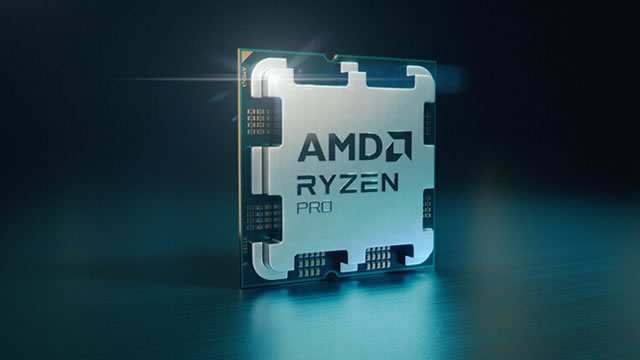
According to PC Gamer, “The AMD Ryzen 7 7800X3D is simply the best gaming CPU around right now. It’s certainly the best gaming chip that AMD has ever made, but it’s also capable of outperforming Intel’s top CPU when it comes to gaming frame rates and is doing so for a lot less cash. It’s also a lot less power-thirsty, too.” Rave reviews such as this would have been considered unthinkable over a decade ago. After 50 years of playing second best to rival Intel (NASDAQ: INTC), Advanced Micro Devices (NASDAQ: AMD) surpassed it, thanks to CEO Dr. Linda Su, who took the reins in 2014 and AMD was able to unveil the Ryzen in 2017, which became a game changer. Based on a principle of multiple microscopic CPUs working in tandem, AMD’s Ryzen CPU outperformed Intel’s CPUs in speed and efficiency, and most importantly – cost only half as much. Ryzen and its later updates subsequently added tens of billions to AMD’s revenues, and in 2022, AMD surpassed Intel in market cap, although not in chip market share. Headwinds and Challenges Under Dr. Lisa Su, AMD’s Ryzen and Epyc CPUs have propelled the company to profitability and market cap superiority over longtime rival Intel. Despite AMD’s phenomenal turnaround over the past decade, not everything has been smooth sailing and concern-free. Unlike Intel, AMD does not own manufacturing facilities in the US. Dr. Su’s reputation and ties to Taiwan have created a strong relationship with manufacturing facilities owned by Taiwan Semiconductor Manufacturing Co, (NYSE: TSM). While the relationship between AMD and TSMC remains robust, geopolitical tensions between Taiwan and China, whose CCP leadership continues to advocate for “reunification” with Taiwan, even if by military invasion, continues to be a supply chain risk factor. While AMD’s MI300 GPU is a viable competitor to Nvidia’s H100, industry publication Tom’s Hardware estimates that AMD’s new chips sell for just 25% of the price of Nvidia’s H100, despite their similar performance. This means less room for growth and lower margins. Additionally, Nvidia (NASDAQ: NVDA) isn’t standing still. In Q1, the company announced its new Blackwell platform, designed to train generative AI models at a fraction of the cost of its predecessor. Nvidia’s faster development cycle means that AMD may be stuck playing a game of catchup — putting further pressure on its pricing power, growth, and margins. US technology export restrictions require AMD, Nvidia, and other US chip makers to design lower-performance versions of their top products for export to China and the Middle East. Prior iterations from Q1 2024 were rejected by the Commerce Dept. as still being too powerful, and export licenses were withheld. The counterintuitive need to create a better device to market while simultaneously designing lower capabilities is proving to be a more delicate and difficult task than anticipated. Regardless, investors are much more concerned with future stock performance over the next 1, 5, to 10 years. While most Wall Street analysts will calculate 12-month forward projections, it’s clear that nobody has a consistent crystal ball, and plenty of unforeseen circumstances can render even near-term projections irrelevant. 24/7 Wall Street aims to present some further-looking insights based on AMD’s own numbers, along with business and market development information that may be of help to our readers’ own research. Key Points In This Article Lisa Su’s acquisitions of ZT Systems and various AI software companies are part of a comprehensive AI-focused strategy. The acquisition of ZT Systems, a cloud architecture solution provider, is a key building block of Lisa Su’s AI development strategy objective, which is to provide AI in end-to-end computing. AMD’s MI300 GPU and future models will continue to compete with Nvidia for the AI graphics market. AMD’s chip architecture for Ryzen and other products will expand for installation applications beyond gaming, such as automobiles, IoT, and others. The threat of a PRC military invasion of Taiwan is still a major semiconductor supply chain threat, as AMD, Nvidia, Apple, and other tech companies all rely on Taiwan Semiconductor for its manufacturing needs. If you’re looking for a megatrend with massive potential, make sure to grab a complimentary copy of our “The Next NVIDIA” report. This report breaks down AI stocks with 10x potential and will give you a huge leg up on profiting from this massive sea change. Advanced Micro Devices News and Updates 12/20/2024 Morgan Stanley analysts have lowered their price target for Advanced Micro Devices from $169 to $158, while maintaining an “equal weight” rating on the stock. Despite this lowered target, it still suggest a potential upside of 30.75% from AMD’s current price. 12/18/2024 Advanced Micro Devices’ stock has reached a 52-week low of $121.82, valuing the company at $199 billion. This decline, coupled with a beta of 1.64, indicates significant price volatility as investors grapple with economic uncertainties and shifting market dynamics. 12/16/2024 Advanced Micro Devices’ stock price dipped 1.3% in midday trading today, reaching a low of $123.12. Trading volume was also much lower than average, with only 15.7 million shares changing hands. 12/12/2024 Advanced Micro Devices’ stock experienced a slight decline of 0.2% during today’s midday trading, fluctuating between $129.13 and $129.92. Trading volume was also much lower than average. 12/11/2024 Advanced Micro Devices’ CEO Lisa Su has been named Time Magazine’s CEO of the year. Since taking over in 2014, Su has orchestrated an incredible turnaround for the company, driving AMD’s stock price up by a staggering 3700%. 12/9/2024 Vivek Arya, an analyst with Bank of America, downgraded Advanced Micro Devices stock from “Buy” to “Neutral” and lowered its price target from $180 to $155. This downgrade follows Amazon’s executives reports of weak demand for AMD’s AI accelerators and led to a decline in AMD’s stock today. 12/6/2024 AMD’s stock price has gone down today. This decrease followed an Amazon executive’s report that the company hasn’t observed enough demand for AMD’s AI accelerators to warrant their sale through Amazon Web Services. 12/5/2024 Mizuho has lowered its price target for Advanced Micro Devices from $185 to $180, but still maintains a “Buy” rating on the stock. This revised target price suggests a potential upside of 26.64% from AMD’s current market price. 12/3/2024 Advanced Micro Devices stock declined 0.3% today, trading between $141.23 and $141.61. 11/27/2024 Advanced Micro Devices has solidified its commitment to Indian by inaugurating a new research and development center. This move aligns with the company’s previously announced $400 million investment in the country. 5-10 Year Review A huge part of AMD’s success has been the Damocles sword decision to have all foundry work performed by Taiwan Semiconductor. After stints at IBM and Texas Instruments, Dr. Lisa Su became COO of AMD, assuming the CEO position in 2014. Soon afterwards, she started her overhaul of the company by splitting it into 2 divisions: Computing and Graphics, which includes desktop and notebook processors and chipsets, discrete GPUs, and professional graphics; Enterprise, Embedded, and Semi-Custom, which includes server and embedded processors, dense servers, semi-custom SoC products (including solutions for gaming consoles), engineering services, and royalties. Dr. Su oversaw the release of the Radeon 300 and Fury series, the last of the Bulldozer derivatives, and then the RX 400 series of GPUs in 2016. Based on AMD’s Zen architecture, both Epyc for servers and workstations Ryzen for laptops and desktops debuted in 2017. They innovatively took multiple micro CPUs to work as a team for superior computing power and speed. Ryzen, in particular, took the computing world and Intel by surprise, as it catapulted AMD to previously uncharted levels. 2020 saw AMD announce the acquisition of Xilinx for its field programmable gate arrays (FPGA). AMD would discontinue Xilinx production of its complex programmable logic devices (CPLD) in early 2024. Pensando Systems was added to AMD’s portfolio in 2022, with Mipsology to follow in 2023. On the AI front, 2023 saw AMD acquire Nod.ai, followed by Silo.AI, Europe’s largest private AI Lab, in 2024. Fiscal Year (Dec) Price Revenues Net Income 2015 $2.87 $3.991 B -($660 M) 2016 $11.34 $4.319 B -($498 M) 2017 $10.28 $5.253 B -($33 M) 2018 $18.46 $6.475 B $337 M 2019 $45.86 $6.731 B $341 M 2020 $91.71 $9.763 B $2.490 B 2021 $143.90 $16.434 B $3.162 B 2022 $64.77 $23.601 B $1.320 B 2023 $147.41 $22.680 B $864 M 2024 LTM (Jun 2024) $$162.21 $23.276 B $$1.354 B Key Drivers for AMD’s Stock in the Future Lisa Su’s release of AMD’s MI300 GPU has thrown down the gauntlet for AI to her cousin, CEO Jensen Huang of Nvidia, which controls close to 70% of the AI GPU market at present. AMD’s MI300 GPU (Graphics Processing Units) and similar products are addressing AI workloads for cloud computing, which is stirring up interest. Microsoft (NASDAQ: MSFT) and Oracle (NASDAQ: ORCL) are already using the MI300. As a result, AMD is now on the radar alongside other AI related stocks. The ZT Systems acquisition for $4.9 billion is a key building block of Lisa Su’s AI development strategy. By integrating ZT’s expertise in data center infrastructure, AMD will be able to offer complete AI solutions, encompassing hardware, software, and system-level integration. Therefore, AMD will soon provide a one-stop, comprehensive and integrated offering to clients seeking robust AI solutions. Data Center growth (already $2.3 billion sector revenues for AMD in Q1, +80% y-o-y), should continue to expand that area for the near and extended future. AMD 3D V-Cache chips will be an integral contributor to AMD-powered data center equipment. Stock Price Prediction for 2025 The consensus rating from over 40 Wall Street analysts is “buy/outperform” (31 buy, 7 outperform, 10 hold). Their average price target in 12 months is $186.91, which is 47.99% from the price today. 24/7 Wall Street’s 12-month projection for AMD’s price is $205.20, which would be a 62.48% increase. We believe Dr. Su’s goal of end-to-end AI utility is already underway, with AMD competing with Nvidia in a similar fashion and strategy to how it challenged Intel: with comparable or superior speed and performance for lower prices. AMD’s Next 5 Years’ Outlook The past 10-year median P/E ratio for AMD is 34.27. 24/7 Wall Street is using a more conservative P/E ratio of 30 for the following price predictions. These prices also preclude an invasion of Taiwan from China, which would understandably devastate chip manufacturing worldwide. For 2026, we predict a price of $237.12, which would be a 15.56% gain year-over-year. AMD’s acquisition of ZT Systems will be a significant contributor to Dr. Su’s AI development agenda. She anticipates that the AI accelerator and GPU chip market will reach $400 billion by 2027. AMD’s Instinct and Epyc accelerators for machine learning will see a major boost in this surge. To follow up on the AI agenda, 2027 should benefit from ZT Systems’ software boost capabilities. During 2023-24, AMD invested more than $1 billion to improve its AI software capabilities and R&D activities. AMD has already made three small software AI-related acquisitions (Silo AI, Nod.ai, and Mipsology) to bolster its mid- and high-level software abstractions and help customers customize LLMs. Dr. Su and Nvidia’s Jensen Huang are blood-relative cousins, and their respective competitive drives and tech savvy make the AMD and Nvidia rivalry in AI all the more compelling when the different components are compared head-to-head. The 24/7 Wall Street price target for 2027 is $294.40. This would be a 24.16% gain year-over-year. 2028 should see AMD get an upswing from its ancillary markets. For example, AMD’s Ryzen is already a big part of the digital cockpits in the automotive market. Its partnerships with Daimler-Benz and Tesla will likely expand to other auto manufacturers as AI becomes more ubiquitous and demand escalates. Our price target is $306, a modest year-over-year gain of 3.94%. Edge computing would be another ancillary market for AMD that would benefit from AI. 2029 should see a boost in IoT applications using AMD-powered devices and digital architecture. AMD’s Multi-Chip Modules (MCM) will continue to expand, with its Epyc Milan X, the first MCM GPU, leading the way for a range of other configurations. The resulting bump would be a target price of $336, a 9.80% gain from the previous year’s price target. AMD Stock in 2030 AMD’s development of end-to-end AI computing is Dr. Lisa Su’s primary goal over the next decade. At present, no smartphone utilizes any AMD CPUs. Nevertheless, AMD has already announced the availability of Ryzen chips for mobile devices. By 2030, the growth of AI-powered mobile gaming should reach the point where the demand for Ryzen performance in smartphones by game-oriented users should see Ryzen-powered smartphones. This would be a huge boon for AMD, as the smartphone market is a major one that has long eluded it. The 24/7 Wall Street 2030 price target is $396.20. Year EPS P/E multiple Price 2025 $6.84 30 $205.20 2026 $7.90 30 $237.12 2027 $9.81 30 $294.40 2028 $10.20 30 $306.00 2029 $11.20 30 $336.00 2030 $13.21 30 $396.20 Get Ready To Retire (Sponsored) Start by taking a quick retirement quiz from SmartAsset that will match you with up to 3 financial advisors that serve your area and beyond in 5 minutes, or less. Each advisor has been vetted by SmartAsset and is held to a fiduciary standard to act in your best interests. Here’s how it works: 1. Answer SmartAsset advisor match quiz 2. Review your pre-screened matches at your leisure. Check out the advisors’ profiles. 3. Speak with advisors at no cost to you. Have an introductory call on the phone or introduction in person and choose whom to work with in the future Get started right here. The post Advanced Micro Devices Inc. (AMD) Price Prediction and Forecast 2025-2030 appeared first on 24/7 Wall St..
AMD is significantly undervalued despite narrowing the technology gap with Nvidia and raising AI revenue guidance throughout 2024. AMD's potential market share in the AI GPU space could grow, driven by new product releases and partnerships with tech giants like Microsoft and Meta. Technical indicators suggest AMD is oversold, presenting a buying opportunity with a potential 12-month price target of $250, approximately 100% above its current price.
Most investors in the technology sector have been focused on the trends and developments around artificial intelligence names, particularly those in the semiconductor industry responsible for building the infrastructure necessary to allow for these models to work and grow from the data they are fed. The darling in this industry is found in NVIDIA Co. NASDAQ: NVDA, but there are signs that a new contender might knock on the door of a new massive rally.
You would think that about half the stocks in the S&P 500 do better than average in any given year. One would expect a balanced distribution between superior and inferior market performers.
Advanced Micro Devices AMD shares have underperformed Nasdaq 100 despite gaining AI market share this year. Should you buy or sell the stock as its technical analysis indicates a downtrend?