



Boeing Company (BA)














Korean Air plans 103 Boeing plane purchases valued at $36.2 bln until 2039
South Korean flag carrier Korean Air said on Thursday it plans to buy 103 Boeing planes between 2026 and 2039.

3 Defense Stocks to Watch as War Drags On, Spending Set to Surge
TX, Lockheed Martin and Boeing stand out as defense spending rises, with strong backlogs, steady orders and broad portfolios supporting growth.
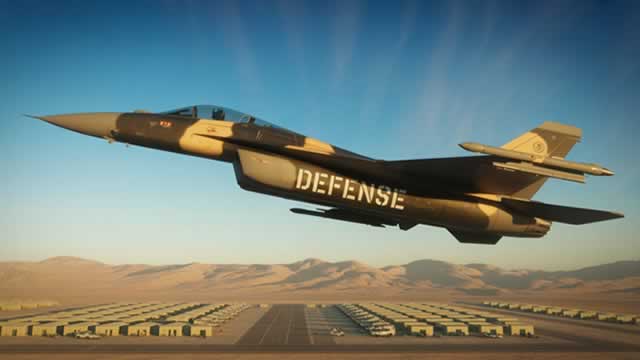
Boeing vs. General Dynamics: Which Aerospace Stock Is the Better Bet?
Both BA and GD are major U.S. aerospace and defense contractors with significant exposure to military and government contracts, competing within the broader defense and aviation sector.

Boeing: The Triple Blow
Boeing (BA) faces a triple threat: global macroeconomic softening, Middle East regional risk, and potential supply chain disruptions amid ongoing conflict. High oil prices threaten economic growth, potentially reducing airline demand and leading to delivery deferrals, especially for wide-body aircraft. Middle Eastern carriers account for a significant portion of BA's 777 and 787 backlogs, making these programs vulnerable to regional instability.

Investors Heavily Search The Boeing Company (BA): Here is What You Need to Know
Boeing (BA) has received quite a bit of attention from Zacks.com users lately. Therefore, it is wise to be aware of the facts that can impact the stock's prospects.

Boeing: Ignore Fuel Price Spikes For This Decade Play
Boeing (BA) offers substantial long-term upside, with commercial ramp and defense wins supporting a bullish investment thesis despite recent underperformance. BA's commercial aircraft production is accelerating, targeting 63 737s/month and 16 787s/month, underpinning robust future cash flow projections. Defense and services divisions are delivering double-digit growth, with major contracts like F47 and Apache helicopters driving margin recovery and backlog expansion.

The Boeing Company (BA) Presents at Bank of America Global Industrials Conference 2026 Transcript
The Boeing Company (BA) Presents at Bank of America Global Industrials Conference 2026 Transcript
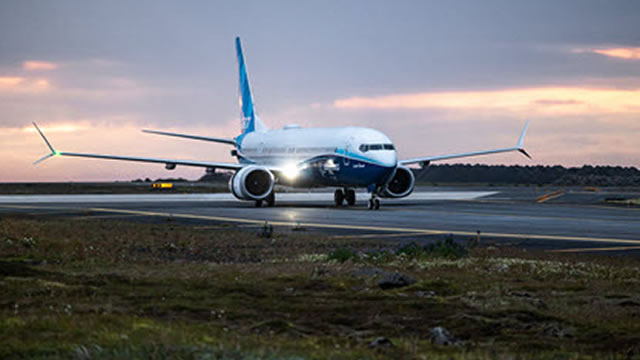
Boeing shareholders can pursue class action over 737 MAX safety
A federal judge certified a shareholder class action accusing Boeing of concealing safety deficiencies in its 737 MAX planes before two crashes that killed 346 people in 2018 and 2019.

Anchor Investment Management LLC Acquires 4,159 Shares of The Boeing Company $BA
Anchor Investment Management LLC boosted its stake in The Boeing Company (NYSE: BA) by 79.4% during the undefined quarter, according to the company in its most recent disclosure with the Securities and Exchange Commission. The institutional investor owned 9,395 shares of the aircraft producer's stock after acquiring an additional 4,159 shares during the

Alliancebernstein L.P. Sells 56,481 Shares of The Boeing Company $BA
Alliancebernstein L.P. trimmed its stake in shares of The Boeing Company (NYSE: BA) by 4.2% in the undefined quarter, according to its most recent disclosure with the SEC. The institutional investor owned 1,277,970 shares of the aircraft producer's stock after selling 56,481 shares during the period. Alliancebernstein L.P. owned 0.17% of Boeing worth

The Boeing Company $BA Stock Position Increased by Banco Bilbao Vizcaya Argentaria S.A.
Banco Bilbao Vizcaya Argentaria S.A. increased its position in The Boeing Company (NYSE: BA) by 61.6% in the undefined quarter, according to the company in its most recent Form 13F filing with the Securities and Exchange Commission. The firm owned 50,409 shares of the aircraft producer's stock after buying an additional 19,221 shares
Despite 311 Pages of Criticism, NASA Still Won't Cancel the Boeing Starliner
NASA is not happy with the performance of Boeing's Starliner spacecraft. A 311-page NASA report outlines the space agency's displeasure and suspends use of Starliner by astronauts.




