





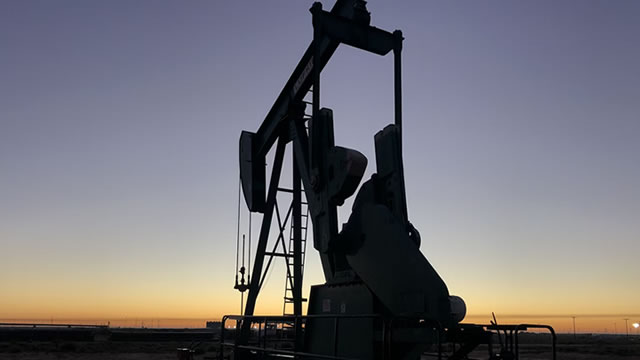
Oil Futures Open Year Lower on Oversupply Concerns
Oil futures were lower to start the year with concerns about oversupply partially contained by geopolitical risks.

Magnolia Oil & Gas: Reinvestment Rate Remains Under 55% Despite Mediocre Oil Prices
Magnolia is on track to reach +10% total production growth in 2025 and may deliver around +6% total production growth in 2026 with an unchanged capex budget. Oil production growth is expected to be a bit lower at around +4% for 2025 and +3% for 2026. Magnolia's reinvestment rate is projected at 54% of adjusted EBITDAX in 2026 at $57 WTI oil.

Oil Rises; Prices Could Remain Near Five-Year Low This Year
Crude oil ticked up in early Asia trade to kick off the new year.

Natural Gas and Oil Forecast: Bearish EIA Data vs OPEC+ Support Keeps Prices Rangebound
Bearish EIA data pressures oil and gas prices, but OPEC+ supply restraint and strong China demand keep natural gas and oil prices trading sideways.

U.S. Crude Oil Inventories Decline Amid Lower Imports
U.S. crude oil inventories fell last week as imports dropped and refineries ran at a slightly faster pace.

Oil Edges Lower; Near-Term Gains Likely Limited
Oil edged lower. The broad geopolitical instability in the Middle East and the Russia-Ukraine conflict typically would sustain a risk premium on crude oil prices, XS.com said.

Why silver's surge relative to oil should be a warning sign for investors
The price relationship between silver and oil has entered uncharted territory after the precious metal's massive surge, says DataTrek Research.

Natural Gas Price Forecast 2026: Is a Major Bull Run Ahead?
Natural gas may stay elevated into early 2026, supported by exports, tighter storage, and improving RSI trends. Later in 2026, supply growth could cap rallies.

Oil and Natural Gas Technical Analysis: Oversupply Risks Rise as Key Support Levels Come Into Focus
Oil prices pulled back despite rising geopolitical tensions, as market focus shifts to oversupply risks with Saudi price cuts expected and global output set to exceed demand.

Oil Edges Lower; Venezuela in Focus
Crude oil edged lower in early Asian trading. Prices fluctuated at low levels, driven by the interplay between fundamentals and macroeconomic and geopolitical factors, Nanhua Futures said.

Oil prices retreat slightly; investors wary of Russia–Ukraine tensions
Oil prices retreated a touch early on Tuesday after rising more than 2% in the previous session, partly driven by spillover from a pullback in precious metals even as escalating Russia–Ukraine tensions left markets grappling with supply disruption fears.

U.S. Crude Oil Stockpiles Rose in Week Ended Dec. 19
U.S. crude oil inventories rose by 400,000 in the week ended Dec. 19. Analysts had predicted stockpiles would fall by 2.6 million barrels.




