



Deere & Company (DE)










Deere raises full-year profit outlook as construction sales surge
Deere & Company (NYSE:DE, XETRA:DCO) reported fiscal third-quarter earnings that beat analyst estimates on both revenue and profit, sending shares up more than 7%. The agricultural and construction equipment maker posted revenue of $11 billion, above estimates of $10.74 billion and up 6% from a year earlier.
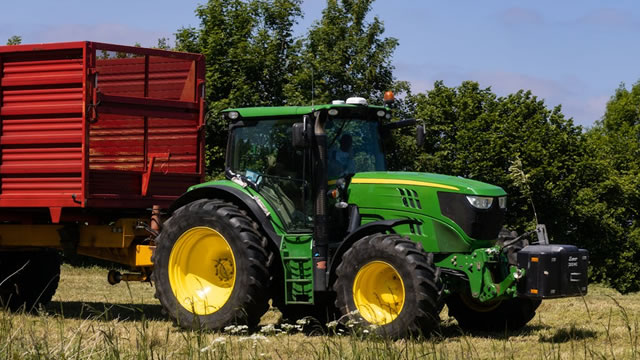
Deere earnings: Cramer says buy DE shares - just not today
Deere (DE) shares are extended gains on Thursday morning after the agricultural machinery giant reported better-than-expected financials for its third quarter (Q3). DE saw its revenue climb 5% on a year-over-year basis to $12.61 billion in Q3 on a $5.1 per share of earnings (EPS), representing a nearly 7% increase from last year.

Deere & Company Q3 Earnings Call Highlights
Deere & Company NYSE: DE reported higher third-quarter revenue and raised its fiscal 2026 outlook, citing operating execution, improving inventory health and continued strength in its construction and small agriculture businesses despite soft conditions in portions of the global farm-equipment market.

Machinery Stock Eyes Best Day Since February After Earnings
Shares of Deere & Co (NYSE:DE) are up 7.1% to trade at $621.93 at last check, after the farm machinery name posted blowout fiscal third-quarter earnings of $5.10 per share on revenue of $12.61 billion, besting expectations.
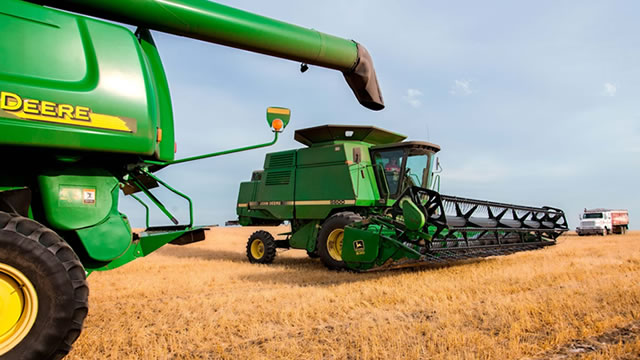
DE Q3 Earnings Beat Estimates on Construction & Turf Strength
Deere's Q3 earnings beat estimates as Construction & Forestry and Small Agriculture & Turf strength offset weakness in Production & Precision Agriculture.

Deere (DE) Q3 Earnings: Taking a Look at Key Metrics Versus Estimates
While the top- and bottom-line numbers for Deere (DE) give a sense of how the business performed in the quarter ended July 2026, it could be worth looking at how some of its key metrics compare to Wall Street estimates and year-ago values.
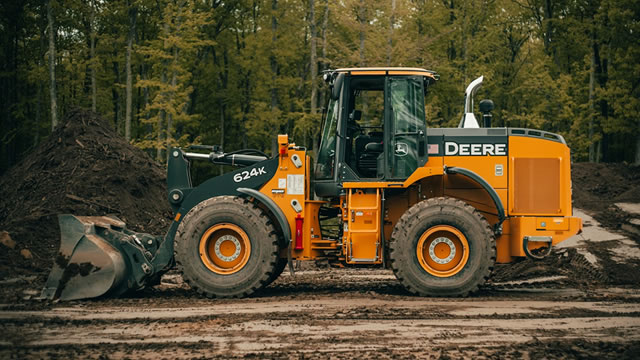
Deere (DE) Beats Q3 Earnings and Revenue Estimates
Deere (DE) came out with quarterly earnings of $5.1 per share, beating the Zacks Consensus Estimate of $4.79 per share. This compares to earnings of $4.75 per share a year ago.

Deere's Profit Rises as Sales Climb
The company posted higher profit and sales in its fiscal third quarter, as continued growth in the company's construction equipment business helped to offset ongoing weakness in its production agriculture segment.

Deere Set to Report Q3 Earnings: Here's What to Expect From the Stock
DE heads into Q3 results with higher earnings and revenue estimates, but weak farm spending and production costs may ail.
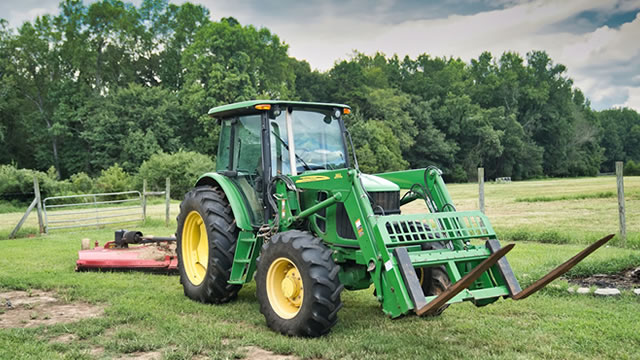
Insights Into Deere (DE) Q3: Wall Street Projections for Key Metrics
Evaluate the expected performance of Deere (DE) for the quarter ended July 2026, looking beyond the conventional Wall Street top-and-bottom-line estimates and examining some of its key metrics for better insight.

Deere (DE) Reports Next Week: Wall Street Expects Earnings Growth
Deere (DE) doesn't possess the right combination of the two key ingredients for a likely earnings beat in its upcoming report. Get prepared with the key expectations.

Deere: The Risk Is Front-Running (Earnings Preview)
Deere enters Q3 earnings with a stock price that has surged ahead of fundamentals, as investors continue front‑running an ag‑cycle recovery that remains absent in industry data. CNH and AGCO's recent reports point to weak North American demand, margin pressure, and potential pricing aggression — key risks for Deere's Production & Precision Agriculture segment. With valuation implying a rapid earnings rebound and guidance unchanged for three straight quarters, Deere must show margin resilience, pricing strength, and cleaner dealer inventories to justify its premium multiple.




