


Ethereum

Ethereum Price Breaks $2,560 as Binance ETH Withdrawals Hit 3-Year High
ETH retests $2,550–$2,575 as support while analysts watch $2,760 and $3,000 as the next targets

Paradex facilitates record $16M ETH options trade at lower cost than Deribit
Paradex's innovative approach in DeFi derivatives could challenge centralized exchanges by offering cost-effective, large-scale trading solutions. Paradex facilitates record $16M ETH options trade at lower cost than Deribit.

Ethereum supply tightens as ETH price reclaims $2,500 – What's next?
Ethereum's supply dynamics are tightening as staking and ETF demand reshape the market around $2,500.
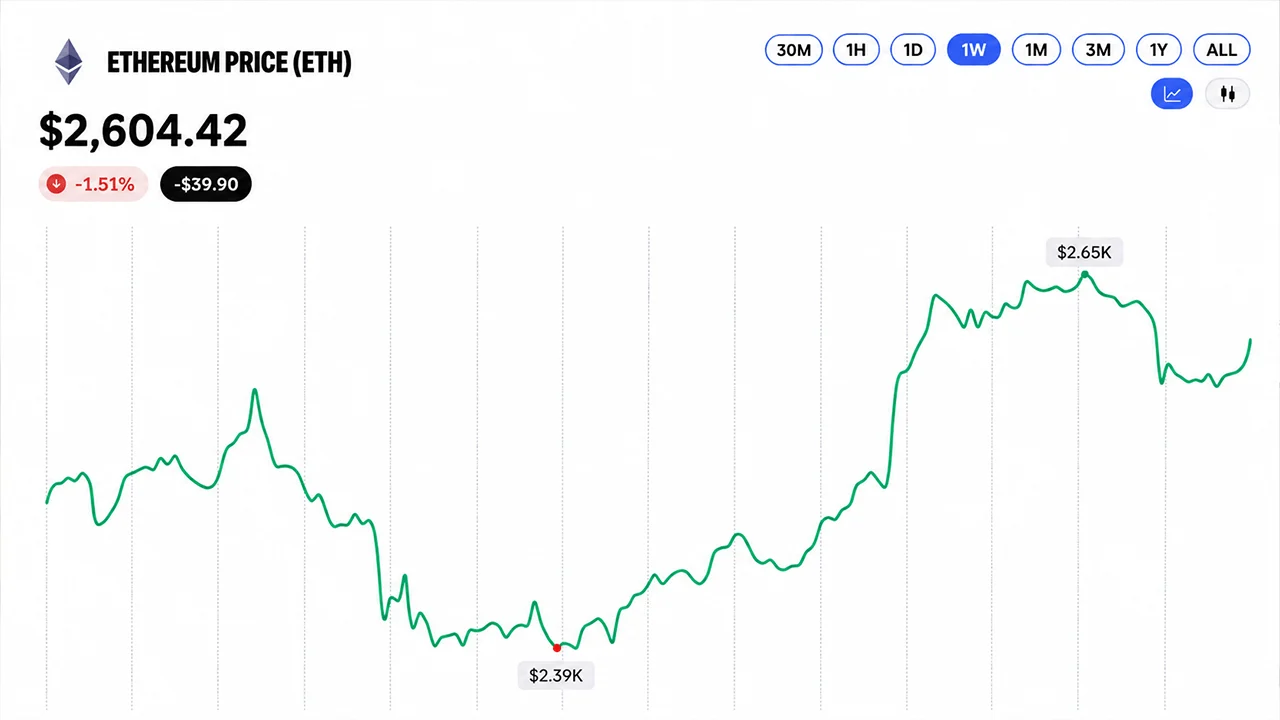
Ethereum Price Retreats From $2,668 as Momentum Starts to Fray
Ethereum's price is back close to $2,600 after climbing from $2,360 to nearly $2,668 in a matter of days, yet the second-largest crypto asset by market cap remains roughly 47% below its October 2025 peak near $4,946. That hasn't stopped forecasts ranging from $4,000 to $10,000 before year-end.
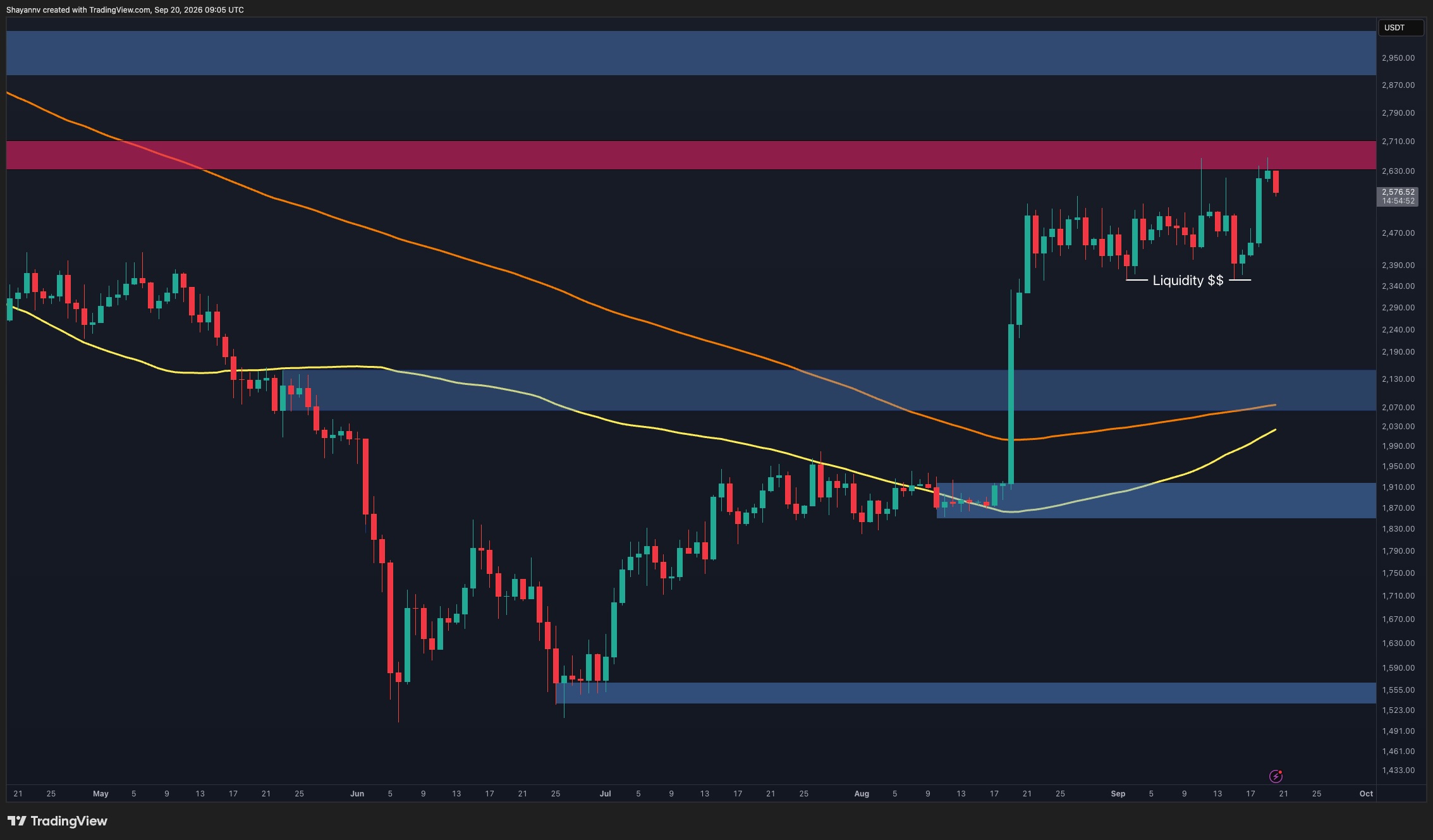
Ethereum Price Prediction: Is $3K in Sight After ETH's Latest Breakout?
Ethereum's latest rally has carried the price back into a major supply area, but sellers have started to respond around the highs. With the asset now near $2.58K, the next reaction could determine whether the recent advance develops into a larger breakout or gives way to another consolidation phase.

Ethereum Price Prediction: What Is ETH's Realistic 2026 Ceiling?
Ethereum is challenging the $2,500–$2,550 zone again. Can ETH reach $2,800, $3,000 or even higher before the end of 2026?

Ethereum Staking Demand Outpaces Exits as Entry Queue Surges
Entry demand reaches 13.6 times exit demand, extending activation waits while 41 million ETH sits in validators.

Robinhood Chain fees hit $4.5M as Ethereum gets $398
Robinhood Chain collected $4.5 million in fees on Sept. 3 while Ethereum settlement costs totaled about $398, according to Bitquery.

Robinhood Chain Growth Shows a Wider Ethereum Revenue Gap
Bitquery data cited by Digital Asset shows a wide gap between Layer 2 fee collection and Ethereum settlement payments.

Crypto: Ethereum Fees Crash by Over 85%
Using Ethereum is much cheaper than in the spring. The average cost of an ETH transfer fell to around 0.095 dollars, compared to a peak of 0.72 dollars on April 21, according to Santiment data.

Ethereum sees 13.6x more ETH waiting to be staked than exited
Ethereum's staking demand surge limits liquidity, indicating strong market confidence and potential for reduced volatility in ETH trading. Ethereum sees 13.6x more ETH waiting to be staked than exited.

Ethereum ETFs Add $29.4M Friday As Fidelity Leads Reported Flows
TL;DR U.S. Ethereum ETFs recorded $29.4 million in net inflows on September 18. Fidelity's FETH brought in $26.2 million.


