










FXI: An Update As Chinese Stocks Take Off On The Upside
I highlighted iShares China Large-Cap ETF as a contrarian investment on June 20, 2024, citing Charlie Munger's belief in Chinese stocks' long-term value despite bearish trends. China's late September stimulus, including interest rate cuts and liquidity injections, spurred a sharp rally in the FXI ETF, reaching a new 2024 high. FXI remains attractive with a low P/E ratio compared to U.S. ETFs, but geopolitical risks with the U.S. and Taiwan persist.
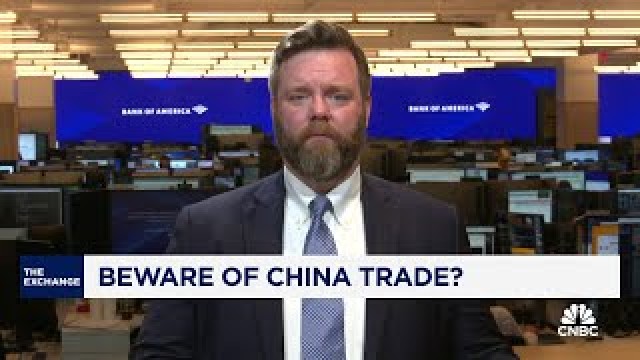
Why China stocks are not suitable for long-term investment
Jared Woodard, BofA Securities head of research investment committee and ETF strategy, joins CNBC's 'The Exchange' to discuss the economic impact of China's new stimulus, why he thinks it is risky to trade in the country right now, and more.
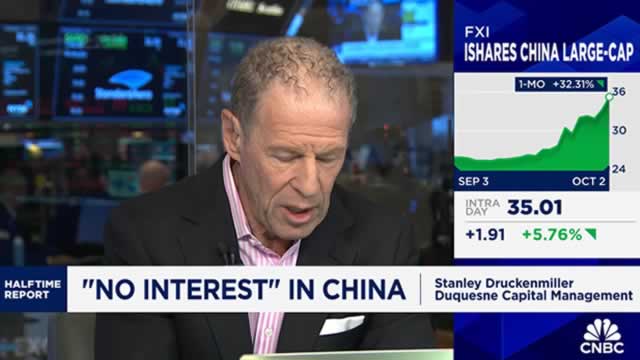
China stocks march higher
The Investment Committee debate whether it's safe to invest in China as the country uses stimulus to push it's stocks higher.

China stock ETFs rip higher even as mainland markets close for holiday
Exchange-traded funds overseas that track Chinese stocks continued their rally Wednesday even as mainland markets were shut for a week-long holiday.

Hang Seng Index: Start Of A Potential New Medium-Term Bullish Trend
Aggressive interest rate cuts by PBoC coupled with potential expansionary fiscal policies that target consumer spending have stoked positive animal spirits. Market breadth has improved on China CSI 300 and Hong Kong Hang Seng Index.

China's stock market soars over 22% for the largest single-day gain in history
Amid an influx of aggressive government stimulus measures, the Chinese stock market is reacting positively, hitting new historical highs.

China Stocks Set for Best Week Since 2022
Chinese equities capped their biggest weekly rally since 2008 with a burst of trading that overwhelmed the Shanghai stock exchange, underscoring a shift in investor sentiment after Beijing ramped up its economic stimulus. That shift was felt in Chinese stocks in the US as well, where they're set for their best week since 2022.
2 China-Based ETFs Log Their Best Week on Record
No exchange-traded funds (ETF) have had a week quite like iShares MSCI China ETF (MCHI) and iShares China Large-Cap ETF (FXI).

China needs more than rate cuts to boost economic growth
China's slowing economy needs more than interest rate cuts to boost growth, analysts said. "We will need a major fiscal policy support to see higher CNY government bond yields," said Edmund Goh, head of China fixed income at abrdn.

China stock-market jump may be ‘tradable rally' — but approach with caution
Chinese stocks and the exchange-traded funds that track them surged Tuesday after Beijing announced the biggest stimulus package since the early days of the COVID pandemic, sparking what some analysts see as a tradable rally.
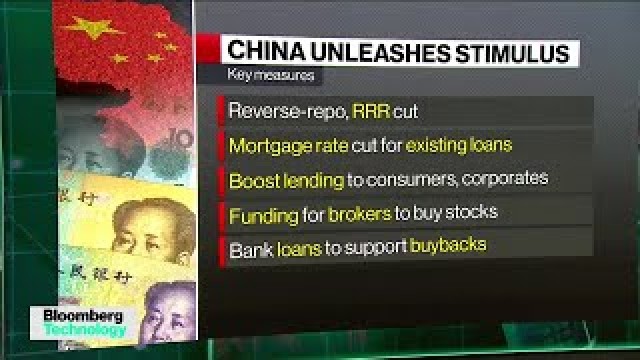
China Stocks, Miners and Industrials Rise on Economic Push
US-listed Chinese tech stocks surged in New York following strong gains in Hong Kong and in mainland stocks, after China's central bank announced a slew of measures aimed at boosting the economy, the housing sector and the stock market. Bloomberg's Henry Ren joins Caroline Hyde and Ed Ludlow on "Bloomberg Technology.
China Stimulus: Does it Signal Panic?
Last night, China's leadership shocked global markets with a new stimulus package to boost the country's ailing economy and stock market. Though most Wall Street analysts largely expected a stimulus, few predicted the magnitude of the stimulus package.




