



Robinhood Markets, Inc. (HOOD)









Robinhood Pushes Brokerages to End the Waiting Game
Watch more: Michael Silver of Robinhood Consumers managing their finances through digital channels increasingly assume that money will appear in accounts quickly, with visibility into when it can be used. For investment platforms, that expectation carries operational consequences.
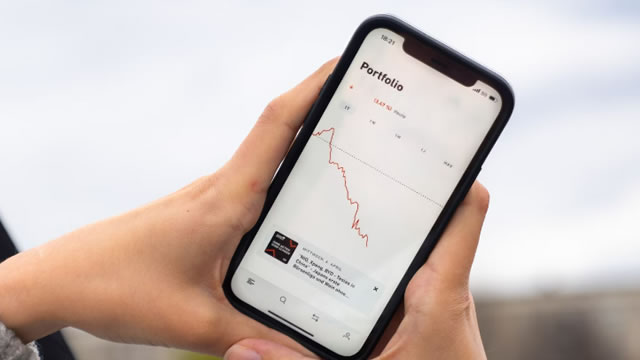
Why Robinhood Markets, Inc. (HOOD) Dipped More Than Broader Market Today
The latest trading day saw Robinhood Markets, Inc. (HOOD) settling at $97.22, representing a -5.85% change from its previous close.

What Baiju Bhatt Learned From the 70 ‘Nos' He Got While Building Robinhood
The billionaire founder of Robinhood shared his grueling journey to build the financial app with Gunjan Banerji in the latest episode of The WSJ Money Interview.

HOOW: Why Robinhood's Comeback Isn't Enough Yet
HOOW remains a Hold due to volatility drag, NAV erosion, and lack of high-conviction near-term upside in Robinhood. HOOW's leveraged structure amplifies drawdowns and capital erosion, requiring immediate bullish moves in HOOD to offset payout shrinkage and volatility drag. While HOOD's long-term thesis has strengthened - driven by prediction markets, agentic AI trading, and premium tier growth - valuation and near-term catalysts are less compelling.
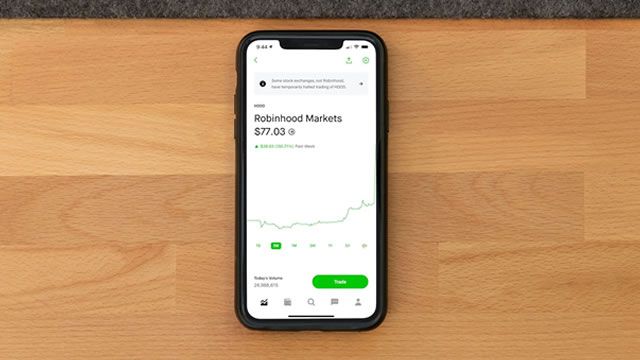
Here is What to Know Beyond Why Robinhood Markets, Inc. (HOOD) is a Trending Stock
Zacks.com users have recently been watching Robinhood Markets (HOOD) quite a bit. Thus, it is worth knowing the facts that could determine the stock's prospects.
Robinhood's Convertible Debt Play: Dilution Risk, Growth Upside
HOOD's $2B convertible debt offering adds cash for buybacks, capped calls and expansion, while future dilution remains the key investor risk.

Baiju Bhatt Left Robinhood as a Billionaire. His Next Bet Is His Boldest Yet.
Watch as the billionaire entrepreneur reveals the grueling series of “nos” he got while building Robinhood, what he bought to celebrate its IPO, and why his next big bet is on space.

Robinhood Markets, Inc. (HOOD) Outperforms Broader Market: What You Need to Know
Robinhood Markets, Inc. (HOOD) reached $108.15 at the closing of the latest trading day, reflecting a +2.8% change compared to its last close.

Robinhood Markets (HOOD) Moves 8.8% Higher: Will This Strength Last?
Robinhood Markets (HOOD) was a big mover last session on higher-than-average trading volume. The latest trend in earnings estimate revisions might help the stock continue moving higher in the near term.
Stock Market Today, June 17: Robinhood Jumps After Announcing 10% Workforce Reduction, Record June Volumes
Expand NASDAQ: HOOD Robinhood Markets Today's Change (8.71%) $8.42 Current Price $105.13 Key Data Points Market Cap $87B Day's Range $95.76 - $110.71 52wk Range $63.52 - $153.86 Volume 2.8M Avg Vol 30M Gross Margin 94.92% Robinhood Markets (HOOD +8.71%), a commission-free retail brokerage and multi-asset investing platform, closed at $105.20, up 8.78%. On Wednesday, the company announced a planned 10% workforce reduction and record June month-to-date volumes, prompting analysts to raise price targets.

Robinhood Soars 12%, Webull Jumps 8% as a Workforce Cut Meets Record Trading Volumes
Shares of Robinhood (NASDAQ:HOOD | HOOD Price Prediction) are surging in midday trading on Wednesday, June 17, with the stock up 12% to roughly $109.

Robinhood stock gains as analysts back growth despite layoffs
Robinhood Markets HOOD shares moved higher on Wednesday after multiple Wall Street firms reaffirmed their bullish outlook on the online brokerage, arguing that the company's growth prospects remain strong. The bullish view came despite a planned workforce reduction affecting roughly 10% of employees.




