



Altria Group, Inc. (MO)










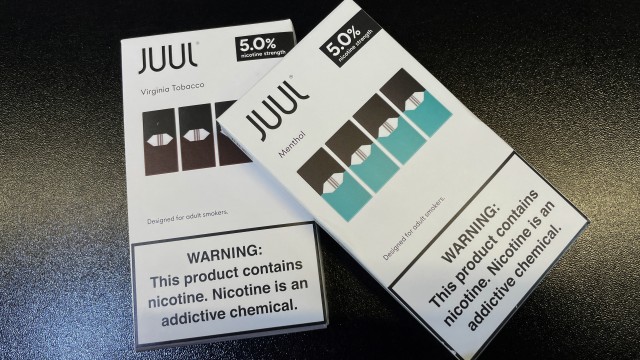
US FDA rescinds market denial order for Juul products
The U.S. Food and Drug Administration (FDA) said on Thursday it was rescinding a June 2022 order that briefly blocked sale of Juul's products, including its device for e-cigarettes.

Why Altria Stock is Still a Good Dividend Play
Altria NYSE: MO is among the leading sin stocks but is still a good dividend play today. Up more than 17.5% in the last few weeks, the purveyor of tobacco products is on track to reclaim the high end of a long-term trading range and possibly set new highs.

Where Will Altria Stock Be in 5 Years?
Altria's main business is selling cigarettes in the United States. Cigarette volumes in the U.S. have been declining for years.

Altria: The Dividend King Is Alive, I'm Still Adding To My Position
Altria Group, Inc. has been one of my favorite dividend picks, and since the publication of my first bull thesis back in February this year, the stock has outperformed the market. This could signal that potentially the Company has now landed in a territory of overvaluation. In this article, I dissect the recent earnings report and share the reasons why I am consistently reinvesting the dividends and adding to my position in Altria.
With Over 10% Gains This Year Is Altria Stock A Better Pick Than Freeport?
We believe that Altria stock (NYSE: MO) is a better pick over Freeport-McMoRan stock (NYSE: FCX), given its better prospects. Although these companies are from different sectors, we compare them because they have a similar market capitalization of $75-$80 billion and a similar revenue base of $20-23 billion.

1 Stock Yielding 8.6% vs. 1 Stock Yielding 5.2%: Which Is Better for Passive Income Investors?
At its current share price, Altria Group's dividend yields 8.6%. Philip Morris International's dividend yields 5.2%.

If I Could Only Buy 2 High Dividend Yield Companies In June 2024
Including high dividend yield companies in your portfolio provides income, reduces volatility, and offers independence from stock market fluctuations. I generally suggest blending companies with a high dividend yield with those that focus on dividend growth, thus ensuring a balanced portfolio mix. In today's article, I will introduce you to my top two high dividend yield companies to consider investing in during this month of June.

Here is What to Know Beyond Why Altria Group, Inc. (MO) is a Trending Stock
Altria (MO) has received quite a bit of attention from Zacks.com users lately. Therefore, it is wise to be aware of the facts that can impact the stock's prospects.

Could Investing $100,000 in Altria Make You a Millionaire?
Altria has an industry-leading position in its core business. The stock has a huge 8.5% dividend yield.

Altria (MO) Navigates Hurdles on Pricing, Smoke-Free Strength
Altria (MO) gains from its pricing power and focus on smoke-free products to navigate market uncertainties like low cigarette volumes.

1 Reason to Buy Altria Stock Like There's No Tomorrow
Altria stock has been a great stock to own during market downturns. With stock markets priced at a premium, investing in defensive stocks like this could prove wise.

Zacks Industry Outlook Philip Morris, Altria and British American Tobacco
For Immediate Release Chicago, IL – May 20, 2024 – Today, Zacks Equity Research Philip Morris International Inc., Altria Group, Inc. and British American Tobacco p.l.c. The Zacks Tobacco industry players have been witnessing soft cigarette sales volumes due to inflation, changing consumer habits, and stringent regulations. Increased costs of essential materials further raise concerns for profit margins. While investments in smoke-free products come at the cost of margins, they have been driving revenues of tobacco companies, given consumers' growing health consciousness. Pricing power has also been working well. These upsides keep About the Industry The Zacks Tobacco industry includes companies that manufacture and sell cigarettes as well as tobacco and nicotine-based products, such as cigars, snuffs and oral tobacco. Some companies also offer RRPs, such as e-cigarettes, vaping and heat-not-burn variants. A few of the firms are engaged in making devices and attachments needed in vaping and heat-not-burn products. Most products manufactured by the tobacco industry participants fall under the strict vigilance of the U.S. Food and Drug Administration ("FDA") and are required to follow the permissible levels of nicotine in manufacturing. Players in this space sell products mostly through large retailers, distributors, convenience stores, drugstores, wholesalers and grocery chains. Additionally, some international tobacco firms operate in the country through subsidiaries. 4 Trends Shaping the Future of the Tobacco Industry The tobacco industry is grappling with challenges related to the inflationary environment, which has significantly influenced consumer spending habits. Economic factors such as inflation, increased interest rates, and Adult Tobacco Consumers' dynamics, including changing purchasing patterns, the adoption of smoke-free products, and shifts in disposable income, have affected cigarette sales volumes. Additionally, stringent government regulations on sales, marketing, and manufacturing, prompted by the health hazards of nicotine consumption, have further impacted volumes. Some guidelines issued by the FDA include the mandatory use of precautionary labels on cigarette packets and self-critical advertisements. As cigarette sales constitute a significant portion of revenues for tobacco industry companies, the decrease in sales volumes within this category raises concerns. Numerous industry participants have been affected by cost inflation. Global inflationary challenges linked to essential materials such as tobacco leaf, energy and labor costs have been concerns. Elevated expenses related to the research, development and marketplace activities of smoke-free products further present risks to profit margins. Increasing awareness of health risks and stringent government regulations intended to curtail cigarette smoking have encouraged many consumers to switch to reduced-risk products (RRPs) or smoke-free alternatives. Promoted as having a less adverse impact on health due to their scientific composition and method of consumption, these products are gaining popularity. More consumers are turning to these alternatives as a way to quit smoking traditional cigarettes. Major players in the tobacco industry have been allocating resources to expand their presence in this category, including investing in innovations to make these products more user-friendly and energy-efficient. Companies have been experiencing significant revenue growth in the RRP or smoke-free product space. Philip Morris and British American Tobacco have been proactively working toward transitioning into predominantly smoke-free companies in the coming years. The continued popularity and resilience of these products are expected to drive positive outcomes for industry players amid ongoing business transformations. Players in the tobacco industry have been leveraging the strong pricing influence of tobacco products, which also helps them make up for high taxes and soft cigarette sales volumes. Since smokers tend to be less responsive to price hikes due to their addiction, this approach is anticipated to continue benefiting companies within the tobacco sector. The prudent pricing of cigarettes has been supporting the revenues of players in the tobacco industry in the face of declining volumes. Zacks Industry Rank Indicates Dull Prospects The Zacks Tobacco industry is housed within the broader Zacks Consumer Staples sector. The industry currently carries a Zacks Industry Rank #174, which places it in the bottom 30% of more than 250 Zacks industries. The group's Zacks Industry Rank, which is basically the average of the Zacks Rank of all the member stocks, indicates drab near-term prospects. Our research shows that the top 50% of the Zacks-ranked industries outperform the bottom 50% by a factor of more than 2 to 1. The industry's position in the bottom 50% of the Zacks-ranked industries is a result of a positive earnings outlook for the constituent companies in aggregate. Looking at the aggregate earnings estimate revisions, it appears that analysts are gradually losing confidence in this group's earnings growth potential. Since the beginning of February 2024, the industry's earnings estimate for 2024 has declined 2.2%. Let's take a look at the industry's performance and current valuation. Industry vs. Broader Market The Zacks Tobacco industry has underperformed the Zacks S&P 500 Composite, while outperforming the broader Zacks Consumer Staple sector over the past year. The industry has gained 4.1% over this period against the broader sector's drop of 5.3%. Meanwhile, the S&P 500 has risen 27.7% in the said time frame. Industry's Current Valuation On the basis of forward 12-month price-to-earnings (P/E), which is commonly used for valuing consumer staple stocks, the industry is currently trading at 10.24X compared with the S&P 500's 21.21X and the sector's 17.34X. Over the past five years, the industry has traded as high as 12.68X, as low as 9.1X and at the median of 10.67X. 3 Tobacco Stocks to Keep a Close Eye On The Zacks Rank #3 (Hold) company's emphasis on smoke-free products, aligned with evolving consumer preferences, has strengthened its market position. Philip Morris is progressing toward its objective of becoming a predominantly smoke-free company by 2030. The exceptional performance of its premium smoke-free brands, IQOS and ZYN, is driving the success of its smoke-free product portfolio. Additionally, this tobacco giant has been positively impacted by its strong pricing strategies. The Zacks Consensus Estimate for PM's 2024 earnings per share The Zacks Rank #3 company has demonstrated resilience in a challenging environment by leveraging its pricing power and prioritizing smoke-free alternatives. Altria's investment in on! has been particularly effective in the oral tobacco realm. Additionally, the acquisition of NJOY Holdings represents a major advancement in the e-vapor category. Some of MO's 2028 Enterprise Goals include doubling its U.S. smoke-free net revenues to $5 billion from its 2022 level and driving mid-single-digit adjusted EPS growth through 2028 on a compounded annual basis. Altria shares have rallied 12.5% in the past six months. The Zacks Consensus Estimate for MO's 2024 EPS has risen by 2 cents to $5.11 over the past 30 days. BTI's strategic focus on growth, innovation, and market leadership in the evolving tobacco and nicotine product landscape has been working well. The company has been benefiting from its efforts to strengthen the Heated Products portfolio with innovative launches like glo Hyper pro and expanding tobacco-free consumables. Additionally, the Zacks Rank #3 company has been enhancing its innovation pipeline by strengthening R&D capabilities, adding device engineering, and forming a collaborative global network. That said, British American Tobacco's efforts to return the U.S. combustibles business to consistent value growth bode well. The Zacks Consensus Estimate for British American Tobacco's 2024 bottom line has declined 0.4% to $4.68 over the past 30 days. Shares of BTI have lost 0.5% in the past six months. Past performance is no guarantee of future results. Inherent in any investment is the potential for loss. This material is being provided for informational purposes only and nothing herein constitutes investment, legal, accounting or tax advice, or a recommendation to buy, sell or hold a security. No recommendation or advice is being given as to whether any investment is suitable for a particular investor. It should not be assumed that any investments in securities, companies, sectors or markets identified and described were or will be profitable. All information is current as of the date of herein and is subject to change without notice. Any views or opinions expressed may not reflect those of the firm as a whole. Zacks Investment Research does not engage in investment banking, market making or asset management activities of any securities. These returns are from hypothetical portfolios consisting of stocks with Zacks Rank = 1 that were rebalanced monthly with zero transaction costs. These are not the returns of actual portfolios of stocks. The S&P 500 is an unmanaged index. To read this article on Zacks.com click here.




