



Microsoft Corporation Common Stock (MSFT)













Anduril to take over Microsoft's U.S. Army $22-billion headset program
Anduril Industries, Palmer Luckey's defense-tech startup, will take over Microsoft's multibillion-dollar augmented reality headset program with the U.S. Army, the companies announced Tuesday. The partnership will give the drone software maker "oversight of production, future development of hardware and software, and delivery timelines" if approved by the Department of Defense.
Anduril takes control of Microsoft's $22B VR military headset program
The Army has granted upstart weapons maker Anduril control of one of its highest-profile and long-troubled projects known as the Integrated Visual Augmentation System, founder Palmer Luckey announced in a blog post Tuesday.

Anduril takes over Microsoft's $22 billion US Army headset program
Palmer Luckey-founded defense tech startup Anduril will take over the development and production of Microsoft's mixed-reality headset program for the U.S. Army, the companies said on Tuesday.

If I Could Buy Only One Cloud Computing Stock, This Would Be It
Technology stalwart Microsoft (MSFT 0.60%) released impressive second-quarter fiscal 2025 financial results on Wednesday, Jan. 29, with revenue and earnings surpassing analyst consensus expectations. Revenue was up 12% year over year to $69.6 billion, while adjusted earnings per share (EPS) rose 10% year over year to $3.23.
Microsoft's AI Revenue Skyrockets, But Challenges Loom
Microsoft's AI Revenue Skyrockets, But Challenges Loom
What OpenAI's chip ambitions reveal about its Microsoft problem
CNBC's Deirdre Bosa reports on news regarding AI.

French antitrust agency probing Microsoft over Bing access, Bloomberg reports
France's antitrust agency is investigating Microsoft over concerns that it is degrading the quality of results when smaller rivals pay to use Bing technology in their own search-engine products, Bloomberg reported on Monday.
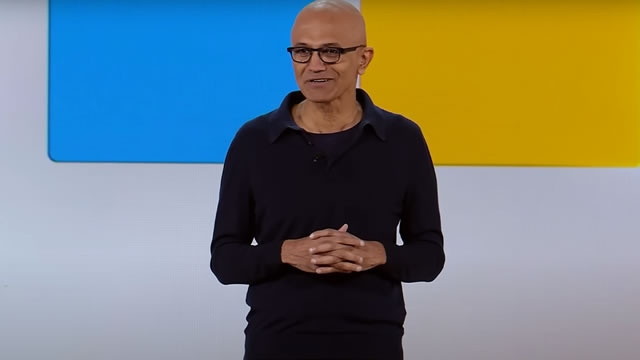
Microsoft to adjust Office-Teams pricing in bid to avoid EU antitrust fine, sources say
Microsoft has offered to widen the price differential between its Office product sold with its chat and video app Teams and its software sold without the app in a bid to avert a possible EU antitrust fine, according to three sources.
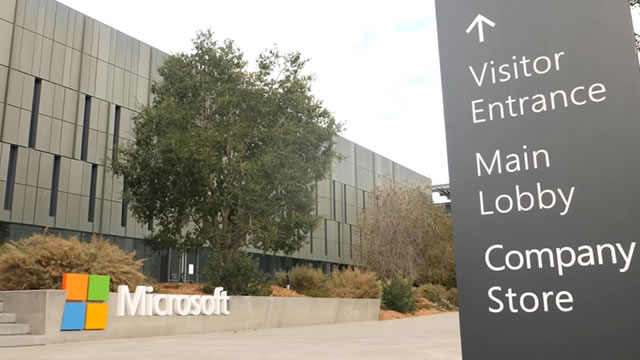
EDP Renewables signs virtual power purchase agreement with Microsoft
EDP Renewables North America said on Monday it has delivered three utility-scale solar projects and signed a long-term virtual power purchase agreement with tech giant Microsoft.

Microsoft and Nvidia Take a Quieter Approach to Trump
Other big technology companies have been boisterous in their courtship of the new administration. But Nvidia and Microsoft have avoided the Washington spotlight.
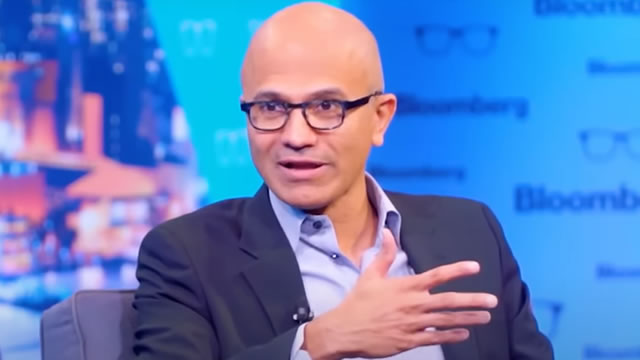
No Need To Fear DeepSeek: Microsoft's AI Growth Story Remains Intact
Microsoft's Q2 FY25 results show strong AI monetization, with Azure AI services growing 157% YoY and contributing significantly to overall growth. DeepSeek's $6 million training cost is misleading; real costs are higher due to extensive infrastructure and prior research investments. Microsoft's strategic AI infrastructure, partnerships, and diversified revenue streams provide a competitive edge and robust financial performance.

Is Microsoft Stock a Buy Now?
The past week or so have been rough for Microsoft (MSFT 0.61%). The company's massive investment in artificial intelligence (AI) infrastructure came under scrutiny following Chinese start-up DeepSeek's revelation that it has developed AI models at a fraction of the cost that the tech giant has spent so far.




