



NVIDIA Corporation (NVDA)
















Nvidia Becomes The First $5 Trillion Company: Why Shares Could Keep Climbing
Nvidia Corporation tops $5 trillion, leading the Dow (with Caterpillar Inc.) after a bullish GTC showcase in Washington, D.C. NVDA shares are up 55% YTD, with strong seasonals and momentum into year-end. Valuation still reasonable, backed by $500 billion in AI revenue visibility and firm margins.
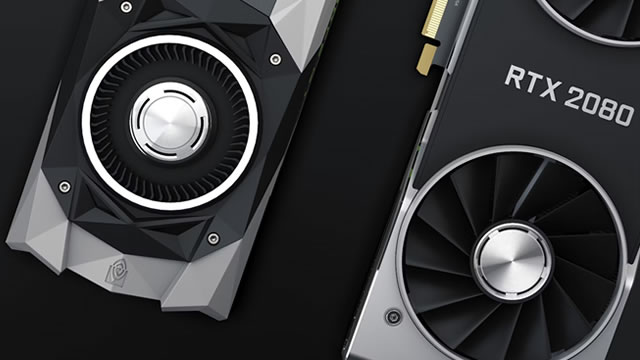
How Far Ahead Is Nvidia Vs. Rivals?
With NVIDIA rising 11% in a week, it is a good time to reassess its position against its competitors. Regularly evaluating alternatives is fundamental to a robust investment strategy.
Nvidia becomes first company ever valued above $5 trillion as AI boom accelerates
Nvidia Corp (NASDAQ:NVDA, ETR:NVD) has become the first company in history to reach a market value above $5 trillion, extending its lead as the biggest beneficiary of the global artificial intelligence boom. Shares of the chipmaker jumped as much as 3.4% at the market open, lifting its market capitalization past the $5 trillion mark for the first time.
AI chipmaker Nvidia is the first $5 trillion company
Nvidia has become the first $5 trillion company, just three months after the Silicon Valley chipmaker was first to break through the $4 trillion barrier.

Nvidia becomes first $5T company powered by AI frenzy: Here's how much CEO Jensen Huang is worth
The milestone underscores the company's swift transformation from a niche graphics-chip designer into the backbone of the global AI industry, turning Jensen Huang into a Silicon Valley icon.

FocusShould You Buy NVIDIA as It Nears $5T Market Cap? ETFs in Focus
NVIDIA inches closer to the $5-trillion market-cap mark. Play the AI chip boom via ETFs SHOC, SMH, SMHX, SOXY & SEMI.
Nvidia Just Became the First $5 Trillion Company—Monitor These Crucial Stock Price Levels
Nvidia (NVDA) became the first company to ever achieve a market capitalization of $5 trillion as its stock surged in early trading Wednesday.
Nvidia Becomes First Company Worth $5 Trillion
More than 44,000%. That's how much Nvidia's stock has climbed over the last decade, outpacing the Nasdaq (up 420%) and S&P 500 (263%) over the same period.

AI sets date when Nvidia stock will hit $10 trillion market cap
As Nvidia (NASDAQ: NVDA) stock continues to make history as the first company to hit a $5 trillion market cap, insights from OpenAI's ChatGPT suggest the semiconductor giant is likely to double this value in the coming years.

Nvidia Market Cap Nears $5 Trillion
Nvidia Corp.'s (NASDAQ: NVDA) market cap was the first to cross $4 trillion.
Nvidia Poised to Become First $5 Trillion Company
The company's shares have been boosted by the AI boom and a flurry of new deals.

NVIDIA Up Another 3.5% Premarket: Here's Why It's Skyrocketing Past $200 Per Share
NVIDIA (Nasdaq: NVDA) shares jumped 4.98% yesterday, a fairly remarkable jump for a $4.9 trillion company that pushed NVIDIA shares past the $200 barrier.




