



NVIDIA Corporation (NVDA)











Bearish Turns in NVDA & AMD, Questions Surround A.I. Future
Analysts cut back expectations for a pair of A.I. stocks. For Nvidia (NVDA), Morgan Stanley trimmed its price target as it raised questions around A.I.
NVDA "Coming After" AMD's CPU Business
A day after falling to a new 52-week low, AMD Inc. (AMD) is downgraded to hold from buy at Melius Research. Jenny Horne shares why the analyst thinks the stock could be in trouble regardless of the DeepSeek news as Nvidia (NVDA) looks to take market share in CPUs for accelerated PCs.
Nvidia and other chip stocks are set to bounce. Is now the time to buy?
Multiple analysts saw Monday's sharp semiconductor pullbacks as overdone. One said they could prove “a buying opportunity in hindsight once the dust settles.
Nvidia, Other AI-Focused Stocks Rebound Somewhat After Monday's Selloff
Nvidia (NVDA) and other artificial intelligence stocks at the forefront of the AI revolution are rebounding somewhat in premarket trading Tuesday after a selloff triggered by Chinese startup DeepSeek's launch of a cutting-edge model at a fraction of the cost of its U.S. rivals.
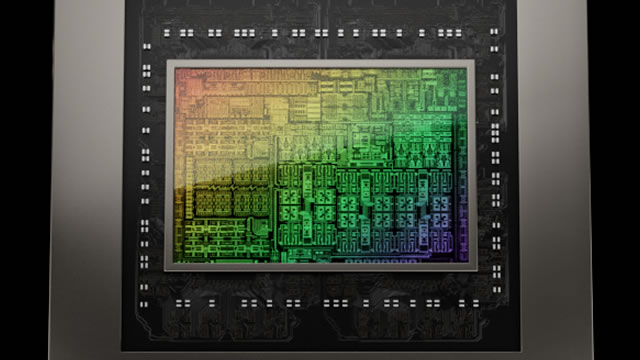
Nvidia CEO Huang Loses $20 Billion
A lot of people and institutions lost a lot of money as Nvidia Corp. (NASDAQ: NVDA) shed $590 billion in market cap when the tech world realized how good the new Chinese DeepSeek artificial intelligence (AI) software is.

NVDA, AVGO and AMD Forecast – Chips Look to Recover on Tuesday
The microchip sector was hammered on Monday, as the DeepSeek drama had everyone running for the hills. The market looks as if it is starting to question the story though, and these companies are looking to recover.
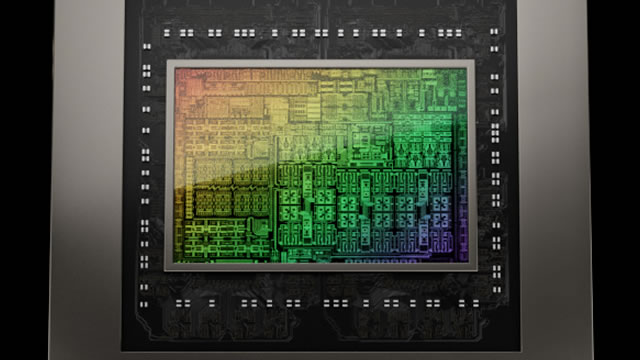
Nvidia, AI Stocks Recover Slightly In Premarket After Monday's DeepSeek Rout
Key U.S. chips and AI stocks mounted a recovery in premarket trading early Tuesday, after being heavily routed a day earlier amid a market panic triggered by the successful launch of Chinese startup DeepSeek's latest AI model, which raised questions about U.S. leadership in the space.
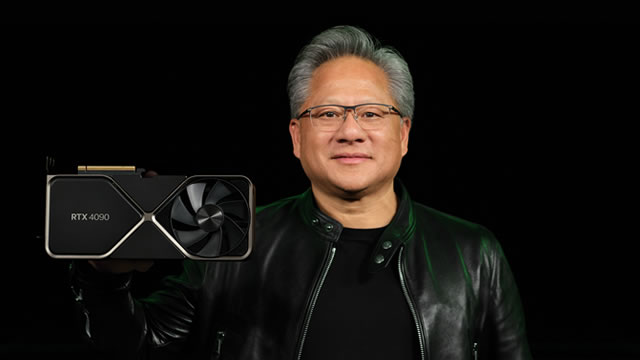
Will Nvidia stock crash below $100?
Monday, January 27, was a veritable bloodbath in the financial markets — one in which Nvidia (NASDAQ: NVDA) was among the hardest-hit companies.
Nvidia still is the only game in town for the most powerful chips: Advisor Capital's JoAnne Feeney
JoAnne Feeney, Advisors Capital Management partner and portfolio manager, joins 'Squawk Box' to discuss the latest market trends, what to make of the tech sell-off on Monday, impact of DeepSeek on the AI race, and more.
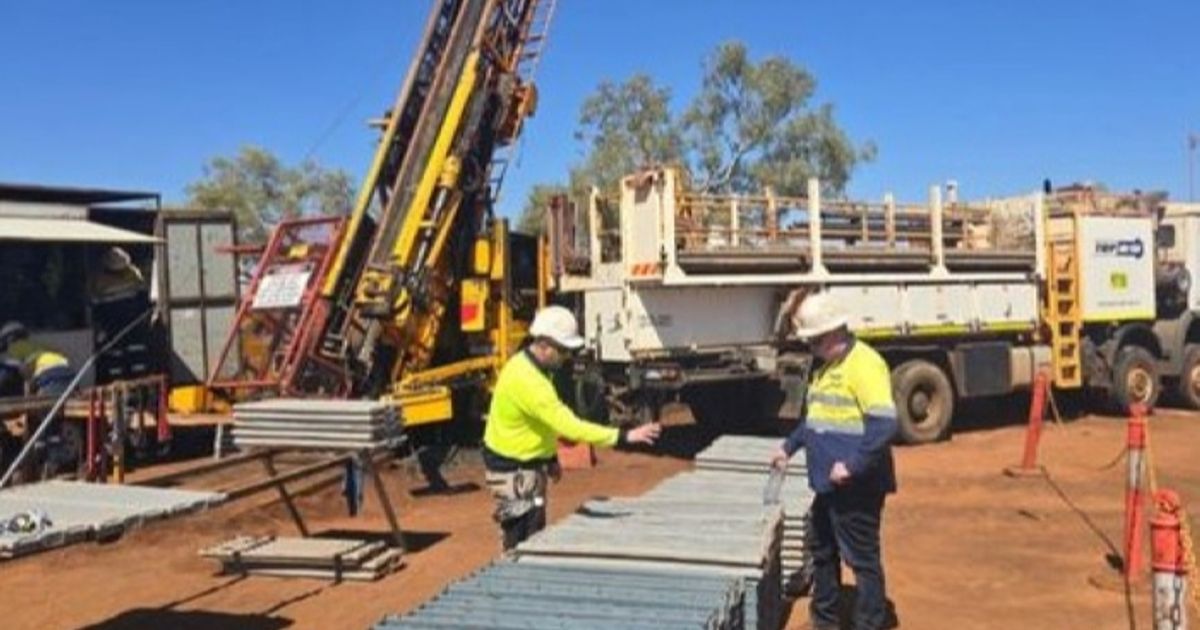
Terra Metals hits high-grade titanium from surface as Dante multi-commodity potential grows
Terra Metals Ltd has unearthed high-grade titanium mineralisation from surface at the Dante Project in the West Musgrave region of Western Australia, with additional concentrations of copper, platinum group metals and vanadium over a 2.5-kilometre-long strike. The company says its results highlight the presence of consistent, shallow mineralisation with potential for a large-scale, high-grade polymetallic deposit from surface. Assays are still pending for a further 33 drill holes targeted at more shallow, high-grade mineralisation, with grades up to 21.3% titanium, 1 g/t platinum group elements (PGE), 0.36% copper and 0.93% vanadium. "Drill results from our second program at Reef 1 North continue to confirm the scale, grade and continuity of mineralisation from surface over a 2.5-kilometre strike,” Terra Metals managing director CEO Thomas Line. “The latest assays highlight the project's potential as a significant multi-commodity discovery, with high-grade titanium together with copper, gold, platinum group metals and vanadium within the same mineralised system, over a large scale. “This unique combination of critical and precious metals positions Dante Reefs as a strategically significant asset within Australia's resource sector. "While titanium continues to generate strong market interest, the full value of the Dante Reefs lies in its rich polymetallic metal assemblage. “The presence of high concentrations of copper, gold, PGMs and vanadium alongside the titanium provides multiple potential products, enhancing the project's long-term potential.” Select results from Reef 1 drilling: Nvidia Corp (NASDAQ:NVDA, ETR:NVD) said on Monday that the success of Chinese AI firm DeepSeek is evidence of its chips' utility in the Chinese market. The company was forced to address investor concerns over reports that DeepSeek had achieved major advancements with minimal Nvidia hardware. The announcement follows a 17% drop in Nvidia's shares, spurred by fears that the company’s dominance in AI hardware could be challenged by more efficient alternatives. "DeepSeek is an excellent AI advancement and a perfect example of Test Time Scaling," Nvidia stated. "DeepSeek’s work illustrates how new models can be created using that technique, leveraging widely-available models and compute that is fully export control compliant.” DeepSeek's progress has been met with both admiration and apprehension. Its V3 model reportedly achieves performance comparable to OpenAI’s GPT-4 while using just 5% of the GPU compute, and its R-1 model operates at 1/13th of the cost of GPT-4. These milestones, Nvidia noted, underscore the ingenuity spurred by resource constraints. Nvidia stressed that the firm's breakthroughs still rely on its hardware. “Inference requires significant numbers of Nvidia GPUs and high-performance networking,” the company said. “We now have three scaling laws: pre-training and post-training, which continue, and new test-time scaling.” DeepSeek’s advancements demonstrate how necessity is driving invention, according to Rahul Bhushan, Managing Director of ARK Invest Europe. "DeepSeek’s V3 model…underscore an important truth: AI’s future is not just about throwing more GPUs at the problem,” Bhushan said. “(T)he fact that DeepSeek’s innovations are open source cannot be overstated. This move opens the door to widespread adoption and decentralization, a trend that could democratize AI access and accelerate progress far beyond traditional players in the West. “It also hints at China’s growing strategic ingenuity in shaping the AI landscape under constrained circumstances,” Bhushan added. “We strongly urge investors to re-evaluate their AI funds and positions.”
Nvidia is rebounding after biggest market cap loss in history, but it's a fragile bounce
The chipmaker rose after plunging 17% on Monday.
Market Panic Over DeepSeek? Why Nvidia's $500 Billion Drop Is Pure Hysteria.
Yesterday, a piece of breaking news sent technology stocks into a tailspin. The Chinese start-up DeepSeek developed an AI chatbot that reportedly rivaled models from industry leaders like OpenAI, Anthropic, and Alphabet at a fraction of the cost.




