



NVIDIA Corporation (NVDA)












Can Nvidia stock hit $200 in 2025
Nvidia (NASDAQ: NVDA) has been on the ascendance on the business and stock market side in an equally impressive measure since late 2022, when the artificial intelligence (AI) boom began in earnest.
This Nvidia ETF earned this much in 2024
With the artificial intelligence revolution in full swing, semiconductor companies have seen outsized returns throughout the course of 2024. However, the gains were not evenly distributed — with Nvidia (NASDAQ: NVDA) taking the lion's share of the market thanks to its cutting-edge chips.
ChatGPT predicts Nvidia stock price for 2025
Over the past two years, Nvidia (NASDAQ: NVDA) has solidified its position as a leader in the artificial intelligence (AI) sector.
Taiwan Semiconductor (TSM) Price Prediction and Forecast
In the high-tech universe, there is a single common road that top-flight companies like Nvidia (NASDAQ: NVDA), Advanced Micro Devices (NASDAQ: AMD), Apple (NASDAQ: AAPL), Qualcomm (NASDAQ: QCOM), Broadcom (NASDAQ: AVGO), and many others must travel to get their chips made, no matter where they hail from. That road inevitably leads to Taiwan Semiconductor Manufacturing Company Ltd. (NYSE: TSM), the largest semiconductor foundry on the planet. When a company like Nvidia designs a new chip, it takes it to Taiwan Semiconductor to actually print the design on a silicon wafer. Taiwan Semiconductor is the top choice for Nvidia, AMD, and many other chip designers, thanks to its precision, quality control, and innovative technical capabilities. At the time of this writing, Taiwan Semiconductor commands over 60% of global spending at chip foundries. The explosion of growth in the artificial intelligence and data center arenas have led to a commensurate demand acceleration for Graphics Processing Unit (GPU) chips and a panoply of similar ones for those fields. By focusing on precision foundry work, Taiwan Semiconductor has become the premier “go-to” player, for chip designers, even among those competing in various sectors. Headwinds and Challenges Taiwan Semiconductor’s biggest threat is from a mainland China invasion of Taiwan, rather than from any market competitors. Despite its crucial place in the semiconductor supply chain, Taiwan Semiconductor is based in Taiwan. Due to claims by The People’s Republic of China’s leadership that Taiwan is a part of China proper, the nation is in a state of perpetual invasion alert. Any overt military action on Taiwanese soil could result in a domino-effect of chip shortages if Taiwan Semiconductor is forced to halt production. Taiwan Semiconductor announced a rise in prices for its 3-nanometer and 5-nm process products by up to 8%. However, Samsung is focusing on its 2-nm process to meet future technologies’ high-performance, low-power, and high-bandwidth requirements, and rival Intel has a 1.4-nm ultra-fine process slated to be unveiled in 2027. The semiconductor industry has historically been cyclical. While AI investment soars, Taiwan Semiconductor has few rivals of significance. During slow periods, semiconductor companies have often been glutted with excess inventory. It remains to be seen how TSM will handle a slowdown after ramping up production to such a high level. Nevertheless, investors are much more concerned with future stock performance over the next 1, 5, to 10 years. Although most Wall Street analysts will calculate 12-month forward projections, it’s clear that nobody has a consistent crystal ball, and plenty of unforeseen circumstances can render even near term prognostications irrelevant. 24/7 Wall Street aims to present some farther looking insights based on Taiwan Semiconductor’s own numbers, along with business and market development information that may be of help to our readers’ own research. Key Points In This Article: Taiwan Semiconductor has control of roughly 62% of the global chip market. For Taiwan, its semiconductor dominance is a good thing, from a national security perspective. Geopolitical observers frequently refer to Taiwan’s semiconductor industry as a “silicon shield” by serving as an incentive for the international community to keep Taiwan out of Beijing’s control. Taiwan Semiconductor’s focus on fabrication precision and its R&D emphasis on miniaturization and efficiency are the main drivers for its huge market share from Nvidia, AMD, Apple, and other chip designers. Aware of its vulnerability to geopolitical destabilization from China, Taiwan Semiconductor has strategically diversified some geographical manufacturing with new US factories in Arizona and Washington, one in Dresden, Germany, and JVs with Sony and Denso in Japan. Apple is hugely dependent on Taiwan Semiconductor, and has been since 2014. Apple announced a deal in 2023 to buy 100% of the output of the most advanced chips from Taiwan Semiconductor in Taiwan (and from its AZ plant in 2024). This move guaranteed that none of Apple’s competitors could acquire similar chips for more than a year. If you’re looking for a megatrend with massive potential, make sure to grab a complimentary copy of our “The Next NVIDIA” report. This report breaks down AI stocks with 10x potential and will give you a huge leg up on profiting from this massive sea change. Taiwan Semiconductor News and Updates 12/20/2024 The Biden administration is planning to blacklist Sophgo, a Chinese company illegally using a Taiwan Semiconductor chip in a Huawei AI processor. The chip, which was found in Huawei’s Ascend 910B, matched one ordered by Sophgo from TSMC. 12/18/2024 Taiwan Semiconductor’s Arizona-based chip fabrication plant is almost back on schedule according to the company’s Chairman, Rick Cassidy. The Arizona plant is the most advanced chip fabrication facility in the United States, producing 4-nanometer chips. 12/16/2024 Taiwan Semiconductor’s stock price experienced a slight increase of 0.1% today, trading as high as $205.50. However, trading volume was lower than average, with only 5.8 million shares changing hands. 12/12/2024 Taiwan Semiconductor’s stock price dipped 0.5% today, trading as low as $192.21. 12/11/2024 Taiwan Semiconductor has released a new report illustrating a solid financial performance for November 2024. The company’s revenue for the month reached NT$276.06 billion, marking a 34% year-over-year increase. 12/9/2024 Taiwan Semiconductor’s stock price declined slightly today, trading as low as $199.16. The stock traded lower than its previous closing price, with a significantly lower than average trading volume. 12/6/2024 Nvidia’s stock price experienced a slight decline of 0.4% to $144.48 in early Friday trading. However, for the week, the stock has seen a 4.8% increase. 12/5/2024 Tawaian Semiconductor may soon be making Nvidia’s powerful new Blackwell AI chips. Production on the chips could begin as early as next year at TSMC’s new factory in Arizona, which is currently under construction. Currently, the chips are manufactured in Taiwan at TSMC’s main plants. However, while the initial stages of production can occur in Arizona, the chips would still need to be shipped back to Taiwan for final packaging. 11/27/2024 Taiwan Semiconducter’s large investment in U.S. manufacturing was a strategic move to diversify its operations and address geopolitical tensions. However, experts suggest that the advanced chip production capabilities in the U.S. may lag behind those in Taiwan for some time. 11/26/2024 Taiwan Semiconductor experienced a slight decline of 0.1% in its share price today, trading as low as $183.87. 5 to 10 Year Review Apple Computer procures nearly 100% of its CPUs and other chips from Taiwan Semiconductor. 2014 was the year that the TSM-Apple cooperation began in earnest, with Apple’s A8 and A8X SoCss. Such has the cooperation expanded that Apple has gone to TSM for nearly 100% of its chip requirements by 2024. Opposing patent infringement lawsuits with GlobalFoundries in 2019 eventually settled with a cross-licensing agreement, which ends in 2029. 2020 saw Taiwan Semiconductor prudently decide to diversify its manufacturing by opening up new plants in Phoenix, AZ, and Dresden, Germany. In July 2020, TSM signed a 20-year deal with Ørsted to buy the entire production of two offshore wind farms under development off Taiwan’s west coast. At the time of its signing, it was the world’s largest corporate green energy order ever made. 2021 saw TSM form joint ventures with Sony and Denso in Japan. Fiscal Year (DEC ) Price Total Revenues Net Income NYSE (TWD) (TWD) 2014 $22.38 $762.806 M $254.301 M 2015 $22.75 $843.497 M $302.854 M 2016 $28.75 $947.983 M $331.733 M 2017 $39.65 $977.947 M $344.998 M 2018 $36.91 $1.031,473 B $363.052 M 2019 $58.10 $1.069,985 B $353.948 M 2020 $109.04 $1.339,254 B $510.744 M 2021 $120.31 $1.587,415 B $596.540 M 2022 $74.49 $2.236,891 B $1.016,530 B 2023 $104.00 $2.161,735 B $838.497 M 2024 TTM (Jun ) $173.81 $2.438,416 B $923.042 M Key Drivers for Taiwan Semiconductor’s Future Nvidia’s Jensen Huang is a huge TSM fan, and believes that switching Nvidia’s GPU fabrication to another source would result in lower quality and higher prices. Taiwan Semiconductor expects its 2024 capital expenditure budget to hit $32 billion. 70% to 80% of the budget will be allocated to advanced process technologies, 20% will be directed to specialty technologies, and 10% will be spent on advanced packaging, testing, and mass-making. The Company’s revenue growth should continue to accelerate due to its leading-edge N3 manufacturing node. Taiwan Semiconductor plans to commence its 2-nm process in 2025. Strong demand for chips used in artificial intelligence and cloud storage data center applications from Nvidia, AMD, and others shows no sign of curtailing. Thanks to its uniquely advanced manufacturing capabilities, Taiwan Semiconductor can easily scale for demand acceleration, and holds close to a near monopoly on large GPU chip contracts from major semiconductor designers for AI and data center use, even among competing designers. Total spending on AI chip content and related systems is forecast to reach $193.3 billion in 2027, according to estimates from IDC. That’s up from $117.5 billion this year, translating into an 18% compound annual growth rate over the next three years. Taiwan Semiconductor has national interest and support from the Taiwanese government in maintaining its wide competitive advantage, as the tech industry’s dependence on TSM-made chips incentivizes the international community to keep a China invasion in check. Stock Price Prediction for 2025 The consensus rating for Taiwan Semiconductor from over a dozen Wall Street analysts is “buy”(11 buy, 4 outperform,1 hold). The average price target in 12 months is $210.79, which is roughly 1.39% above the current price. 24/7 Wall Street’s 12-month projection for Taiwan Semiconductors’ price is $183.92, which is -11.53% below the current price. While Taiwan Semiconductor will start its 2-nm process in 2025, Samsung has a vested interest in developing its own niche advantage and support from the Korean government in that space. As a result, we don’t anticipate as big of a 2025 surge from 2-nm as other analysts might. Taiwan Semiconductor’s Next 5 Years’ Outlook Since Taiwan Semiconductor consumes as much as 5% of Taiwan’s entire energy output, its Ørsted wind farm energy production should manifest tangible cost savings benefits. Therefore, we project 2026’s stock price to hit $186.00, a modest .74% year-over-year gain. While its 2-nm process will likely compete favorably at the start against Samsung, the TSM competitive advantage in other avenues of chip manufacturing will ultimately prove to be overwhelming. The anticipated surge of data center spending on chips should fuel larger contracts. Collaborations with research institutions and tech giants in developing next-generation AI chips could open new revenue streams and strengthen its position as an innovation leader in the industry. Our projection for 2027 is $206.80. 2028 should begin to see the rewards from the 2024 R&D surge of $32 billion in advanced process technologies. New products from TSM investments in quantum computing research are expected to bear fruit by 2028, potentially revolutionizing certain computing applications. The company’s focus on developing ultra-low power consumption chips for IoT and edge computing devices could position it as a key player in the growing market for energy-efficient technologies. The 2028 24/7 Wall Street price target is $213.90. 2029 will mark the expiration of Taiwan Semiconductor’s GlobalFoundries cross-licensing agreement, which should double up the revenues from that stream. Further developments in chips for quantum computing, healthcare and other applications can open up more direct government contract opportunities. US and German TSM factories should be operating at full capacity by 2029. We anticipate a price jump to $245.99. Taiwan Semiconductor Stock in 2030 TSM’s work in quantum computing should pave the way for neuromorphic computing chips that can mimic many human brain functions. By 2030, Taiwan Semiconductor’s work in quantum computing should pave the way for neuromorphic computing chips at the forefront of AI applications. These would mimic human brain functions more closely than ever before. The company’s involvement in space exploration projects and renewable energy initiatives may also diversify its revenue streams and enhance its global technological influence. We expect a $254.59 stock price, representing a 22.46% gain over today’s stock price. Year P/E Ratio EPS Price 2025 22 $8.36 $183.92 2026 20 $9.30 $186.00 2027 22 $9.40 $206.80 2028 20 $10.70 $213.90 2029 20 $12.30 $245.99 2030 18 $14.14 $254.59 Want to Retire Early? Start Here (Sponsor) Want retirement to come a few years earlier than you’d planned? Or are you ready to retire now, but want an extra set of eyes on your finances? Now you can speak with up to 3 financial experts in your area for FREE. By simply clicking here you can begin to match with financial professionals who can help you build your plan to retire early. And the best part? The first conversation with them is free. Click here to match with up to 3 financial pros who would be excited to help you make financial decisions. The post Taiwan Semiconductor (TSM) Price Prediction and Forecast appeared first on 24/7 Wall St..

I’m in my 30s and my 401(k) savings haven’t even touched $10,000 yet — am I too far behind?
If you’re in your 30s and haven’t yet saved a six-figure sum for retirement, I believe it’s far too soon in the game to be hitting the panic button. Why? You’re still (likely) in the earlier innings of your career and have yet to unlock (and understand) the full power to be had from compound interest. Compounding is one of those concepts best understood after you’ve seen it in action (think your portfolio value appreciation after a decade or more of consistent reinvestment of dividends). Indeed, if you’re in your 30s and only have four figures saved up, it can feel like you’re driving in the right lane (the slow one) in a race against time. Though having less than $10,000 in a 401k isn’t ideal, I think that meeting with a financial advisor can easily help steer you back in the left lane as you hit the gas a bit on your retirement plans. Of course, it can be tough to make up for lost time, but if you’ve got a 401k employee match, as this 30-something Reddit poster who’s looking to play catch up does, I do think the right tools are in place to pick up the pace. Key Points There’s so much time to catch up if you’re behind your retirement goals in your 30s! The key point is to not get discouraged and to seek help to help you get back in the retirement-saving fast lane! If you’re looking for some stocks with huge potential, make sure to grab a free copy of our brand-new “The Next NVIDIA” report. It features a software stock we’re confident has 10X potential. This individual in their 30s is behind on their 401k savings but far from being “too far behind.” Undoubtedly, having less than $10,000 would qualify as being “behind” in retirement for someone in their 30s. However, I believe there’s no such thing as being too far behind. At the end of the day, a four-figure sum in the 401k is far better than having zero or a negative sum. While your 401k nest egg may be far below the average at any given age, I do believe that circumstances can change with the proper guidance and financial game plan. Whether that entails “downgrading” the current lifestyle to save more and make the most of a 401k employee match (such matches can be akin to receiving free cash from your work!), being less conservative with one’s investments (someone in their 30s shouldn’t be investing like someone in their 60s!), or steering clear of bad financial decisions (think leasing a vehicle or getting involved in get-rich-quick schemes), there’s always some place to improve. Indeed, if you’ve got less than $10,000, it may be costly to visit a financial advisor. Either way, I’d still encourage savers, like the 30-something Redditor poster, to find one that fits within their budget. It doesn’t have to cost a small fortune to get good advice to help one build a fortune over the decades. Additionally, I’d encourage those who feel miles behind with their retirement savings to use the negative emotions (think guilt, shame, envy, hopelessness, and all the sort) as motivation to close the gap with the averages, whatever that may be. I believe it is possible to start one’s financial journey at a snail-pace, only to accelerate to a hare’s pace by the final decade. Whether we’re talking about supercharging one’s savings habits, raises from one’s work (which may entail heftier 401k employee matches), or good, old-fashioned dividend reinvestment to compound one’s retirement portfolio, there are realistic pathways that can lead one down the path a retirement that’s fatter than expected. The bottom line It’s okay to feel just a bit discouraged if you’re struggling to save, especially if you’re in your 30s, a pretty expensive time in one’s life, with student loan debts, mortgage debts, and children, among other expenses common to the decade. Indeed, your 30s is a time to get serious about finances, especially compared to your 20s. The good news is that it’s never too late to shift gears to ensure they’re returned to the right retirement trajectory. For now, cutting back on spending is a top priority for someone who’s severely behind on savings. I think a professional financial advisor could also make sense to budget for in the new year. Perhaps the new year could bring a new way to think about saving for retirement. Get Ready To Retire (Sponsored) Start by taking a quick retirement quiz from SmartAsset that will match you with up to 3 financial advisors that serve your area and beyond in 5 minutes, or less. Each advisor has been vetted by SmartAsset and is held to a fiduciary standard to act in your best interests. Here’s how it works: 1. Answer SmartAsset advisor match quiz 2. Review your pre-screened matches at your leisure. Check out the advisors’ profiles. 3. Speak with advisors at no cost to you. Have an introductory call on the phone or introduction in person and choose whom to work with in the future Get started right here. The post I’m in my 30s and my 401(k) savings haven’t even touched $10,000 yet — am I too far behind? appeared first on 24/7 Wall St..
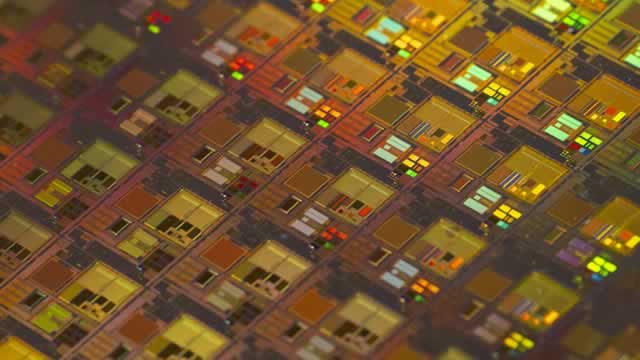
NVDA Could Go Up To $170 In Q1 After Breaching $145 Level As Traders Turn Bullish On Jensen Huang's AI Giant
As Nvidia Corporation NVDA shares closed above the $140 level for the first time in 20 days on Tuesday, traders expect the stock to make new highs if it breaches $145 per share.

Trading expert sets Nvidia (NVDA) stock price for Q1 2025
A stock trading expert highlighted that Nvidia's (NASDAQ: NVDA) stock could reach a new record high in the first quarter of 2025, provided the current cycle surpasses the $145 mark.
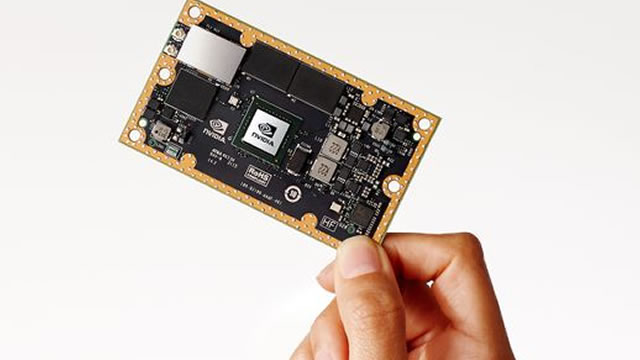
Is Nvidia (NVDA) a Buy as Wall Street Analysts Look Optimistic?
When deciding whether to buy, sell, or hold a stock, investors often rely on analyst recommendations. Media reports about rating changes by these brokerage-firm-employed (or sell-side) analysts often influence a stock's price, but are they really important?
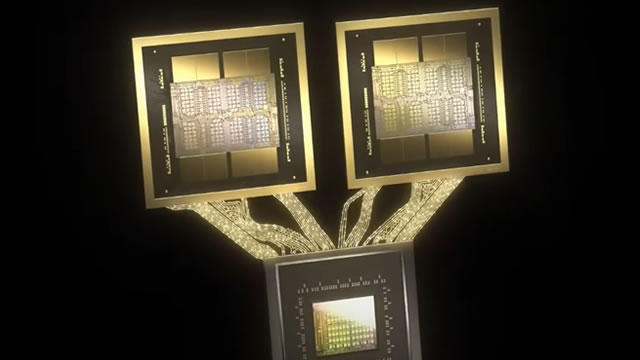
Nvidia's $3 trillion year: How the AI boom propelled the chip giant
Nvidia has had a year that few companies could have predicted, solidifying its position as one of the most influential players in the technology sector.
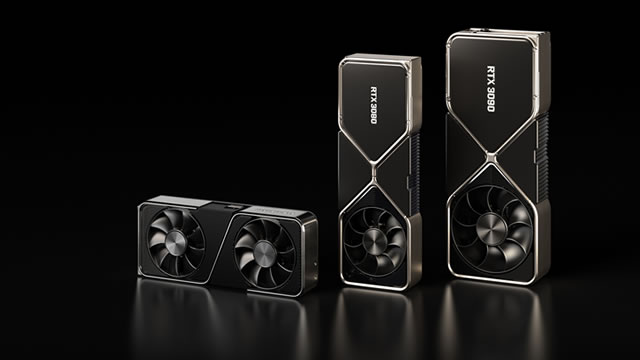
Nvidia sees 'remarkable' influx of retail investor dollars as traders flock to AI darling
Retail traders sent almost $30 billion into Nvidia shares this year on balance, according to Vanda Research. It's the latest honor for the megacap tech stock, which has shown leadership within artificial intelligence that has dazzled both Wall Street and Main Street.
Here's how much Nvidia insiders have sold in 2024
Following Nvidia's (NASDAQ: NVDA) stock red-hot run in 2024, its momentum has coincided with significant insider selling activity.
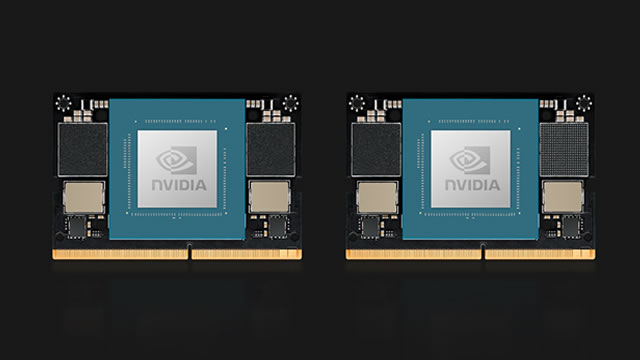
Nvidia Stock Is At Its 50-Day Line. This Trade Gets You Bullish Exposure With Limited Risk.
With Nvidia on the cusp of retaking its 50-day line, is it time to get some bullish exposure? The post Nvidia Stock Is At Its 50-Day Line.




