



NVIDIA Corporation (NVDA)
















Nvidia Stock Investors Got Great News From Elon Musk
Nvidia Stock Investors Got Great News From Elon Musk

Taiwan Semiconductor (TSM) Price Prediction and Forecast
In the high-tech universe, there is a single common road that top-flight companies like Nvidia (NASDAQ: NVDA), Advanced Micro Devices (NASDAQ: AMD), Apple (NASDAQ: AAPL), Qualcomm (NASDAQ: QCOM), Broadcom (NASDAQ: AVGO), and many others must travel to get their chips made, no matter where they hail from. That road inevitably leads to Taiwan Semiconductor Manufacturing Company Ltd. (NYSE: TSM), the largest semiconductor foundry on the planet. When a company like Nvidia designs a new chip, it takes it to Taiwan Semiconductor to actually print the design on a silicon wafer. Taiwan Semiconductor is the top choice for Nvidia, AMD, and many other chip designers, thanks to its precision, quality control, and innovative technical capabilities. At the time of this writing, Taiwan Semiconductor commands over 60% of global spending at chip foundries. The explosion of growth in the artificial intelligence and data center arenas have led to a commensurate demand acceleration for Graphics Processing Unit (GPU) chips and a panoply of similar ones for those fields. By focusing on precision foundry work, Taiwan Semiconductor has become the premier “go-to” player, for chip designers, even among those competing in various sectors. Headwinds and Challenges Taiwan Semiconductor’s biggest threat is from a mainland China invasion of Taiwan, rather than from any market competitors. Despite its crucial place in the semiconductor supply chain, Taiwan Semiconductor is based in Taiwan. Due to claims by The People’s Republic of China’s leadership that Taiwan is a part of China proper, the nation is in a state of perpetual invasion alert. Any overt military action on Taiwanese soil could result in a domino-effect of chip shortages if Taiwan Semiconductor is forced to halt production. Taiwan Semiconductor announced a rise in prices for its 3-nanometer and 5-nm process products by up to 8%. However, Samsung is focusing on its 2-nm process to meet future technologies’ high-performance, low-power, and high-bandwidth requirements, and rival Intel has a 1.4-nm ultra-fine process slated to be unveiled in 2027. The semiconductor industry has historically been cyclical. While AI investment soars, Taiwan Semiconductor has few rivals of significance. During slow periods, semiconductor companies have often been glutted with excess inventory. It remains to be seen how TSM will handle a slowdown after ramping up production to such a high level. Nevertheless, investors are much more concerned with future stock performance over the next 1, 5, to 10 years. Although most Wall Street analysts will calculate 12-month forward projections, it’s clear that nobody has a consistent crystal ball, and plenty of unforeseen circumstances can render even near term prognostications irrelevant. 24/7 Wall Street aims to present some farther looking insights based on Taiwan Semiconductor’s own numbers, along with business and market development information that may be of help to our readers’ own research. Key Points In This Article: Taiwan Semiconductor has control of roughly 62% of the global chip market. For Taiwan, its semiconductor dominance is a good thing, from a national security perspective. Geopolitical observers frequently refer to Taiwan’s semiconductor industry as a “silicon shield” by serving as an incentive for the international community to keep Taiwan out of Beijing’s control. Taiwan Semiconductor’s focus on fabrication precision and its R&D emphasis on miniaturization and efficiency are the main drivers for its huge market share from Nvidia, AMD, Apple, and other chip designers. Aware of its vulnerability to geopolitical destabilization from China, Taiwan Semiconductor has strategically diversified some geographical manufacturing with new US factories in Arizona and Washington, one in Dresden, Germany, and JVs with Sony and Denso in Japan. Apple is hugely dependent on Taiwan Semiconductor, and has been since 2014. Apple announced a deal in 2023 to buy 100% of the output of the most advanced chips from Taiwan Semiconductor in Taiwan (and from its AZ plant in 2024). This move guaranteed that none of Apple’s competitors could acquire similar chips for more than a year. If you’re looking for a megatrend with massive potential, make sure to grab a complimentary copy of our “The Next NVIDIA” report. This report breaks down AI stocks with 10x potential and will give you a huge leg up on profiting from this massive sea change. Tawain Semiconductor News and Updates 11/18/2024 The U.S. Commerce Department has finalized a $6.6 billion subsidy for Tawain Semiconductor to boost semiconductor production in Phoenix, Arizona. This marks the first major award under the $52.7 billion CHIPS and Science Act of 2022. 5 to 10 Year Review Apple Computer procures nearly 100% of its CPUs and other chips from Taiwan Semiconductor. 2014 was the year that the TSM-Apple cooperation began in earnest, with Apple’s A8 and A8X SoCss. Such has the cooperation expanded that Apple has gone to TSM for nearly 100% of its chip requirements by 2024. Opposing patent infringement lawsuits with GlobalFoundries in 2019 eventually settled with a cross-licensing agreement, which ends in 2029. 2020 saw Taiwan Semiconductor prudently decide to diversify its manufacturing by opening up new plants in Phoenix, AZ, and Dresden, Germany. In July 2020, TSM signed a 20-year deal with Ørsted to buy the entire production of two offshore wind farms under development off Taiwan’s west coast. At the time of its signing, it was the world’s largest corporate green energy order ever made. 2021 saw TSM form joint ventures with Sony and Denso in Japan. Fiscal Year (DEC ) Price Total Revenues Net Income NYSE (TWD) (TWD) 2014 $22.38 $762.806 M $254.301 M 2015 $22.75 $843.497 M $302.854 M 2016 $28.75 $947.983 M $331.733 M 2017 $39.65 $977.947 M $344.998 M 2018 $36.91 $1.031,473 B $363.052 M 2019 $58.10 $1.069,985 B $353.948 M 2020 $109.04 $1.339,254 B $510.744 M 2021 $120.31 $1.587,415 B $596.540 M 2022 $74.49 $2.236,891 B $1.016,530 B 2023 $104.00 $2.161,735 B $838.497 M 2024 TTM (Jun ) $173.81 $2.438,416 B $923.042 M Key Drivers for Taiwan Semiconductor’s Future Nvidia’s Jensen Huang is a huge TSM fan, and believes that switching Nvidia’s GPU fabrication to another source would result in lower quality and higher prices. Taiwan Semiconductor expects its 2024 capital expenditure budget to hit $32 billion. 70% to 80% of the budget will be allocated to advanced process technologies, 20% will be directed to specialty technologies, and 10% will be spent on advanced packaging, testing, and mass-making. The Company’s revenue growth should continue to accelerate due to its leading-edge N3 manufacturing node. Taiwan Semiconductor plans to commence its 2-nm process in 2025. Strong demand for chips used in artificial intelligence and cloud storage data center applications from Nvidia, AMD, and others shows no sign of curtailing. Thanks to its uniquely advanced manufacturing capabilities, Taiwan Semiconductor can easily scale for demand acceleration, and holds close to a near monopoly on large GPU chip contracts from major semiconductor designers for AI and data center use, even among competing designers. Total spending on AI chip content and related systems is forecast to reach $193.3 billion in 2027, according to estimates from IDC. That’s up from $117.5 billion this year, translating into an 18% compound annual growth rate over the next three years. Taiwan Semiconductor has national interest and support from the Taiwanese government in maintaining its wide competitive advantage, as the tech industry’s dependence on TSM-made chips incentivizes the international community to keep a China invasion in check. Stock Price Prediction for 2025 The consensus rating for Taiwan Semiconductor from over a dozen Wall Street analysts is “buy”(11 buy, 4 outperform,1 hold). The average price target in 12 months is $210.79, which is roughly 12.72% above the current price. 24/7 Wall Street’s 12-month projection for Taiwan Semiconductors’ price is $183.92, which is –=1.65% below the current price. While Taiwan Semiconductor will start its 2-nm process in 2025, Samsung has a vested interest in developing its own niche advantage and support from the Korean government in that space. As a result, we don’t anticipate as big a 2025 surge from 2-nm as other analysts might. Taiwan Semiconductor’s Next 5 Years’ Outlook Since Taiwan Semiconductor consumes as much as 5% of Taiwan’s entire energy output, its Ørsted wind farm energy production should manifest tangible cost savings benefits. Therefore, we project 2026’s stock price to hit $186.00, a modest .74% year-over-year gain. While its 2-nm process will likely compete favorably at the start against Samsung, the TSM competitive advantage in other avenues of chip manufacturing will ultimately prove to be overwhelming. The anticipated surge of data center spending on chips should fuel larger contracts. Collaborations with research institutions and tech giants in developing next-generation AI chips could open new revenue streams and strengthen its position as an innovation leader in the industry. Our projection for 2027 is $206.80. 2028 should begin to see the rewards from the 2024 R&D surge of $32 billion in advanced process technologies. New products from TSM investments in quantum computing research are expected to bear fruit by 2028, potentially revolutionizing certain computing applications. The company’s focus on developing ultra-low power consumption chips for IoT and edge computing devices could position it as a key player in the growing market for energy-efficient technologies. The 2028 24/7 Wall Street price target is $213.90. 2029 will mark the expiration of Taiwan Semiconductor’s GlobalFoundries cross-licensing agreement, which should double up the revenues from that stream. Further developments in chips for quantum computing, healthcare and other applications can open up more direct government contract opportunities. US and German TSM factories should be operating at full capacity by 2029. We anticipate a price jump to $245.99. Taiwan Semiconductor Stock in 2030 TSM’s work in quantum computing should pave the way for neuromorphic computing chips that can mimic many human brain functions. By 2030, Taiwan Semiconductor’s work in quantum computing should pave the way for neuromorphic computing chips at the forefront of AI applications. These would mimic human brain functions more closely than ever before. The company’s involvement in space exploration projects and renewable energy initiatives may also diversify its revenue streams and enhance its global technological influence. We expect a $254.59 stock price, representing a 36.14% gain over today’s stock price. Year P/E Ratio EPS Price 2025 22 $8.36 $183.92 2026 20 $9.30 $186.00 2027 22 $9.40 $206.80 2028 20 $10.70 $213.90 2029 20 $12.30 $245.99 2030 18 $14.14 $254.59 Want to Retire Early? Start Here (Sponsor) Want retirement to come a few years earlier than you’d planned? Or are you ready to retire now, but want an extra set of eyes on your finances? Now you can speak with up to 3 financial experts in your area for FREE. By simply clicking here you can begin to match with financial professionals who can help you build your plan to retire early. And the best part? The first conversation with them is free. Click here to match with up to 3 financial pros who would be excited to help you make financial decisions. The post Taiwan Semiconductor (TSM) Price Prediction and Forecast appeared first on 24/7 Wall St..

Live Market Updates: Nasdaq Composite Jumps, Tesla Soars Again, Palantir Plummets | TSLA, PLTR
Last night, Nasdaq Futures were up .69% near midnight. However, minutes after the market open, the Nasdaq Composite has seen gains stall. Here’s a check-in of major indexes shortly after market open: Nasdaq Composite: Up 32.48 (+.17%) Dow Jones Industrial Average: Down 30.73 (-.07%) S&P 500: Up 4.25 (+.07%) The reality is that several key issues will shape the market this week, so investors are likely waiting on those to play out before any major movements happen in the market. NVIDIA Earnings: Happen on Wednesday night. NVIDIA is now a bellwether for dozens of stocks in the AI industry, so its earnings will impact the trajectory for the entire technology market. Treasury Nominee: Donald Trump is currently weighing several candidates for the role of Treasury Secretary. The pick will give some insight into how significant a trade war with China could be, so the market is following it closely. Prediction market Polymarket currently has Scott Bessent at a 34% chance, Howard Lutnick at 29%, and Kevin Warsh at 24%. Key Trump allies like Elon Musk have pushed for Howard Lutnick, but many key Wall Street figures have come out against his nomination. Tesla Shares Rallying Tesla (Nasdaq: TSLA) shares are up sharply in morning trading, up 7.33% as of 9:45 a.m. ET. The key catalyst behind Tesla’s move is a report that Donald Trump’s transition team will prioritize a Federal framework for self-driving car regulation. Tesla has bet its future on self-driving, and recently showed off a $30,000 two seat Cybercab. Right now, the company is receiving roughly $1.2 billion in annualized revenue from its self-driving software. However, the release of the Cybercab could turn self-driving into the companies largest revenue contributor. “The Next NVIDIA” Could Change Your Life If you missed out on NVIDIA’s historic run, your chance to see life-changing profits from AI isn’t over. The 24/7 Wall Street Analyst who first called NVIDIA’s AI-fueled rise in 2009 just published a brand-new research report named “The Next NVIDIA.” Click here to download your FREE copy. The post Live Market Updates: Nasdaq Composite Jumps, Tesla Soars Again, Palantir Plummets | TSLA, PLTR appeared first on 24/7 Wall St..

Broadcom (AVGO) Price Prediction and Forecast 2025-2030
The explosive demand for semiconductors and microchips has grabbed news headlines and led the market higher over the past few years. As the drive towards integrating artificial intelligence (AI) into our everyday lives progresses, there are a handful of mega-cap companies that are capable of meeting that demand. And as much NVIDIA Corp. (NASDAQ: NVDA) may get the lion’s share of attention, it is companies like Broadcom Inc. (NASDAQ: AVGO) that will also be playing a central role in supply. The San Jose, Calif.-based company, which was founded in 1961, has been a major player in the tech space for decades. But its business sectors focusing on semiconductors and infrastructure software products have been major catalysts in its market cap pushing toward $1 trillion market capitalization — good for a top 15 among all publicly traded companies. Despite shares of Broadcom gaining over 633.41% in the past five years and 41.18% in 2024, 24/7 Wall Street has performed an analysis that suggests there is still a big-time upside for Broadcom before the end of the decade. Here is where prospective investors and current shareholders might expect the stock to be over the course of the next five years. Key Points in This Article: Broadcom’s history of stellar earnings and strong revenue generation suggests the ability of the company to remain one of the most appealing semiconductor and software stocks. With the burgeoning AI trend and a recent stock split, Broadcom is increasingly appealing and more accessible to investors. If you’re looking for a megatrend with massive potential, make sure to grab a complimentary copy of our “The Next NVIDIA” report. This report breaks down AI stocks with 10x potential and will give you a huge leg up on profiting from this massive sea change. Recent Broadcom News and Updates 11/18/2024 Broadcom experienced a small decline of 0.1% today, trading as low as $162.22. Trading volume was also much lower than average, with only 2,960,294 shares changing hands, a 90% decrease from the usual daily volume. Broadcom’s Recent Stock Success Broadcom’s incredible growth has been reflected in the price of its shares, which have surged since 2014 to the tune of a 3,170% gain. This culminated on July 15, 2024, when the company announced a 10-for-1 stock split that made its shares more accessible to all investors by driving the stock’s price down to $167 at the time. Beyond its role in AI and semiconductors, Broadcom is also a major supplier for Apple Inc. (NASDAQ: AAPL), providing the Magnificent Seven mainstay with critical wireless connectivity components and other hardware. According to the company, Broadcom expects 20% growth in wireless revenue just in the final quarter of 2024. Between its semiconductor, software and smartphone business segments, the stock has experienced sizable growth in the recent past: INSERT TABLE HERE Year Share Price* Revenue** Net Income** 2014 $10.06 $4.244 $1.343 2015 $14.63 $6.897 $2.613 2016 $18.19 $13.269 $4.672 2017 $25.69 $17.656 $7.255 2018 $25.36 $20.805 $9.391 2019 $31.65 $22.548 $9.452 2020 $43.79 $23.858 $9.993 2021 $66.48 $27.403 $12.578 2022 $55.24 $33.169 $16.526 2023 $111.63 $35.798 $18.378 *Post-split adjusted basis , **Revenue and net income in $billions Over the course of the last decade, Broadcom’s revenue grew by more than 743% while its net income increased by over 1,268%. Despite a slight contraction in share price in 2022 during an extended bull market that had an outsized impact on the tech sector, on a post-split adjusted basis, shares of Broadcom have climbed 1,009.64% from 2014 through 2023. As the Silicon Valley mainstay looks towards the second half of the decade, 24/7 Wall Street has identified three key drivers that are likely to positively impact Broadcom’s growth metrics and stock performance through 2030. Key Drivers of Broadcom’s Stock Performance 1. Exceptional Track Record of Earnings and Revenue Beats: Going back to the first quarter of 2015, Broadcom has beaten earnings in every single quarter except one. That is one earnings miss over the course of 39 quarters. Expectations are that the company will continue to beat on earnings and revenue, with a forecast earnings per share (EPS) of $1.39 for the last quarter of 2024. In the third quarter of 2024, the company posted an impressive 17.65% year-over-year EPS gain, which year-over-year total revenue grew from $8.88 billion in July 2023 to $13.07 billion in July 2024 — an increase of 47.18%. 2. Filling the Gap NVIDIA Cannot Satisfy: For investors concerned about NVIDIA’s possible overvaluation or the company’s inability to single-handedly satisfy the explosive AI-driven semiconductor demand, Broadcom is an alternative that at current prices could be considered a bargain. In September, Barchart.com reported that the “stock looks deeply undervalued … based on its strong revenue, free cash flow, FCF margin, management guidance and analysts’ price targets.” Specifically, that free cash flow has grown markedly between FY 2019 to FY 2023, from $9.27 billion to $17.63 billion good for an increase of over 90%. As demand for semiconductors and microchips continues to grow, Broadcom has an abundance of cash ready to be deployed in order to match that growth. 3. Institutional Ownership: Broadcom is beloved by institutional investors, of which there are 3,382. Of the company’s 4.671 billion shares outstanding, a staggering 3.537 billion of them are held by institutional investors, according to Nasdaq.com. That accounts for 75.74% of the company’s entire stock. The top three largest holders are Vanguard Group with 448 million shares followed by BlackRock at 342 million and Capital World Investors with 224 million shares. Together, those three positions account for $175.432 million in share value. And in the past year, 1,760 institutional investors increased their positions. Broadcom (AVGO) Price Prediction in 2025 The current consensus median one-year price target for Broadcom is $195, representing a potential upside of 17.73% over the next 12 months. Of all the analysts covering Broadcom, the stock is a consensus buy, with a 1.43 ‘Buy’ rating on a scale from 1 (‘Strong Buy’) to 5 (‘Strong Sell’). By the end of 2025, 24/7 Wall Street‘s forecast for AVGO shares is $204.27, representing a 23.33% potential upside based on an EPS of $6.19 and a PE ratio of 33. Broadcom (AVGO) Stock Forecast Through 2030 Year Revenue* EPS 2025 $60.492 $6.19 2026 $67.906 $7.29 2027 $75.850 $8.82 2028 $85.222 $11.94 2029 $84.920 $14.93 2030 $86.618 $18.66 *Revenue and net income in $billions How Broadcom’s Next Five Years Could Play Out At the end of 2025, we forecast Broadcom’s stock to be trading for $204.27 based on revenue of $60.492 billion, a net income of $34.224 billion, and an EPS of $6.19. The following year, we estimate earnings per share of $7.29 on over $67 billion in revenue. Starting in 2027 through 2029, we expect a 13% growth in revenue and a 40% jump in earnings per share, bringing Broadcom’s price target from $238.14 in 2027 to $373.13 in 2029. Broadcom’s Price Target for 2030 By the conclusion of 2030, 24/7 Wall Street estimates Broadcom’s stock will trade at $429.09, representing a 159.07% increase from its current price, based on revenue of $86.618 billion and an EPS of $18.66. Year Price Target 2025 $204.27 2026 $196.83 2027 $238.14 2028 $322.38 2029 $373.13 2030 $429.09 Take This Retirement Quiz To Get Matched With An Advisor Now (Sponsored) Are you ready for retirement? Planning for retirement can be overwhelming, that’s why it could be a good idea to speak to a fiduciary financial advisor about your goals today. Start by taking this retirement quiz right here from SmartAsset that will match you with up to 3 financial advisors that serve your area and beyond in 5 minutes. Smart Asset is now matching over 50,000 people a month. Click here now to get started. The post Broadcom (AVGO) Price Prediction and Forecast 2025-2030 appeared first on 24/7 Wall St..

NVIDIA (NVDA) Price Prediction and Forecast
The artificial intelligence-fueled rally has been the foremost contributor to the major market indices’ sizable gains over the past several years. And one company in particular is at the vanguard: NVIDIA Corp. (NASDAQ: NVDA). NVIDIA is the premier manufacturer of components critical to the surge in AI; namely, semiconductors, microchips, and graphics processing units (GPUs).ca As a result, the Santa Clara, Calif.-based company has seen its stock skyrocket in the recent past. Since the first day the market opened in 2023, shares have gained 871.80%, and in the decade from August 2014 to the present, they are up a preposterous 30108.51%. In June 2024, NVIDIA underwent its sixth stock split, further fueling demand for its shares as the company surged upward and is now the second largest by market cap. Despite those mind-boggling gains, analysts still expect enormous upside potential in the medium and long term. 24/7 Wall Street has performed analysis to provide prospective investors and current shareholders with an idea of where NVIDIA’s stock might be headed over the course of the next five years. Key Points in This Article: NVIDIA’s track record of strong earnings suggests an ability to remain at the forefront of its industry, as competitors fight for the leftovers. Between NVIDIA’s client list of Magnificent Seven companies and the burgeoning trend in AI, growth in both revenue and net income is projected to continue its steep climb. If you’re looking for a megatrend with massive potential, make sure to grab a complimentary copy of our “The Next NVIDIA” report. This report breaks down AI stocks with 10x potential and will give you a huge leg up on profiting from this massive sea change. NVIDIA News and Updates 11/18/2024 When installed in high-capacity server racks, Nvidia’s next-generation Blackwell data center processors overheat. This has led to the need to redesign the server racks, which in turn could potentially delay shipping for the processors. If the redesign and shipping of the processors do not occur on time, Nvidia’s major customers (Google, Microsoft, Meta, etc.) will be forced to delay their own timelines. 11/15/2024 As Nvidia prepares to release its earnings report next week, several top analysts have increased their price targets for the company. HSBC’s Frank Lee has been the most optimistic, raising his target to $200, implying a potential 36.78% upside. Susquehanna’s Christopher Rolland and Oppenheimer’s Rich Schafer also increased their targets to $180 and $175, respectively. In contrast, Raymond James’ Srini Pajjuri lowered his target to $170, although he still views any potential dip in Nvidia’s stock price as a buying opportunity. 11/14/2024 Nvidia is scheduled to report its third-quarter financial results a week from today. Analysts predict a rise of 82% year-over-year in sales to $33.04 billion and an earnings increase to 75 cents a share. The Susquehanna Financial Group raised its price target for Nvidia from 160 to 180. 11/12/2024 Nvidia’s stock price increased today following a positive analyst report from Mizuho. The firm raised its price target for the company to $165 from $140. This bullish sentiment has contributed to Nvidia’s stock price nearing recent record highs. 11/11/2024 Melius Research increased its price target for Nvidia to $185.00 (previously $165.00), with a “Buy” rating on the stock. 11/8/2024 Nvidia has officially joined the Dow Jones Industrial Average. Nvidia’s stock price has risen by about 9% this week, surpassing Apple as the world’s most valuable company. 11/7/2024 The Federal Reserve delivered a 25 basis point interest rate cut today, bringing its benchmark rate down to a range of 4.5% to 4.75%. The market reacted positively to the news, with shares of Nvidia hitting new all-time highs. 11/6/2024 Several stocks surged on Wall Street today following the U.S. presidential election. Nvidia hit a record high, solidifying its position as the world’s most valuable company with a market capitalization of $3.58 trillion. 11/5/2024 Nvidia has claimed its position as the world’s most valuable publicly traded company, surpassing Apple. This surge in valuation is the result of an unprecedented demand for the company’s high-performance graphics processing units (GPUs), which are essential for powering artificial intelligence and machine learning applications. 11/4/2024 Nvidia will be added to the Dow Jones Industrial Average, replacing Dow Inc. (DOW), effective before the market opens on November 8th. NVIDIA’s Recent Stock Success Unless you have been living under a rock, chances are you have caught wind of the very well-documented and rather exponential surge in NVIDIA’s share price since 2022. But before 2022’s price-per-share explosion, it was steadily appreciating as it underwent a series of stock splits. Year Share Price* Revenue** Net Income** 2014 $0.51 $4.130 $0.588 2015 $0.82 $4.681 $0.800 2016 $2.67 $5.010 $0.929 2017 $4.88 $6.910 $1.851 2018 $3.24 $9.714 $3.085 2019 $5.98 $11.716 $4.143 2020 $13.06 $10.918 $3.580 2021 $29.64 $16.675 $6.277 2022 $14.61 $26.914 $11.259 2023 $49.52 $26.974 $8.366 *Post-split adjusted basis **Revenue and net income in $billions Over the course of the last decade, NVIDIA’s revenue grew by more than 553% while its net income increased by just over 1,323%. The company experienced a slight contraction in revenue and net income in 2020 due to the COVID-19 pandemic, but it rebounded soundly the following year and has continued to steadily grow both metrics since. Meanwhile, shares were able to increase by 9,610% from 2014 to 2023. As the AI lynchpin looks forward to the second half of the decade, 24/7 Wall Street has identified three key drivers that are likely to impact its growth metrics and stock performance through 2030. Key Drivers of NVIDIA’s Stock Performance Stronghold on the GPU Industry: No one makes GPUs like Nvidia makes GPUs, and the industry demanding them is well aware of that. While semiconductor competitors like Advanced Micro Devices Inc. (NASDAQ: AMD) and Taiwan Semiconductor Manufacturing Company Ltd. (NYSE: TSM) do command some attention in their respective corners of the market, simply comparing the three companies’ market caps demonstrates the discrepancies between NVIDIA and, well, every other company. While Advanced Micro Devices and Taiwan Semiconductor Manufacturing have respectable market caps of $226.36 billion and $826.62 billion, respectively, those are dwarfed by NVIDIA’s $3.45 trillion. Demand From Unrivaled Tech Customers: The company’s primary clientele are the other members of the Magnificent Seven, which are leading the way forward in the AI revolution. In fact, only four Big Tech rival companies — Alphabet Inc. (NASDAQ: GOOGL), Amazon.com Inc. (NASDAQ: AMZN), Meta Platforms Inc. (NASDAQ: META), and Microsoft Corp. (NASDAQ: MSFT) — account for 40% of NVIDIA’s revenue as they vie with one another to become the front runner of the transition to generative AI. The AI Trend Is Just Getting Started: According to Grand View Research, the market size of AI in 2023 was $196.63 billion. As large as that seems, it pales in comparison to where the market is headed. From 2024 to 2030, it is expected that the industry will grow at an astounding compound annual growth rate (CAGR) of 36.6%, with “continuous research and innovation directed by tech giants [that] are driving adoption of advanced technologies in industry verticals, such as automotive, healthcare, retail, finance, and manufacturing,” according to Grand View Research’s report. NVIDIA (NVDA) Price Prediction in 2025 The current consensus median one-year price target for NVIDIA, according to analysts, is $150.00, which represents a nearly 5.65% potential upside over the next 12 months based on the current share price of $141.98. Of all the analysts covering NVIDIA, the stock is a consensus buy, with a 1.3 ‘Buy’ rating on a scale from 1 (‘Strong Buy’) to 5 (‘Strong Sell’). However, by the end of 2025, 24/7 Wall Street‘s forecast projects shares of NVIDIA to be trading for $137.50 based on a projected EPS of $2.75 and a price-to-earnings (P/E) ratio of 50, with a best-case scenario of $192.50 per share and a worst-case scenario of $82.50 per share. NVIDIA (NVDA) Stock Forecast Through 2030 Year Revenue* Net Income* EPS 2025 $121.255 $68.392 $2.75 2026 $168.151 $95.246 $3.83 2027 $193.852 $108.182 $4.44 2028 $225.462 $130.155 $5.28 2029 $236.498 $152.001 $6.16 2030 $265.522 $175.412 $7.24 *Revenue and net income in $billions How NVIDIA’s Next Five Years Could Play Out At the end of 2025, we expect to see revenue, net income and EPS rise 99%, 111.66% and 111.54%, respectively. That would result in a share price of $137.50, or -3.16% higher than where the stock is currently trading. Our high-end price target is $192.50, while our low-end price target is $82.50. When 2026 concludes, we forecast NVIDIA’s revenue to be $168.151 billion resulting in a net income of $95.246 billion. That year would end with a per-share price of $191.50, representing a gain of 34.88% compared to its share price today. Our high-end price target is $268.10, while our low-end price target is $114.90. When 2027 concludes, we forecast NVIDIA’s revenue to be $193.85 billion resulting in a net income of $108.182 billion. That year would end with a per-share price of $222.00, representing a gain of 56.36% compared to its share price today. Our high-end price target is $310.80, while our low-end price target is $133.20. When 2028 concludes, we forecast NVIDIA’s revenue to be $225.462 billion resulting in a net income of $130.155 billion. That year would end with a per-share price of $264.00, representing a gain of 85.94% compared to its share price today. Our high-end price target is $369.60, while our low-end price target is $158.40. When 2029 concludes, we forecast NVIDIA’s revenue to be $236.498 billion resulting in a net income of $152.001 billion. That year would end with a per-share price of $308.00, representing a gain of 116.93% compared to its share price today. Our high-end price target is $431.20, while our low-end price target is $184.40. NVIDIA Stocks Price Target for 2030 By the conclusion of 2030, 24/7 Wall Street estimates that NVIDIA’s stock will be trading for $362.00, good for a 154.97% increase over today’s share price, based on an EPS of $7.24 and a P/E ratio of 50. Our high-end price target is $506.80 based on an EPS of $7.24 and a P/E ratio of 70. Meanwhile, our low-end price target is $217.20 based on an EPS of $7.24 and a P/E ratio of 30. Year Price Target % Change From Current Price 2025 $137.50 -3.16% 2026 $191.50 34.88% 2027 $222.00 56.36% 2028 $264.00 85.94% 2029 $308.00 116.93 2030 $362.00 154.97% Want to Retire Early? Start Here (Sponsor) Want retirement to come a few years earlier than you’d planned? Or are you ready to retire now, but want an extra set of eyes on your finances? Now you can speak with up to 3 financial experts in your area for FREE. By simply clicking here you can begin to match with financial professionals who can help you build your plan to retire early. And the best part? The first conversation with them is free. Click here to match with up to 3 financial pros who would be excited to help you make financial decisions. The post NVIDIA (NVDA) Price Prediction and Forecast appeared first on 24/7 Wall St..
Nvidia Stock Has Done This After Its Last Four Quarterly Results. Here's What It May Do After Nov. 20
Nvidia Stock Has Done This After Its Last Four Quarterly Results. Here's What It May Do After Nov. 20
Jim Cramer on why Nvidia investors shouldn't overreact to the latest Blackwell report
'Mad Money' host Jim Cramer looks at the recent move down in Nvidia.
Jim Cramer weighs Nvidia stock after report of Blackwell AI chip overheating
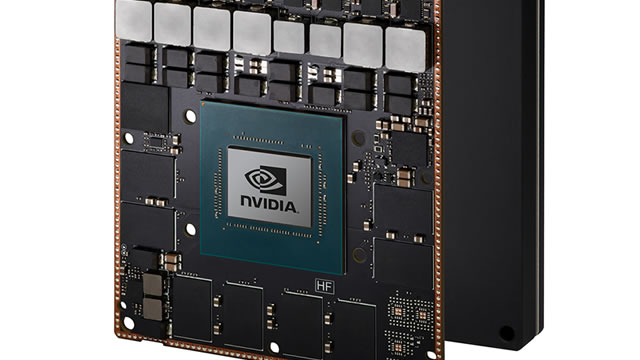
CNBC's Jim Cramer discussed the stock of Nvidia in light of a report that the artificial intelligence darling is having overheating problems with servers for its newest graphics chips. The Information reported that Nvidia's AI Blackwell chips overheat when connected to custom servers, and it had asked suppliers to change server rack designs several times.

Markets Mixed Monday: NVIDIA Forecast and More
Markets are back to seeing a post-election stock market reducing regulations and letting valuations ride higher.
Nvidia's Blackwell chip overheats ahead of Q3 earnings
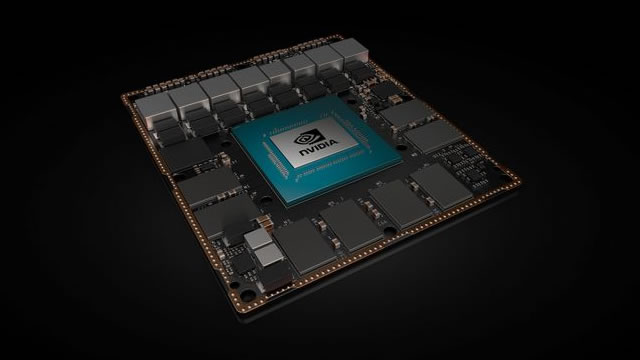
Nvidia (NVDA) shares fall following reports of overheating issues with its Blackwell chips, ahead of the company's third-quarter earnings report this Wednesday. Rosenblatt Securities senior research analyst Hans Mosesmann joins Market Domination Co-hosts Julie Hyman and Josh Lipton to share that some of the headwinds Nvidia is facing stem from the company's push to advance technology at a faster pace than the supply chain can support.
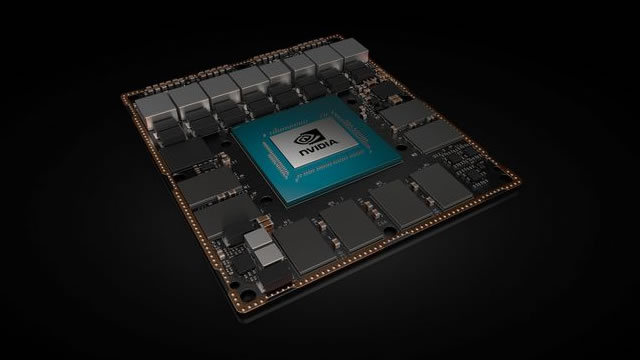
Melius' Ben Reitzes looks ahead to Nvidia earnings
Ben Reitzes, Melius Research Head of Technology Research, joins 'Closing Bell Overtime' to talk what to expect from Nvidia earnings.
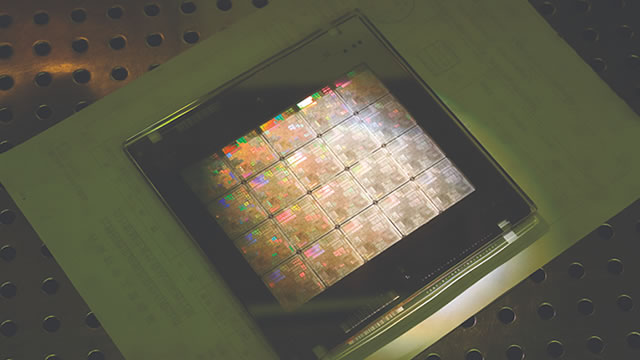
Nvidia Q3 Preview: This Is The Big Quarter
Nvidia Corporation's stock has surged 31.32% driven by optimism around the Blackwell GPU, but I believe this enthusiasm is overly optimistic and exposes valuation risks. The Blackwell GPU faces overheating issues in server configurations, complicating its adoption and potentially increasing costs for hyperscalers, which could impact Nvidia's sales. Despite upward revisions for Q3 earnings, Nvidia's high valuation and reliance on Blackwell's success make its current stock price unsustainable, warranting a strong sell recommendation.




