



NVIDIA Corporation (NVDA)















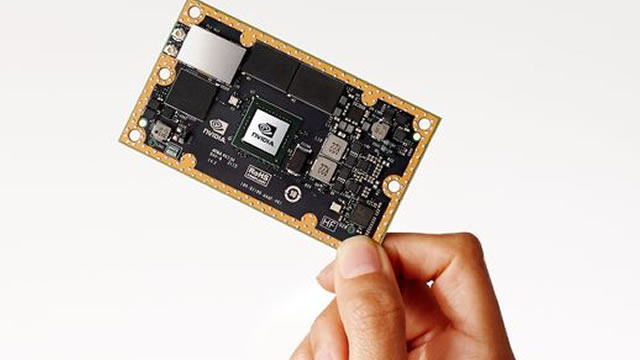
Analysts revise Nvidia stock price targets
In a year dominated by hype surrounding the potential of artificial intelligence, no company has made out better than semiconductor industry leader Nvidia (NASDAQ: NVDA).
Nvidia Set For Gains From AI Cloud Demand, Blackwell Launch, And Data Center Expansion: Analyst
Oppenheimer analyst Rick Schafer maintained Nvidia Corp NVDA with an Outperform rating and raised the price target from $150 to $175.
Wall Street Stays Bullish On Nvidia Ahead Of Earnings. Can the AI Titan Outdo Itself Again?
IBD's Alexis Garcia and Ed Carson preview key upcoming earnings reports from Nvidia, Palo Alto Networks and Walmart. New to trading?

Nvidia Stock Could Soar Between 10% and 28%, According to Select Wall Street Analysts. Is the Stock a Buy Before Nov. 20?
Analysts from UBS and Morgan Stanley just raised their price targets on Nvidia stock.
Meet the Supercharged Growth Stock That Could Make You a Millionaire
Nvidia is now targeting one of the most underserved markets to boost sales even more.

Will Nvidia Be a $5 Trillion Stock by 2028?
Can the world's largest company deliver more upside and get to this milestone?

1 Wall Street Analyst Says Nvidia Is a "Must Own" Because of This "Once-in-a-Lifetime Opportunity"
Investors will be kicking themselves if they miss the chipmaker's next phase of growth.
This Is the Biggest Threat to Nvidia's Artificial Intelligence (AI) Dominance That Virtually No One Is Talking About
Nvidia's biggest headwind is right under its nose.

Where Are They Now? 15 Countries That Were Once Part of the Soviet Union
It’s been 33 years now since the Soviet Union collapsed in 1991 into 15 separate countries. And what a ride it’s been. The West has reaped the fruits of the USSR’s loss, expanding NATO to take in all of Scandinavia and most of Eastern Europe. However, the economic and political situation in the former Soviet republics themselves remains fraught, in large part because Russia still considers these countries to be its own sphere of influence. Read on for stats on each of them to get up to date. 24/7 Wall St. Insights The former Soviet republics have made uneven economic progress. Much of the new development is concentrated in a few urban centers. Russian troops remain in several of these countries and have intervened militarily to make sure they stay as much under Moscow’s control as possible. Check out: 2 Dividend Legends To Hold Forever and Discover “The Next NVIDIA How Did the Russian Empire Get So Big? The core of Russia was the principality of Muscovy—what is today the city of Moscow. From the 13th-19th centuries, it expanded in all directions until it stretched from Eastern Europe across northern Asia to the Pacific Ocean, and over into Alaska in North America. It was able to expand most easily toward the east because the land there was thinly populated by tribes with lower levels of technology. The Soviet Republics A communist revolution in 1917 was followed by a civil war. Once the Red Army prevailed, the country was reorganized into the Soviet Union in 1922. The leadership wanted the largest nationalities to have their own “republics” and feel some sense of autonomy, but still be controlled by Moscow. The borders of the republics roughly followed where ethnic groups had settled without regard for geography. In some cases, as in the strange interlocking borders of Tajikistan, Kyrgyzstan, and Uzbekistan in the Fergana Valley, the Soviets created situations that caused conflict between the republics, preventing any of them from growing too powerful and making them more dependent on Moscow to keep the peace. What Caused the Soviet Union to Collapse? With an economy only about 1/3 the size of the United States, the Soviet Union engaged in an arms race during the Cold War that prevented them from investing as much as they should have in civilian infrastructure. That, and the inefficiency, corruption, and negative market results of centralized economic planning, caused the USSR to fall well behind. Mikhail Gorbachev came to power and tried to save the system by allowing greater economic and social freedom. This ultimately failed and resulted in the loss of all of the USSR’s allies and the breakup of the country itself into 15 independent nations. Will Russia Split up Next? There is a possibility that Russia itself could split up into more than one country. Most of its development is concentrated in the wealthy cities of the European part of the country, particularly Moscow and St. Petersburg. During the war with Ukraine, Russia has drafted men into the army disproportionately from distant and ethnically non-Russian parts of the country to hide from the urban population the human cost of the war to Russia. Sakha, Chechnya, Dagestan, and Tatarstan are some of the areas that could become new countries. This would only happen if the Russian government was too weak to prevent it, such as in a severe economic crisis or military defeat. 1. Armenia 2023 GDP: $19 billion Russian troops present: 2,000 Successes: Armenia has a large diaspora in western countries that significantly help the country’s international economic and diplomatic relationships. Failures: It has had military clashes with arch-rival Azerbaijan over control of Nagorno-Karabakh, an Armenian region inside Azerbaijan’s borders. Russian troops are present in a peacekeeping role, which compromises the independence of both countries. 2. Azerbaijan 2023 GDP: $77 billion Russian troops present: 2,000 Successes: The country exports petroleum, giving it substantial profits. Failures: Democracy is threatened by a tendency toward strongman rule, corruption, and civil liberties issues. 3. Belarus 2023 GDP: $72 billion Russian troops present: 8,000 Successes: Belarus has maintained its independence from the countries of the Western alliance, so it has not angered its giant neighbor Russia. Failures: It is one of the last dictatorships in Europe and endures sanctions and economic isolation because of its alliance with Russia. It is functionally a Russian puppet state. 4. Estonia 2023 GDP: $44 billion Russian troops present: none Successes: Estonia joined NATO, giving it excellent military protection and access to western markets, technology, and investment. Failures: It is now a NATO/Russia border state, subject to efforts at subversion by Russia and on the front lines of any future war. 5. Georgia 2023 GDP: $25 billion Russian troops present: 10,000 Successes: Georgia has maintained its independence and made progress toward stability as a democracy. It aspires to becoming a member of NATO and the EU. Failures: Georgia’s westward orientation troubles Moscow. The Russians invaded and occupied two regions: Abkhazia and South Ossetia and are in position to take over all of Georgia in the future if they wanted to. 6. Kazakhstan 2023 GDP: $256 billion Russian troops present: None. Successes: Kazakhstan exports oil and hosts the training and launch site for the Russian space program. The country built a new capital more centrally located. Failures: With an enormous Russian population and long borders with Russia, Kazakhstan has little choice but to align itself with Russia while still trying to maintain its independence. 7. Kyrgystan 2023 GDP: $11 billion Russian troops present: 500 Successes: Kyrgyzstan opened its air base to the United States and coalition countries fighting in Afghanistan. This was an important strategic move that put the country on the map for western powers. Failures: Remote and isolated, Kyrgyzstan has a struggling economy and has been politically unstable. Russian troops guard the air base in the country, but this also puts Russia in a position to intervene if it doesn’t like the direction the government takes. 8. Latvia 2023 GDP: $42 billion Russian troops present: None. Successes: Latvia has become a full-scale democracy and has prospered economically since independence. It is a member of NATO and the EU. Failures: The country has a large ethnic Russian minority the government needs to avoid provoking so that Moscow doesn’t get ideas of intervening. It also has had to manage cyberattacks from Russian-backed hackers. 9. Lithuania 2023 GDP: $66 billion Russian troops present: None. Successes: Like Estonia and Latvia, Lithuania has been able to establish a strong democratic government and a market economy, and is securely integrated into NATO and the EU. Failures: Lithuania has to contend with the Russian enclave of Kaliningrad to its west and the Russian puppet state of Belarus to its east. Its security situation on the ground is not good if NATO does not hold its ground and maintain a strong and credible military deterrent. 10. Moldova 2023 GDP: $16 billion Russian troops present: 1,500 Successes: Moldova has been able to maintain its independence and position itself as a net exporter of agricultural products. Failures: The region of Transnistria has declared independence and 1,500 Russian troops are occupying that region to support them. As long as such a territorial dispute exists, Moldova will not be able to join western defense and economic structures. 11. Russia 2023 GDP: $2.3 trillion Russian troops present: 1.5 million plus 2 million reserves Successes: Russia managed to hold on to its own territory, attract foreign investment, and recover enough to create a wealthy middle class and begin modernizing infrastructure and the military. Failures: The country allowed Vladimir Putin to consolidate power, restrict civil liberties, control the press and influence the public with propaganda, and intervene violently in neighboring countries. The invasion of Ukraine significantly set back Russia’s situation, causing Sweden and Finland to join NATO and Western countries to impose harsh sanctions and arm Ukraine with increasingly lethal weaponry. Ukraine’s side of the war is being financed partially with Russia’s own assets that were frozen in international banks due to sanctions. 12. Tajikistan 2023 GDP: $10 billion Russian troops present: 7,000 Successes: Tajikistan managed not to get dragged into the war in neighboring Afghanistan, and it has been able to maintain its own territorial integrity. Failures: The country is remote and poverty-stricken. It went through a brutal civil war from 1992-1997. Russian troops remain in the country to keep peace, and retain controlling influence in Tajikistan. 13. Turkmenistan 2023 GDP: $50 billion Russian troops present: None. Successes: Turkmenistan has large deposits of natural gas that drive its economy and have enabled some grandiose construction projects. Failures: The country does not have a diversified economy, is under dictatorial rule, and represses its citizens. 14. Ukraine 2023 GDP: $200 billion Russian troops present: 100,000 Successes: The country has withstood opposition to stay on a westernized political and economic path. It has aspirations to join NATO and the EU. Failures: Russia invaded Ukraine and began taking its territory in 2014, intensifying to a full-scale war in 2022. Ukraine has been able marshal tremendous global support to isolate Russia economically and diplomatically and has received hundreds of billions of dollars in assistance. This has not been enough, though, to break the battlefield stalemate they have with the Russians. 15. Uzbekistan 2023 GDP: $90 billion Russian troops present: None. Successes: Uzbekistan is one of the most populous countries of Central Asia and a political, economic, and cultural leader in the region. Failures: The economy is heavily dependent on a few income streams, such as cotton. Uzbekistan also has come under criticism for not protecting its citizens’ civil rights in areas such as religion or political dissent. Take This Retirement Quiz To Get Matched With An Advisor Now (Sponsored) Are you ready for retirement? Planning for retirement can be overwhelming, that’s why it could be a good idea to speak to a fiduciary financial advisor about your goals today. Start by taking this retirement quiz right here from SmartAsset that will match you with up to 3 financial advisors that serve your area and beyond in 5 minutes. Smart Asset is now matching over 50,000 people a month. Click here now to get started. The post Where Are They Now? 15 Countries That Were Once Part of the Soviet Union appeared first on 24/7 Wall St..

Taiwan Semiconductor (TSM) Price Prediction and Forecast
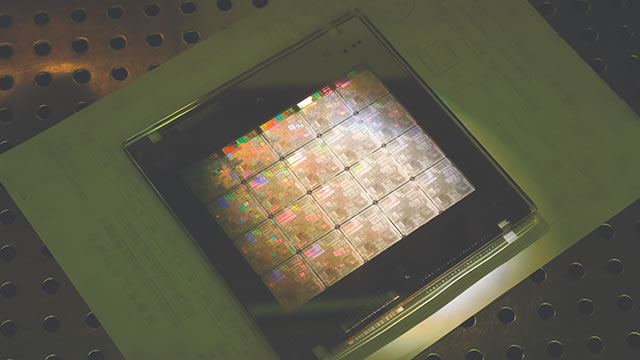
In the high-tech universe, there is a single common road that top-flight companies like Nvidia (NASDAQ: NVDA), Advanced Micro Devices (NASDAQ: AMD), Apple (NASDAQ: AAPL), Qualcomm (NASDAQ: QCOM), Broadcom (NASDAQ: AVGO), and many others must travel to get their chips made, no matter where they hail from. That road inevitably leads to Taiwan Semiconductor Manufacturing Company Ltd. (NYSE: TSM), the largest semiconductor foundry on the planet. When a company like Nvidia designs a new chip, it takes it to Taiwan Semiconductor to actually print the design on a silicon wafer. Taiwan Semiconductor is the top choice for Nvidia, AMD, and many other chip designers, thanks to its precision, quality control, and innovative technical capabilities. At the time of this writing, Taiwan Semiconductor commands over 60% of global spending at chip foundries. The explosion of growth in the artificial intelligence and data center arenas have led to a commensurate demand acceleration for Graphics Processing Unit (GPU) chips and a panoply of similar ones for those fields. By focusing on precision foundry work, Taiwan Semiconductor has become the premier “go-to” player, for chip designers, even among those competing in various sectors. Headwinds and Challenges Taiwan Semiconductor’s biggest threat is from a mainland China invasion of Taiwan, rather than from any market competitors. Despite its crucial place in the semiconductor supply chain, Taiwan Semiconductor is based in Taiwan. Due to claims by The People’s Republic of China’s leadership that Taiwan is a part of China proper, the nation is in a state of perpetual invasion alert. Any overt military action on Taiwanese soil could result in a domino-effect of chip shortages if Taiwan Semiconductor is forced to halt production. Taiwan Semiconductor announced a rise in prices for its 3-nanometer and 5-nm process products by up to 8%. However, Samsung is focusing on its 2-nm process to meet future technologies’ high-performance, low-power, and high-bandwidth requirements, and rival Intel has a 1.4-nm ultra-fine process slated to be unveiled in 2027. The semiconductor industry has historically been cyclical. While AI investment soars, Taiwan Semiconductor has few rivals of significance. During slow periods, semiconductor companies have often been glutted with excess inventory. It remains to be seen how TSM will handle a slowdown after ramping up production to such a high level. Nevertheless, investors are much more concerned with future stock performance over the next 1, 5, to 10 years. Although most Wall Street analysts will calculate 12-month forward projections, it’s clear that nobody has a consistent crystal ball, and plenty of unforeseen circumstances can render even near term prognostications irrelevant. 24/7 Wall Street aims to present some farther looking insights based on Taiwan Semiconductor’s own numbers, along with business and market development information that may be of help to our readers’ own research. Key Points In This Article: Taiwan Semiconductor has control of roughly 62% of the global chip market. For Taiwan, its semiconductor dominance is a good thing, from a national security perspective. Geopolitical observers frequently refer to Taiwan’s semiconductor industry as a “silicon shield” by serving as an incentive for the international community to keep Taiwan out of Beijing’s control. Taiwan Semiconductor’s focus on fabrication precision and its R&D emphasis on miniaturization and efficiency are the main drivers for its huge market share from Nvidia, AMD, Apple, and other chip designers. Aware of its vulnerability to geopolitical destabilization from China, Taiwan Semiconductor has strategically diversified some geographical manufacturing with new US factories in Arizona and Washington, one in Dresden, Germany, and JVs with Sony and Denso in Japan. Apple is hugely dependent on Taiwan Semiconductor, and has been since 2014. Apple announced a deal in 2023 to buy 100% of the output of the most advanced chips from Taiwan Semiconductor in Taiwan (and from its AZ plant in 2024). This move guaranteed that none of Apple’s competitors could acquire similar chips for more than a year. If you’re looking for a megatrend with massive potential, make sure to grab a complimentary copy of our “The Next NVIDIA” report. This report breaks down AI stocks with 10x potential and will give you a huge leg up on profiting from this massive sea change. 5 to 10 Year Review Apple Computer procures nearly 100% of its CPUs and other chips from Taiwan Semiconductor. 2014 was the year that the TSM-Apple cooperation began in earnest, with Apple’s A8 and A8X SoCss. Such has the cooperation expanded that Apple has gone to TSM for nearly 100% of its chip requirements by 2024. Opposing patent infringement lawsuits with GlobalFoundries in 2019 eventually settled with a cross-licensing agreement, which ends in 2029. 2020 saw Taiwan Semiconductor prudently decide to diversify its manufacturing by opening up new plants in Phoenix, AZ, and Dresden, Germany. In July 2020, TSM signed a 20-year deal with Ørsted to buy the entire production of two offshore wind farms under development off Taiwan’s west coast. At the time of its signing, it was the world’s largest corporate green energy order ever made. 2021 saw TSM form joint ventures with Sony and Denso in Japan. Fiscal Year (DEC ) Price Total Revenues Net Income NYSE (TWD) (TWD) 2014 $22.38 $762.806 M $254.301 M 2015 $22.75 $843.497 M $302.854 M 2016 $28.75 $947.983 M $331.733 M 2017 $39.65 $977.947 M $344.998 M 2018 $36.91 $1.031,473 B $363.052 M 2019 $58.10 $1.069,985 B $353.948 M 2020 $109.04 $1.339,254 B $510.744 M 2021 $120.31 $1.587,415 B $596.540 M 2022 $74.49 $2.236,891 B $1.016,530 B 2023 $104.00 $2.161,735 B $838.497 M 2024 TTM (Jun ) $173.81 $2.438,416 B $923.042 M Key Drivers for Taiwan Semiconductor’s Future Nvidia’s Jensen Huang is a huge TSM fan, and believes that switching Nvidia’s GPU fabrication to another source would result in lower quality and higher prices. Taiwan Semiconductor expects its 2024 capital expenditure budget to hit $32 billion. 70% to 80% of the budget will be allocated to advanced process technologies, 20% will be directed to specialty technologies, and 10% will be spent on advanced packaging, testing, and mass-making. The Company’s revenue growth should continue to accelerate due to its leading-edge N3 manufacturing node. Taiwan Semiconductor plans to commence its 2-nm process in 2025. Strong demand for chips used in artificial intelligence and cloud storage data center applications from Nvidia, AMD, and others shows no sign of curtailing. Thanks to its uniquely advanced manufacturing capabilities, Taiwan Semiconductor can easily scale for demand acceleration, and holds close to a near monopoly on large GPU chip contracts from major semiconductor designers for AI and data center use, even among competing designers. Total spending on AI chip content and related systems is forecast to reach $193.3 billion in 2027, according to estimates from IDC. That’s up from $117.5 billion this year, translating into an 18% compound annual growth rate over the next three years. Taiwan Semiconductor has national interest and support from the Taiwanese government in maintaining its wide competitive advantage, as the tech industry’s dependence on TSM-made chips incentivizes the international community to keep a China invasion in check. Stock Price Prediction for 2025 The consensus rating for Taiwan Semiconductor from over a dozen Wall Street analysts is “buy”(11 buy, 4 outperform,1 hold). The average price target in 12 months is $210.79, which is roughly 12.66% above the current price. 24/7 Wall Street’s 12-month projection for Taiwan Semiconductors’ price is $183.92, which is -1.70% below the current price. While Taiwan Semiconductor will start its 2-nm process in 2025, Samsung has a vested interest in developing its own niche advantage and support from the Korean government in that space. As a result, we don’t anticipate as big a 2025 surge from 2-nm as other analysts might. Taiwan Semiconductor’s Next 5 Years’ Outlook Since Taiwan Semiconductor consumes as much as 5% of Taiwan’s entire energy output, its Ørsted wind farm energy production should manifest tangible cost savings benefits. Therefore, we project 2026’s stock price to hit $186.00, a modest .74% year-over-year gain. While its 2-nm process will likely compete favorably at the start against Samsung, the TSM competitive advantage in other avenues of chip manufacturing will ultimately prove to be overwhelming. The anticipated surge of data center spending on chips should fuel larger contracts. Collaborations with research institutions and tech giants in developing next-generation AI chips could open new revenue streams and strengthen its position as an innovation leader in the industry. Our projection for 2027 is $206.80. 2028 should begin to see the rewards from the 2024 R&D surge of $32 billion in advanced process technologies. New products from TSM investments in quantum computing research are expected to bear fruit by 2028, potentially revolutionizing certain computing applications. The company’s focus on developing ultra-low power consumption chips for IoT and edge computing devices could position it as a key player in the growing market for energy-efficient technologies. The 2028 24/7 Wall Street price target is $213.90. 2029 will mark the expiration of Taiwan Semiconductor’s GlobalFoundries cross-licensing agreement, which should double up the revenues from that stream. Further developments in chips for quantum computing, healthcare and other applications can open up more direct government contract opportunities. US and German TSM factories should be operating at full capacity by 2029. We anticipate a price jump to $245.99. Taiwan Semiconductor Stock in 2030 TSM’s work in quantum computing should pave the way for neuromorphic computing chips that can mimic many human brain functions. By 2030, Taiwan Semiconductor’s work in quantum computing should pave the way for neuromorphic computing chips at the forefront of AI applications. These would mimic human brain functions more closely than ever before. The company’s involvement in space exploration projects and renewable energy initiatives may also diversify its revenue streams and enhance its global technological influence. We expect a $254.59 stock price, representing a 36.07% gain over today’s stock price. Year P/E Ratio EPS Price 2025 22 $8.36 $183.92 2026 20 $9.30 $186.00 2027 22 $9.40 $206.80 2028 20 $10.70 $213.90 2029 20 $12.30 $245.99 2030 18 $14.14 $254.59 Want to Retire Early? Start Here (Sponsor) Want retirement to come a few years earlier than you’d planned? Or are you ready to retire now, but want an extra set of eyes on your finances? Now you can speak with up to 3 financial experts in your area for FREE. By simply clicking here you can begin to match with financial professionals who can help you build your plan to retire early. And the best part? The first conversation with them is free. Click here to match with up to 3 financial pros who would be excited to help you make financial decisions. The post Taiwan Semiconductor (TSM) Price Prediction and Forecast appeared first on 24/7 Wall St..

NVIDIA (NVDA) Price Prediction and Forecast
The artificial intelligence-fueled rally has been the foremost contributor to the major market indices’ sizable gains over the past several years. And one company in particular is at the vanguard: NVIDIA Corp. (NASDAQ: NVDA). NVIDIA is the premier manufacturer of components critical to the surge in AI; namely, semiconductors, microchips, and graphics processing units (GPUs).ca As a result, the Santa Clara, Calif.-based company has seen its stock skyrocket in the recent past. Since the first day the market opened in 2023, shares have gained 901.16%, and in the decade from August 2014 to present, they are up a preposterous 31021.28%. In June 2024, NVIDIA underwent its sixth stock split, further fueling demand for its shares as the company surged upward and is now the second largest by market cap. Despite those mind-boggling gains, analysts still expect enormous upside potential in the medium and long term. 24/7 Wall Street has performed analysis to provide prospective investors and current shareholders with an idea of where NVIDIA’s stock might be headed over the course of the next five years. Key Points in This Article: NVIDIA’s track record of strong earnings suggests an ability to remain at the forefront of its industry, as competitors fight for the leftovers. Between NVIDIA’s client list of Magnificent Seven companies and the burgeoning trend in AI, growth in both revenue and net income is projected to continue its steep climb. If you’re looking for a megatrend with massive potential, make sure to grab a complimentary copy of our “The Next NVIDIA” report. This report breaks down AI stocks with 10x potential and will give you a huge leg up on profiting from this massive sea change. NVIDIA News and Updates 11/14/2024 Nvidia is scheduled to report its third-quarter financial results a week from today. Analysts predict a rise of 82% year-over-year in sales to $33.04 billion and an earnings increase to 75 cents a share. The Susquehanna Financial Group raised its price target for Nvidia from 160 to 180. 11/12/2024 Nvidia’s stock price increased today following a positive analyst report from Mizuho. The firm raised its price target for the company to $165 from $140. This bullish sentiment has contributed to Nvidia’s stock price nearing recent record highs. 11/11/2024 Melius Research increased its price target for Nvidia to $185.00 (previously $165.00), with a “Buy” rating on the stock. 11/8/2024 Nvidia has officially joined the Dow Jones Industrial Average. Nvidia’s stock price has risen by about 9% this week, surpassing Apple as the world’s most valuable company. 11/7/2024 The Federal Reserve delivered a 25 basis point interest rate cut today, bringing its benchmark rate down to a range of 4.5% to 4.75%. The market reacted positively to the news, with shares of Nvidia hitting new all-time highs. 11/6/2024 Several stocks surged on Wall Street today following the U.S. presidential election. Nvidia hit a record high, solidifying its position as the world’s most valuable company with a market capitalization of $3.58 trillion. 11/5/2024 Nvidia has claimed its position as the world’s most valuable publicly traded company, surpassing Apple. This surge in valuation is the result of an unprecedented demand for the company’s high-performance graphics processing units (GPUs), which are essential for powering artificial intelligence and machine learning applications. 11/4/2024 Nvidia will be added to the Dow Jones Industrial Average, replacing Dow Inc. (DOW), effective before the market opens on November 8th. 11/1/2024 Nvidia is developing a new type of chip that combines both a CPU and a GPU on a single chip. This new chip is designed to power consumer PCs, competing directly with Qualcomm’s Snapdragon X series. 10/31/2024 Nvidia’s stock price decreased 4% today. The decrease follows the European Commission’s announcement that the company’s proposed acquisition of AI startup Run requires EU antitrust clearance due to potential competition concerns. NVIDIA’s Recent Stock Success Unless you have been living under a rock, chances are you have caught wind of the very well-documented and rather exponential surge in NVIDIA’s share price since 2022. But before 2022’s price-per-share explosion, it was steadily appreciating as it underwent a series of stock splits. Year Share Price* Revenue** Net Income** 2014 $0.51 $4.130 $0.588 2015 $0.82 $4.681 $0.800 2016 $2.67 $5.010 $0.929 2017 $4.88 $6.910 $1.851 2018 $3.24 $9.714 $3.085 2019 $5.98 $11.716 $4.143 2020 $13.06 $10.918 $3.580 2021 $29.64 $16.675 $6.277 2022 $14.61 $26.914 $11.259 2023 $49.52 $26.974 $8.366 *Post-split adjusted basis **Revenue and net income in $billions Over the course of the last decade, NVIDIA’s revenue grew by more than 553% while its net income increased by just over 1,323%. The company experienced a slight contraction in revenue and net income in 2020 due to the COVID-19 pandemic, but it rebounded soundly the following year and has continued to steadily grow both metrics since. Meanwhile, shares were able to increase by 9,610% from 2014 to 2023. As the AI lynchpin looks forward to the second half of the decade, 24/7 Wall Street has identified three key drivers that are likely to impact its growth metrics and stock performance through 2030. Key Drivers of NVIDIA’s Stock Performance Stronghold on the GPU Industry: No one makes GPUs like Nvidia makes GPUs, and the industry demanding them is well aware of that. While semiconductor competitors like Advanced Micro Devices Inc. (NASDAQ: AMD) and Taiwan Semiconductor Manufacturing Company Ltd. (NYSE: TSM) do command some attention in their respective corners of the market, simply comparing the three companies’ market caps demonstrates the discrepancies between NVIDIA and, well, every other company. While Advanced Micro Devices and Taiwan Semiconductor Manufacturing have respectable market caps of $226.43 billion and $842.64 billion, respectively, those are dwarfed by NVIDIA’s $3.64 trillion. Demand From Unrivaled Tech Customers: The company’s primary clientele are the other members of the Magnificent Seven, which are leading the way forward in the AI revolution. In fact, only four Big Tech rival companies — Alphabet Inc. (NASDAQ: GOOGL), Amazon.com Inc. (NASDAQ: AMZN), Meta Platforms Inc. (NASDAQ: META), and Microsoft Corp. (NASDAQ: MSFT) — account for 40% of NVIDIA’s revenue as they vie with one another to become the front runner of the transition to generative AI. The AI Trend Is Just Getting Started: According to Grand View Research, the market size of AI in 2023 was $196.63 billion. As large as that seems, it pales in comparison to where the market is headed. From 2024 to 2030, it is expected that the industry will grow at an astounding compound annual growth rate (CAGR) of 36.6%, with “continuous research and innovation directed by tech giants [that] are driving adoption of advanced technologies in industry verticals, such as automotive, healthcare, retail, finance, and manufacturing,” according to Grand View Research’s report. NVIDIA (NVDA) Price Prediction in 2025 The current consensus median one-year price target for NVIDIA, according to analysts, is $150.00, which represents a nearly 2.55% potential upside over the next 12 months based on the current share price of $146.27. Of all the analysts covering NVIDIA, the stock is a consensus buy, with a 1.3 ‘Buy’ rating on a scale from 1 (‘Strong Buy’) to 5 (‘Strong Sell’). However, by the end of 2025, 24/7 Wall Street‘s forecast projects shares of NVIDIA to be trading for $137.50 based on a projected EPS of $2.75 and a price-to-earnings (P/E) ratio of 50, with a best-case scenario of $192.50 per share and a worst-case scenario of $82.50 per share. NVIDIA (NVDA) Stock Forecast Through 2030 Year Revenue* Net Income* EPS 2025 $121.255 $68.392 $2.75 2026 $168.151 $95.246 $3.83 2027 $193.852 $108.182 $4.44 2028 $225.462 $130.155 $5.28 2029 $236.498 $152.001 $6.16 2030 $265.522 $175.412 $7.24 *Revenue and net income in $billions How NVIDIA’s Next Five Years Could Play Out At the end of 2025, we expect to see revenue, net income and EPS rise 99%, 111.66% and 111.54%, respectively. That would result in a share price of $137.50, or -6.00% higher than where the stock is currently trading. Our high-end price target is $192.50, while our low-end price target is $82.50. When 2026 concludes, we forecast NVIDIA’s revenue to be $168.151 billion resulting in a net income of $95.246 billion. That year would end with a per-share price of $191.50, representing a gain of 30.92% compared to its share price today. Our high-end price target is $268.10, while our low-end price target is $114.90. When 2027 concludes, we forecast NVIDIA’s revenue to be $193.85 billion resulting in a net income of $108.182 billion. That year would end with a per-share price of $222.00, representing a gain of 51.77% compared to its share price today. Our high-end price target is $310.80, while our low-end price target is $133.20. When 2028 concludes, we forecast NVIDIA’s revenue to be $225.462 billion resulting in a net income of $130.155 billion. That year would end with a per-share price of $264.00, representing a gain of 80.49% compared to its share price today. Our high-end price target is $369.60, while our low-end price target is $158.40. When 2029 concludes, we forecast NVIDIA’s revenue to be $236.498 billion resulting in a net income of $152.001 billion. That year would end with a per-share price of $308.00, representing a gain of 110.57% compared to its share price today. Our high-end price target is $431.20, while our low-end price target is $184.40. NVIDIA Stocks Price Target for 2030 By the conclusion of 2030, 24/7 Wall Street estimates that NVIDIA’s stock will be trading for $362.00, good for a 147.49% increase over today’s share price, based on an EPS of $7.24 and a P/E ratio of 50. Our high-end price target is $506.80 based on an EPS of $7.24 and a P/E ratio of 70. Meanwhile, our low-end price target is $217.20 based on an EPS of $7.24 and a P/E ratio of 30. Year Price Target % Change From Current Price 2025 $137.50 -6.00% 2026 $191.50 30.92% 2027 $222.00 51.77% 2028 $264.00 80.49% 2029 $308.00 110.57 2030 $362.00 147.49% Want to Retire Early? Start Here (Sponsor) Want retirement to come a few years earlier than you’d planned? Or are you ready to retire now, but want an extra set of eyes on your finances? Now you can speak with up to 3 financial experts in your area for FREE. By simply clicking here you can begin to match with financial professionals who can help you build your plan to retire early. And the best part? The first conversation with them is free. Click here to match with up to 3 financial pros who would be excited to help you make financial decisions. The post NVIDIA (NVDA) Price Prediction and Forecast appeared first on 24/7 Wall St..

NVIDIA, QCOM & 1 Other S&P 500 Stock Show Solid Earnings Growth
NVIDIA, QUALCOMM and Arista Networks are currently exhibiting superb earnings growth.




