



NVIDIA Corporation (NVDA)
















Billionaires are dumping Nvidia stock to buy this Index Fund
Nvidia (NASDAQ: NVDA) has been the darling of Wall Street, particularly within the AI space, and for good reason.
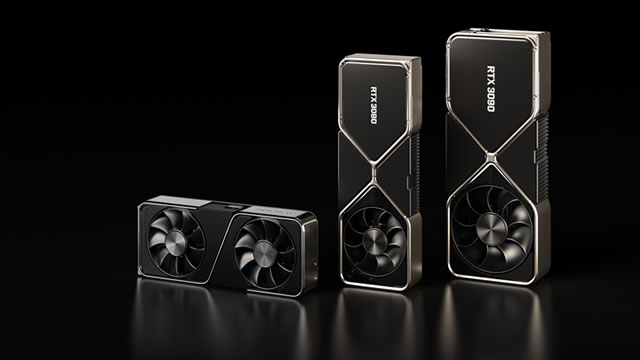
Nvidia: Market, Market Share, Margins And Multiples
Nvidia's TAM is projected at $2 trillion, with a conservative market cap estimate of $8T in 10 years, presenting limited downside risk for long-term shareholders. A bear case assumes 50% market share and 50% margin, while a bull case assumes 90% market share and 78% margin, leading to a $54T market cap in ten years. Key risks include a severe recession resetting client spend, loss of CEO Jensen Huang, and competition from AMD, Intel, and start-ups like Groq and Etched.

USD Is Rested And Ready To Go Again
USD, a 2x leveraged ETF, has a 58% concentration in NVDA and 17% in AVGO, making it high risk but with huge potential rewards. After consolidating in Q2 and Q3, USD's valuations are more attractive, and a bullish long-term pattern suggests a potential Q4 rally. The ETF's performance heavily depends on NVDA's earnings and broader semiconductor trends; investors should monitor these closely and consider setting stop losses.
Nvidia: Reiterate Buy As Blackwell To Drive Growth Through Next Year
Data center revenue grew 154% from the prior year to $26 billion, largely driven by strong demand for Hopper, GPU computing and networking solutions. Blackwell is expected to now start production ramp in the fourth quarter, and this will continue into FY2026. With the next generation models requiring 10 to 20 times more compute to train given significantly more data put into the model, the trend of continued purchases of the best-in-class compute for AI will likely continue.
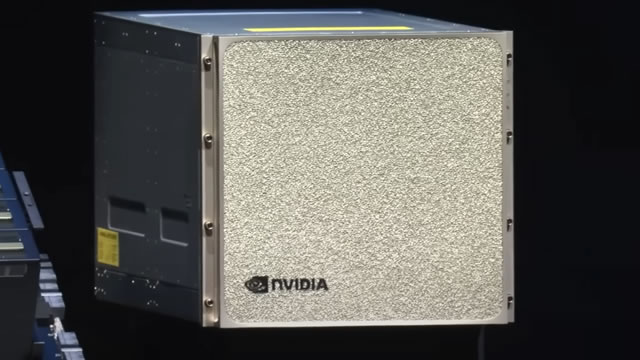
Nvidia Stock Investors Just Got Good News From Wall Street: The Artificial Intelligence (AI) Boom Is Thriving
Capital expenditures related to artificial intelligence infrastructure will accelerate over the next five years, according to JPMorgan analysts. Many companies have attempted to compete with Nvidia and most of them have come up short, according to Morgan Stanley analysts.

Nvidia's (NVDA) secret weapon for 2025
Nvidia's (NASDAQ: NVDA) share price has recently faced questions regarding its ability to sustain the momentum experienced in recent months, but several fundamentals, which can be equated to a secret weapon, are pointing to upside potential in the coming year.
Nvidia's stock is no longer the S&P 500's top gainer this year. Here's what is.
Investors have been turning beyond the chip sector as a way to play the AI and data-center booms.

Nvidia Is Dead Serious About Ramping Blackwell Shipments
Nvidia Corporation dominates the AI accelerator market with over 95% share, despite recent design issues with its Blackwell GPUs. Investors' fears are unwarranted; Nvidia is committed to shipping Blackwell GPUs, with increased capacity dollar commitments from Taiwan Semi. Nvidia's valuation suggests a 22% upside, with a forward P/E of ~40x and expected revenue growth doubling in 2024.
Why Nvidia and these 13 other high-flying stocks are in danger of crashing
Semiconductor and home-builder stocks are forming a bubble.

Where Will Nvidia Stock Be in 3 Years?
In the short term, Nvidia stock may see a jump thanks to the upcoming Blackwell launch. In the long run, Nvidia stock may witness selling activity as competition in the chip realm rises.
Monster insider trading alert for Nvidia stock
Earlier in September, during a particularly turbulent period for Nvidia (NASDAQ: NVDA) and the stock market more broadly, the semiconductor giant's senior officers were noted for selling vast volumes of company shares.
This $1 Trillion Opportunity Could Make Nvidia Stock a No-Brainer Buy -- and It's Not Artificial Intelligence (AI)
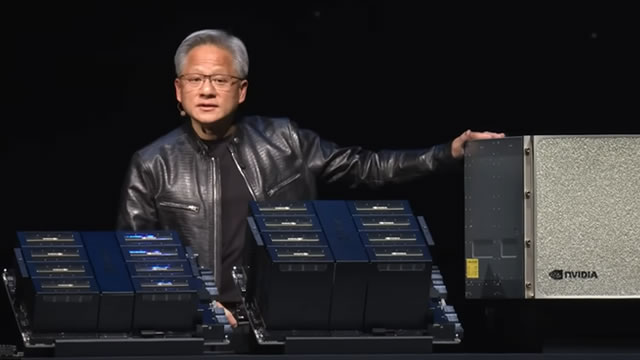
Nvidia CEO Jensen Huang believes that "Moore's Law is over." He thinks that as a result, existing data centers will shift to accelerated computing even without AI as a tailwind.




