









Pulsar Helium: A Quantum Supplier De-Risked And Revalued
Pulsar Helium holds a uniquely high-grade helium asset at Topaz, Minnesota, now de-risked by new state legislation. Exceptional helium-4 and helium-3 concentrations position PSRHF to supply critical industries like quantum computing, semiconductors, and aerospace amid rising geopolitical and supply risks. Recent drilling confirms up to 14.5% helium concentrations; resource estimates could expand to 3–5 billion cubic feet with further appraisal.

How Does D-Wave's New Simulator Change the Quantum Computing Landscape?
In the last month, shares of D-Wave Quantum Inc. NYSE: QBTS have fallen by about 13% amid a broader selloff in the AI space that has impacted many firms across the tech space.

Trump's 2 New Quantum Computing Orders Reignite the Next AI-Style Investing Boom
President Trump's latest push into quantum computing is arriving at an interesting moment.

Trump Seeks to Boost Quantum Computing With New Executive Orders
The orders aim to speed the development of the advanced computers and mitigate the security threats they pose.

2 Quantum Stocks That Are a Sell Today Despite Long-Term Promise
IonQ and Rigetti face rising macro pressure despite strong execution, with rich valuations and higher rates clouding the near-term outlook.

Why Rigetti Says Cooling Challenges Won't Derail Quantum Advantage
RGTI says mature dilution refrigeration and faster superconducting gates can support its path to quantum advantage in roughly three years.

Could Commercially Useful Quantum Computers Really Be 5-7 Years Away?
It's hard to know what to make of quantum computers. On the one hand, it may very well be like where AI was five or seven years ago.
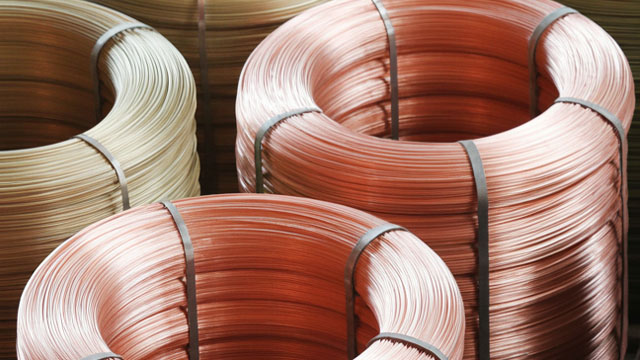
Panama audit of shuttered First Quantum copper mine flags environmental liabilities
Panama's government-commissioned audit of First Quantum Minerals' Cobre Panama copper mine has found the project broadly compliant with its legal, environmental and operational obligations, but flagged shortfalls in reforestation commitments and identified possible future environmental liabilities, the environment ministry said on Friday.
How Could Federal Backing Advance D-Wave's Quantum Efforts?
QBTS signs a $100M LOI under the CHIPS and Science Act, signaling federal backing that could accelerate its quantum computing R&D and qubit roadmap.

2 Quantum Stocks Are Drawing Capital as AI Infrastructure Hits a Wall
Generative artificial intelligence (AI) dominated the market narrative for the last three years, driving semiconductor sector valuations to historic premiums. Yet, the physical limits of classical computing are quietly halting that momentum.

Amazon Exec Predicts Commercial Quantum Computers Could Launch in 2031
Amazon artificial intelligence executive Peter DeSantis reportedly said Wednesday (June 17) that the first “commercially useful small-scale” quantum computers will appear five to seven years from now.

WQTM: The Quantum Computing Trade Wall Street Is Missing
The Macro Shift: Generative AI built on traditional silicon is approaching a literal power and physical limitation wall. Quantum computing is one of the most credible next-step technologies. The Catalyst: Quantum Computing is waiting for its breakout moment. The U.S. Commerce Department just threw a $2 billion bag of CHIPS Act cash at the quantum sector. The Edge: I rate the WisdomTree Quantum Computing Fund (WQTM) as a Buy. It wraps the top quantum names with the largest moats into a diversified basket.




