


AT&T Inc. (T)




AT&T Vs. Verizon: Which Big Dividend Stock Wins In A Rate-Cut Market?
Verizon and AT&T, major internet and cellular providers, are compared for yield and total return, with AT&T leading in year-to-date performance amongst my comparative measures. Both companies are considered fixed income proxies, akin to utilities, with potential rate sensitivity that could be intensified or muted depending on the US President's new administration. Verizon wins in dividend comparisons and short-term reflexive patterns, while AT&T excels in free cash flow payout ratio, earnings expectations, and valuation.

AT&T (T) Tops Q3 Earnings Estimates
AT&T (T) came out with quarterly earnings of $0.60 per share, beating the Zacks Consensus Estimate of $0.59 per share. This compares to earnings of $0.64 per share a year ago.

AT&T posts subscriber beat, but stock falls as company takes a big charge
AT&T took a $4.4 billion goodwill impairment charge related to its business-wireline unit, which is under pressure as business customers cut back on legacy voice services.
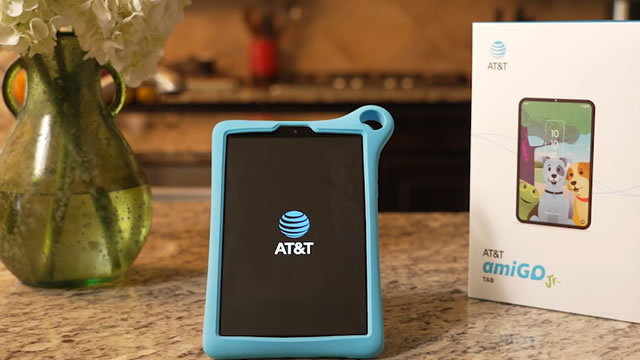
AT&T exceeds wireless subscriber estimates on demand for pricey unlimited plans
AT&T gained more wireless subscribers than expected in the third quarter, driven by the steady adoption of its higher-tier unlimited plans that come with perks including increased hotspot data.
AT&T Tops Earnings Estimates but Third-Quarter Revenue Slightly Misses
AT&T reports third-quarter revenue of $30.2 billion, just missing Wall Street expectations of $30.4 billion.

Verizon Vs. AT&T: Wireless Giants Brace For Q3 Earnings Face-Off
As Verizon Communications Inc VZ and AT&T Inc T prepare to release their third quarter earnings, the stage is set for a head-to-head clash between the two telecom giants.

AT&T (T) Stock Before Q3 Earnings Release: To Buy or Not to Buy?
By investing in infrastructure and pioneering new technologies, T is well-positioned to enhance the connectivity landscape nationwide.

AT&T ratifies agreement with striking CWA union
Telecom operator AT&T on Friday ratified agreements with the Communications Workers of America in the Southeast and West, which covers about 23,000 employees.

AT&T: Income Appeal Is No Longer Attractive
AT&T's dividend yield is currently lower than Verizon's, and its valuation is higher than historical averages, reducing its income appeal. Despite a strong share price rally, AT&T's financial performance has been lackluster, with limited growth prospects and declining equipment sales. AT&T's focus on reducing debt and investing in 5G and fiber infrastructure is positive, but its dividend growth is expected to remain minimal.

Unlocking Q3 Potential of AT&T (T): Exploring Wall Street Estimates for Key Metrics
Get a deeper insight into the potential performance of AT&T (T) for the quarter ended September 2024 by going beyond Wall Street's top -and-bottom-line estimates and examining the estimates for some of its key metrics.
AT&T: Moment Of Truth
AT&T is nearing a pivotal point, with potential for aggressive debt repayments and an improving balance sheet. I expect Q3 net broadband subscriber additions of 230-250k, increased ARPU, a confirmed free cash flow forecast, and $1-2B in net debt repayments. AT&T has a favorable deleveraging trend, as indicated by falling net financial debt and lower interest expenses.

Why AT&T May Have Just Become an Even Better Dividend Stock to Own
Could a dividend increase be coming for AT&T shareholders?


