







Landmark Bancorp: Improving Loan Book Makes Stock Attractive
Landmark Bancorp delivered robust Q3 2025 results, with net interest income up 20% and EPS reaching $0.85. LARK maintains a conservative balance sheet, with 25% of assets in cash/securities and a loan book heavily weighted to real estate. Non-accruing loans declined 25% to $10M, and provisioning remains well below pre-tax, pre-provision earnings, supporting credit quality.

Unity Bancorp: Kicking Off Regional Bank Earnings Season
Unity Bancorp, Inc. delivered strong Q4 results, with record 2025 EPS and sequential margin expansion. Loans grew 12.6% and deposits rose 10.7% year-over-year, supporting continued balance sheet strength. Asset quality showed minor deterioration tied to a single borrower, but overall remains solid for a regional bank.

U.S. Bancorp Q4 2025 Earnings Preview: It Looks Like The Discount Is Gone
U.S. Bancorp executed a strong turnaround, rallying 43%+ and transitioning from defense to growth, but now trades at a full 12.5x earnings multiple. The recent BTIG acquisition adds strategic capital markets exposure, yet introduces integration risks and investor uncertainty amid a preference for buybacks and lending. USB's operational health has improved, with margin expansion and reduced CRE risk, but future upside depends on earnings growth, not further multiple expansion.

Fidelity D & D Bancorp: Stronger Fundamentals, Improving Rate Tailwinds, And A Long-Awaited Buy
Fidelity D & D Bancorp (FDBC) is upgraded to 'Buy' as profitability rises and fundamentals strengthen, despite continued stock underperformance. FDBC's Q3 2025 saw net income climb to $26.09M, with ROAE at 11.96% and ROA at 0.97%, reflecting disciplined loan growth and robust asset quality. The bank's sticky deposit base, prudent expense management, and 11th consecutive dividend increase underscore capital strength and management confidence.

U.S. Bancorp Aims to Grow Capital Markets Business With BTIG Acquisition
U.S. Bancorp plans to accelerate the growth of its capital markets business by acquiring BTIG. The planned acquisition of BTIG, a financial services firm specializing in investment banking, institutional sales and trading, research and prime brokerage, will give U.S. Bancorp new capabilities in these fields, U.S. Bancorp said in a Tuesday (Jan.

Fifth Third Bancorp (FITB) Earnings Expected to Grow: What to Know Ahead of Next Week's Release
Fifth Third Bancorp (FITB) possesses the right combination of the two key ingredients for a likely earnings beat in its upcoming report. Get prepared with the key expectations.

Here's Why Fifth Third Bancorp (FITB) is a Strong Value Stock
Wondering how to pick strong, market-beating stocks for your investment portfolio? Look no further than the Zacks Style Scores.

U.S. Bancorp to Buy BTIG for Up to $1 Billion
U.S. Bancorp has struck a deal to buy BTIG, a financial-services firm specializing in investment banking, institutional sales and trading, research and prime brokerage, for up to $1 billion in cash and stock.

Here's Why Fifth Third Bancorp (FITB) is a Strong Momentum Stock
Wondering how to pick strong, market-beating stocks for your investment portfolio? Look no further than the Zacks Style Scores.

Will Fifth Third Bancorp (FITB) Beat Estimates Again in Its Next Earnings Report?
Fifth Third Bancorp (FITB) has an impressive earnings surprise history and currently possesses the right combination of the two key ingredients for a likely beat in its next quarterly report.
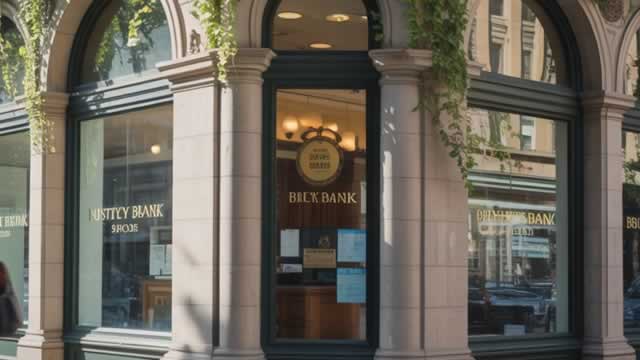
Merchants Bancorp Preferreds Review Update: One Gets My Rating Rating
Merchants Bancorp currently offers three preferred stocks: MBINL, MBINM, and MBINN, each with distinct call protection and yield profiles. MBIN's financial strength is adequate, with Net Income covering preferred dividends by 5.3x and Total Common Equity at 3x, though these are lower than prior years. MBINL offers the best call protection; MBINN's low yield-to-call suggests the market expects it to remain outstanding; MBINM's high coupon increases call risk.

U.S. Bancorp Up Nearly 22% in 6 Months: Buy, Hold, or Sell the Stock?
USB is up nearly 22% in six months, do strong revenue growth, liquidity, and digital investments make it a buy, hold, or sell now? Let us discuss.




