



Visa Inc. Class A (V)














Why Visa and Mastercard are seeing their sharpest stock drops in half a year
Investors seem jittery about President Trump's support of a measure that would require a lower-cost alternative for credit-card routing.
Is Visa (V) a Buy as Wall Street Analysts Look Optimistic?
Investors often turn to recommendations made by Wall Street analysts before making a Buy, Sell, or Hold decision about a stock. While media reports about rating changes by these brokerage-firm employed (or sell-side) analysts often affect a stock's price, do they really matter?
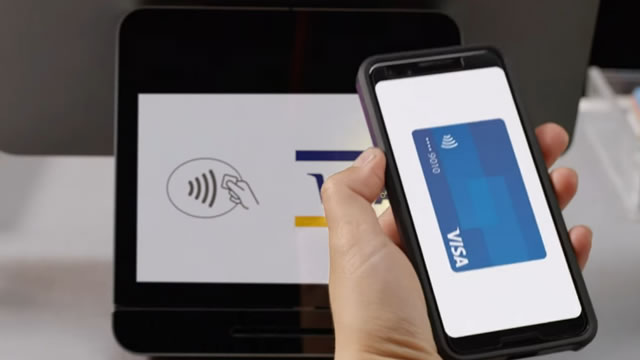
Visa's Tokenization Push Is Becoming More Than a Security Play
V's tokenization push is evolving beyond security, boosting transaction efficiency, AI-driven insights and seamless payments across devices.
Why Visa Stock Could Be A Strong Portfolio Add
Visa (V) stock could be an appealing purchase at this time. Why? Because it offers high margins – indicative of pricing strength and cash generation capabilities – at a discounted price.
Visa (V) Stock Falls Amid Market Uptick: What Investors Need to Know
Visa (V) closed the most recent trading day at $352.23, moving 1.03% from the previous trading session.

Visa Stock's Steady 14.4% Rise in A Year: Can 2026 Add More Firepower?
V's quiet consistency powers growth, stablecoin expansion, and AI-ready rails, steady, not flashy, but hard to ignore.

Investors Heavily Search Visa Inc. (V): Here is What You Need to Know
Zacks.com users have recently been watching Visa (V) quite a bit. Thus, it is worth knowing the facts that could determine the stock's prospects.

Visa: The Easiest Way To Benefit From Consumers
Visa offers a tollbooth business model, collecting fees on $16.7 trillion in annual transactions across 4.9 billion credentials globally. V's 56.4% non-GAAP net profit margin and AA- credit rating underscore its financial fortress status and operational efficiency. With a 12.4% projected EPS CAGR through FY 2028 and a forward P/E of 26.9, V trades below its 10-year average multiple.

Why Does Visa Continue to Sit at the Center of Digital Payments?
V remains central to digital payments thanks to its massive global network, transaction-based model and expanding value-added services as cash use declines.

Visa (V) Stock Sinks As Market Gains: Here's Why
In the most recent trading session, Visa (V) closed at $346.03, indicating a -1.33% shift from the previous trading day.

CNBC's Investment Committee's Top Picks for 2026: Amazon, Sabra and Visa
The Investment Committee detail their top picks for 2026 and explain why these names are may go higher during the year.

Visa (NYSE: V) Stock Price Prediction and Forecast 2026-2030 (Jan 2026)
This year, Visa Inc. (NYSE: V) has unveiled a scam disruption initiative, adoption of its “Tap to Phone” technology has soared, it unveiled its vision for artificial intelligence (AI) in commerce, and it expanded its capabilities in the digital currency space.




