



Verizon Communications Inc. (VZ)











Why Verizon Communications (VZ) is a Top Momentum Stock for the Long-Term
The Zacks Style Scores offers investors a way to easily find top-rated stocks based on their investing style. Here's why you should take advantage.

Verizon Gains 9.2% YTD: Should You Invest in VZ Stock Now?
VZ stock is up 9.2% YTD, fueled by 5G expansion and a strong focus on improving customer services.
Investors Heavily Search Verizon Communications Inc. (VZ): Here is What You Need to Know
Recently, Zacks.com users have been paying close attention to Verizon (VZ). This makes it worthwhile to examine what the stock has in store.
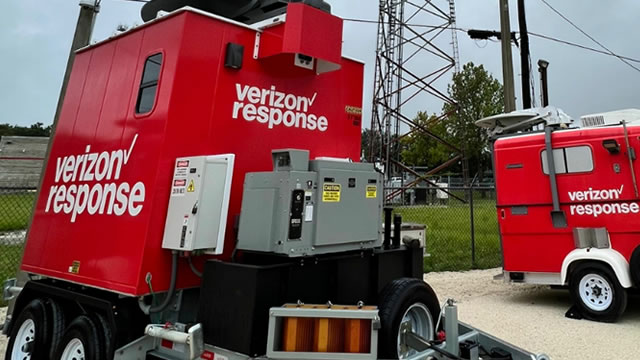
Will Verizon (VZ) Beat Estimates Again in Its Next Earnings Report?
Verizon (VZ) has an impressive earnings surprise history and currently possesses the right combination of the two key ingredients for a likely beat in its next quarterly report.

Will Verizon's Customer-Focused Approach Drive Sustainable Growth?
VZ utilizes Google Cloud AI, including Gemini models, to introduce personalized 24/7 customer service.

Verizon Private 5G Network Gains Traction: Can it Boost Revenues?
VZ lands a multibillion-dollar deal to deploy Private 5G across the Thames Estuary, transforming key U.K. logistics and manufacturing hubs.

Why Verizon Communications (VZ) Outpaced the Stock Market Today
Verizon Communications (VZ) closed the most recent trading day at $42.36, moving +1.58% from the previous trading session.
Here is What to Know Beyond Why Verizon Communications Inc. (VZ) is a Trending Stock
Zacks.com users have recently been watching Verizon (VZ) quite a bit. Thus, it is worth knowing the facts that could determine the stock's prospects.
Verizon Communications (VZ) Stock Sinks As Market Gains: Here's Why
In the most recent trading session, Verizon Communications (VZ) closed at $42.50, indicating a -1.19% shift from the previous trading day.
Verizon Gains Momentum in the Wireless Vertical: Will it Persist?
VZ gains wireless traction with 5G Ultra-Wideband expansion and faster speeds, but earnings estimates slip slightly.
Why Verizon Communications (VZ) Outpaced the Stock Market Today
Verizon Communications (VZ) closed at $44.13 in the latest trading session, marking a +1.1% move from the prior day.
Here's Why Verizon Communications (VZ) is a Strong Value Stock
Wondering how to pick strong, market-beating stocks for your investment portfolio? Look no further than the Zacks Style Scores.




