



Boeing Company (BA)













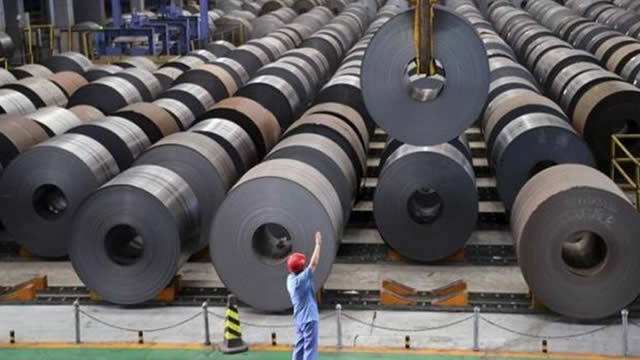
Carpenter Technology: The Specialty Materials Play On Boeing's Production Ramp
Carpenter Technology Corporation (CRS) is positioned for durable, margin-accretive growth, driven by robust aerospace and industrial demand. CRS's aerospace exposure is underpinned by Boeing and Airbus production ramp-ups, while industrials benefit from data center and power infrastructure demand. Despite product mix headwinds and a high trading multiple, CRS's disciplined capital allocation and strong balance sheet support continued organic growth.
BA Q2 Earnings Call Highlights Production Ramp, Certification Progress
Boeing highlights rising aircraft output, certification progress and a record $715 billion backlog as it targets stronger cash flow and growth.
‘At last ready to run,' Jim Cramer just revealed his new top stock pick
After years of business issues and stock market decline, Boeing's (NYSE: BA) latest earnings proved sufficiently strong to generate both a regular session rally and to prompt Jim Cramer to declare that the firm is ‘at last ready to run.'

The Boeing Company (BA) Q2 2026 Earnings Call Transcript
The Boeing Company (BA) Q2 2026 Earnings Call Transcript

Boeing Jumps 6%, Coca-Cola Gains 4% in a Dow Double-Shot as Money Rotates Out of AI
Two Dow Jones blue chips are stealing the spotlight Tuesday afternoon as
Boeing Q2 Earnings Call Highlights
Boeing NYSE: BA reported second-quarter revenue of $24.6 billion, up 8% from a year earlier, as higher commercial airplane deliveries and increased defense volume lifted results across its three business segments. The company posted a core loss per share of $0.76, an improvement from the prior year, and generated $631 million of positive free cash flow.

Mostly Quiet Ahead of Fed Decision
Interest rates have not moved since December's quarter-point cut to a range of +3.50-3.75%.
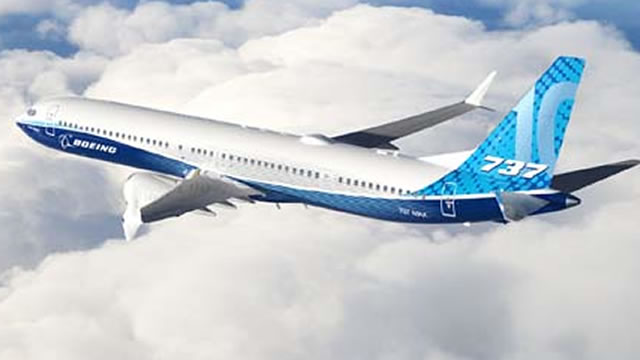
The 1 Number Behind Boeing's Q2 2026 Earnings That Has Investors Worried
Boeing booked $280 million in additional charges on the VC-25B presidential aircraft program during the second quarter of 2026, the single line item that pushed the company's Defense, Space & Security segment into the red and drove a wider-than-expected loss.
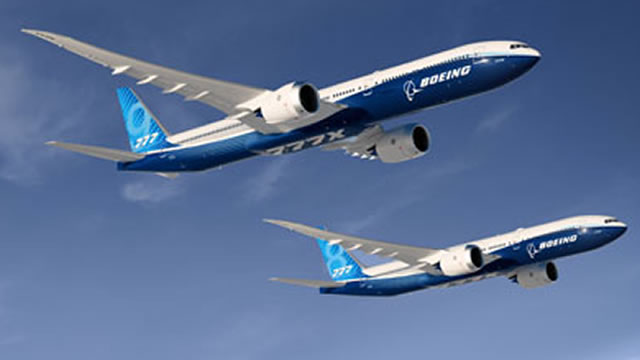
Boeing earnings: when will BA target $10B free cash flow again?
Boeing (BA) stock is extending gains on Tuesday morning even though the airplane maker posted a wider-than-expected loss for its fiscal second quarter (Q2). Investors are cheering BA mostly because the bottom-line weakness did not disrupt management's full-year outlook for up to $3 billion in free cash flow.
Boeing's Q2 Loss Wider Than Estimated, Revenues Increase Y/Y
BA's Q2 revenues beat estimates and backlog hits a record $715.3 billion, but a wider-than-expected adjusted loss tempered the stronger sales performance.
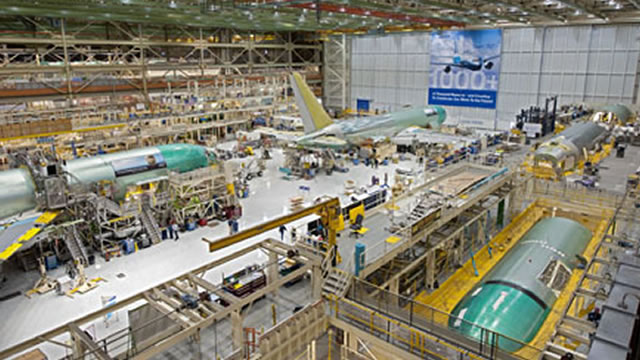
Compared to Estimates, Boeing (BA) Q2 Earnings: A Look at Key Metrics
While the top- and bottom-line numbers for Boeing (BA) give a sense of how the business performed in the quarter ended June 2026, it could be worth looking at how some of its key metrics compare to Wall Street estimates and year-ago values.
Boeing (BA) Reports Q2 Loss, Beats Revenue Estimates
Boeing (BA) came out with a quarterly loss of $0.76 per share versus the Zacks Consensus Estimate of a loss of $0.34. This compares to a loss of $1.24 per share a year ago.




