





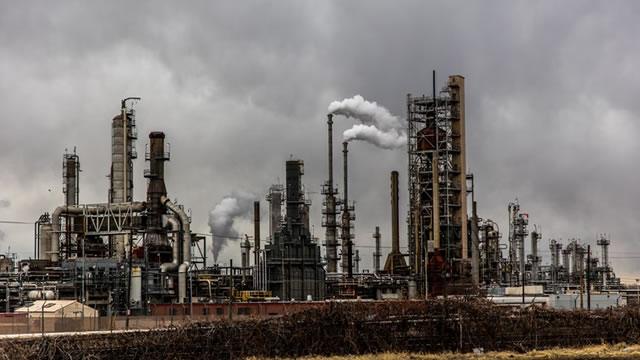
Oil tankers transiting Strait of Hormuz 'must be very careful,' Iran foreign ministry warns
Oil tankers passing through the Strait of Hormuz "must be very careful," the spokesman for Iran's Ministry of Foreign Affairs told CNBC. MarineTraffic map showing current ships traffic on Strait of Hormuz dislplayed on a laptop screen and MarineTraffic logo displayed on a phone screen are seen in this illustration photo taken in Krakow, Poland on March 5, 2026.
How much oil do G7 countries hold in emergency reserves?
The Group of Seven countries are considering releasing emergency oil stocks to address the Middle Eastern supply crisis, the International Energy Agency said on Monday, as oil prices surged to as high as almost $120 per barrel.
No decision yet on G7 releasing oil stocks, France's Lescure says
G7 countries have not made a decision yet on the potential release of emergency oil stocks in the wake of the U.S.-Israeli war on Iran, France's Finance Minister Roland Lescure said on Monday.
How will central banks respond to the war in Iran & soaring oil prices?
Conflict in the Middle East and a surge in crude oil prices are setting the stage for a closely watched Federal Reserve meeting next week. Rising energy costs will fan inflation fears, with key U.S. CPI and PCE data due in the coming days.
Oil prices will 'destroy' demand until supply goes back up, says ClearView's Kevin Book
Kevin Book, ClearView Energy Partners managing director, joins 'Squawk Box' to discuss the spike in oil prices, how far higher prices can go, impact of high oil prices on China and Russia, state of the U.S. Strategic Petroleum Reserve, and more.

Oil surges above $100 as Gulf states cut back production
Oil prices surged on Monday as Middle East countries cut production amid the ongoing conflict in the region, leading to reports that G7 countries, including the U.S., planned to discuss a coordinated release of crude from their strategic reserves.
Serbia suspends energy exports to shield market as crude prices surge on Iran war
Serbia has suspended crude oil and fuel product exports to safeguard its market from shortages and price spikes, the energy minister said on Monday, as global crude prices jump above $119 a barrel amid supply uncertainty due to the war in Iran.

Gas Prices Hit $3.47 Per Gallon As Crude Oil Soars To Highest Level Since 2022
The Finance Ministers of the G7 countries and International Energy Agency (IEA) Executive Director Fatih Birol will hold a call at 8:30 a.m. E.T. on Monday to discuss a coordinated release of their strategic petroleum reserves, according to FT's report.
Oil and gas industry urge EU to pause methane emissions law
Oil and gas companies urged the European Union on Monday to pause its methane emissions law, warning it could disrupt Europe's fuel imports when tougher provisions kick in next year.

Wheat Approaches Two-Year High as Impact of Oil Price Surge Widens
Chicago wheat futures were rising as the escalating conflict in the Middle East caused oil and fertilizer prices to surge.
Treasury yields climb higher as investors monitor Iran war and soaring oil price
U.S. Treasury yields climbed higher on Monday as oil prices soared past $100 a barrel and increased inflation fears among investors.




