



Pacific Biosciences of California, Inc. (PACB)



Summary
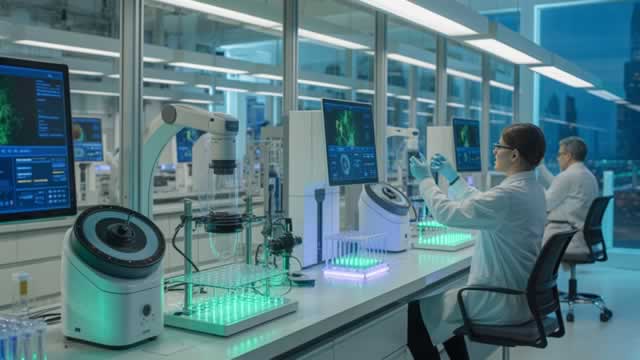
Pacific Biosciences of California (PACB) Declines More Than Market: Some Information for Investors
In the most recent trading session, Pacific Biosciences of California (PACB) closed at $1.99, indicating a -2.93% shift from the previous trading day.

PacBio Teams With TychoBio to Advance AI-Driven RNA Therapeutics
PACB partners with TychoBio to harness AI and long-read RNA sequencing for rare disease therapies, aiming to improve drug efficacy and safety through advanced data models.

Why Pacific Biosciences of California (PACB) Dipped More Than Broader Market Today
The latest trading day saw Pacific Biosciences of California (PACB) settling at $2.3, representing a -15.44% change from its previous close.
Pacific Biosciences of California, Inc. Investors
| Name | Quantity | Cost | Value | Profit ($) | Gain (%) |
|---|---|---|---|---|---|
 Curtis Ellergodt Rothschild Investment LLC | 323 | $426.33 | $642.77 | $216.44 | 50.77% |
| JD Jim Dushek HARBOUR INVESTMENTS Inc. | 182 | $256.08 | $362.18 | $106.1 | 41.43% |
 Farallon Capital Farallon Capital Management LLC | 14,200 | $118,570 | $27,690 | -$90,880 | -76.65% |
| NA Nizar Araji National Bank Of Canada /FI/ | 397 | $595.68 | $778.12 | $182.44 | 30.63% |
| BG Bart Gancher Intech Investment Management LLC | 67,410 | $85,921.5 | $132,123.6 | $46,202.1 | 53.77% |
Pacific Biosciences of California, Inc. (PACB) FAQ
What is the stock price today?
On which exchange is it traded?
What is its stock symbol?
Does it pay dividends? What is the current yield?
What is its market cap?
Has Pacific Biosciences of California, Inc. ever had a stock split?
Pacific Biosciences of California, Inc. Profile
| Life Sciences Tools & Services Industry | Healthcare Sector | Mark Van Oene CEO | NASDAQ (NGS) Exchange | 69404D108 CUSIP |
| US Country | 485 Employees | - Last Dividend | - Last Split | 27 Oct 2010 IPO Date |
Overview
Pacific Biosciences of California, Inc., originally known as Nanofluidics, Inc. until its name change in 2005, is a biotechnology firm focused on the design, development, and manufacturing of solutions for sequencing in order to tackle genetically complex problems. Founded in the year 2000 and based in Menlo Park, California, the company has carved a niche for itself in the realm of high-fidelity long-read sequencing technologies. Pacific Biosciences, also known as PacBio, caters to a diverse clienteles such as academic and governmental research institutions, genome centers, public health laboratories, hospitals, clinical research institutes, contract research organizations, as well as entities in the pharmaceutical and agricultural sectors. The company boasts a global presence, marketing its products directly and through distribution partners across Asia, Australia, Europe, the Middle East, Africa, and Latin America. Strategic alliances, like those with Invitae Corporation for development and commercialization, and a collaboration with Radboud University Medical Center for genetics research, are pillars supporting PacBio's innovation and market expansion.
Products and Services
- Sequencing Systems
- Consumable Products
- Binding and Sequencing Kits
- Revio System & Sequel Systems
- Short-Read Sequencing (SBB)
- Onso Instrument & SBB Consumables
Pacific Biosciences offers sequencing systems renowned for their single molecule real-time (SMRT) technology. This technology allows for the resolution of genetically complex issues through high-fidelity, long-read sequencing capabilities.
The company provides a variety of consumable products for sequencing, including SMRT cells, and reagent kits designed for specific workflows. This includes kits for the preparation of SMRTbell double-stranded DNA libraries, which comprise essential molecular biology reagents necessary for sequencing preparation.
PacBio's binding kits include modified DNA polymerase, crucial for binding SMRTbell libraries to the polymerase in preparation for sequencing. Sequencing kits, on the other hand, contain all necessary reagents for on-instrument real-time sequencing, which includes phospholinked nucleotides.
The Revio and Sequel systems are designed for the conduct, monitoring, and analysis of single-molecule biochemical reactions in real-time, pioneering advancements in the sequencing technologies sector.
Beyond its forte in long-read sequencing, Pacific Biosciences also provides solutions for short-read sequencing (SBB), catering to a broader range of genomic analysis needs.
The Onso instrument is tailored for conducting, monitoring, and analyzing SBB biochemical reactions. Accompanying consumables include flow cells and reagent kits for clustering and sequencing, facilitating comprehensive short-read sequencing processes.
Contact Information




