



Space Exploration Technologies Corp. Class A (SPCX)








A Rocket Supply Crunch Is Making It Harder to Hitch a Ride to Space
There's a rush to secure flights as SpaceX winds down its flagship vehicle and rivals try to ramp up.

Wall Street analyst sets SpaceX (SPCX) stock price target for 12 months
As Space Exploration Technologies Corp. (NASDAQ: SPCX) stock traded above its initial public offering (IPO) price for the past 30 consecutive days through September 21, 2026, Adam Jonas, a Wall Street analyst at Morgan Stanley (NYSE: MS), expects a rally towards a new all-time high (ATH) over the next 12 months.
ChatGPT predicts SpaceX stock price after October 9 share unlock
SpaceX (NASDAQ:SPCX) stock has managed to gain nearly 12% so far in September, trading at $152, comfortably above the initial public offering price (IPO) of $135 on June 11. With SpaceX share unlocks approaching, however, investors are trying to predict how the price will move early in October.
China is chasing SpaceX and setting its sights on the global space economy
Chinese space-technology players are closing in on Elon Musk's company and looking to grow their reach, experts say.
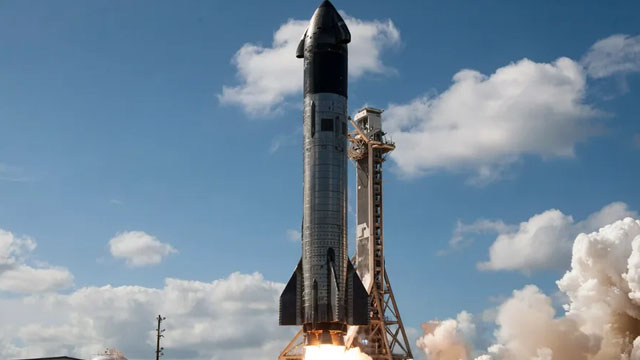
SpaceX Stock Has Gone Nowhere Since Its First Day of Trading
SpaceX closed its first session at $160.95 on June 12 and closed Friday at $152.71, about 5% lower. Insider lockup agreements are releasing shares in tranches, with three more releases scheduled by late October.

SpaceX Is Becoming An AI Giant
SpaceX targets 5-10 GW of compute capacity in 2027, potentially making AI its largest long-term revenue engine. SemiAnalysis estimates 10 GW could support roughly $300 billion ARR if half of incremental compute capacity is externally monetized. Starlink generated a 62.9% EBITDA margin in 2025, but Connectivity simultaneously required approximately $4.18 billion of capital expenditures.
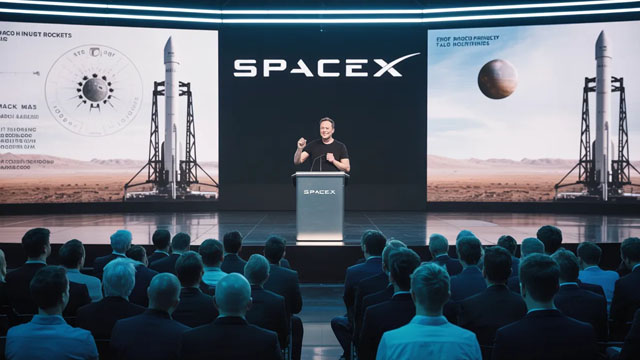
SpaceX: Don't Wait Till It Potentially Becomes The Largest AI Cloud
SpaceX is positioned as an emerging AI cloud leader, targeting 10 GW compute capacity by 2027 and reaching $100 billion ARR by year-end. Growing short-term compute deals significantly enhance SPCX's compute economics and support its AI compute growth ambitions. Execution risk remains high due to foundational power supply constraints, chip supply challenges, and ambitious scaling targets for space-based data centers.

$10,000 invested in SpaceX stock at IPO is now worth
Following a slowdown earlier in September, the SpaceX (NASDAQ: SPCX) stock rally has once again turned more decisive, and the equity was, at its latest close, trading at $154.81: roughly in the middle of its day-one range.

SpaceX Stock Rises Again. AI Demand Isn't Slowing Down.
The company has scheduled the 14th test flight for its huge, fully reusable rocket, Starship.
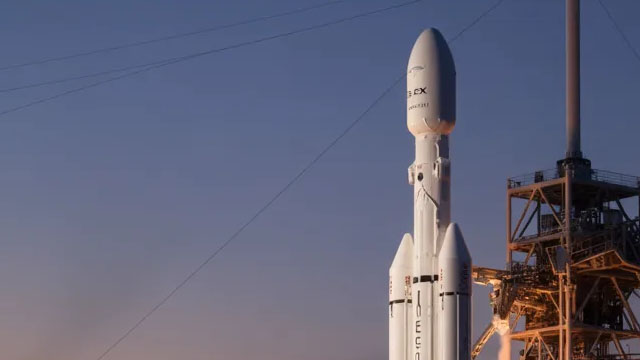
SpaceX: A $3.2 Trillion Inflection Is Closer Than It Looks
SpaceX, aka Space Exploration Technologies Corp., maintains a significant valuation premium post-IPO despite the recent post-lockup expiry, supported by resilient institutional confidence and a robust execution roadmap. Increasing vertical integration across Starship launch, Starlink, and AI infrastructure strengthens longer-term revenue scalability and operating leverage. This, alongside SpaceX's latest contract win promising $1.11 billion in monthly revenue, improves visibility into its $100 billion ARR target exiting 2026 and $1 trillion annual revenue target by 2030.

SpaceX: Volatility Is Here, But Hold On For The Long Haul
SpaceX is reaffirmed as a buy, with recent volatility presenting attractive entry points for long-term investors. Q2 revenue surged 92% y/y to $7.81 billion, far surpassing expectations and driven primarily by the Starlink connectivity segment. Starlink posted 66% y/y revenue growth and achieved its best quarter for net-new subscriber additions, highlighting accelerating traction.
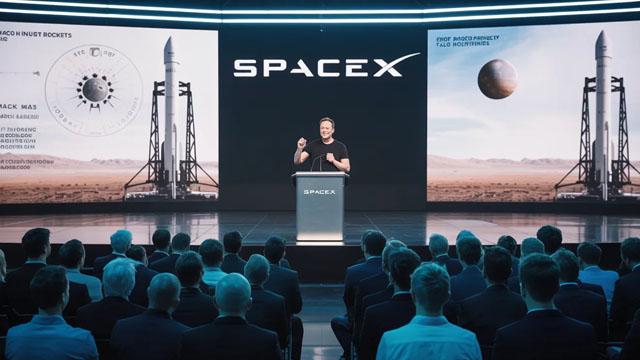
Can SpaceX Really Turn Starlink Into a $1 Trillion Business? Ron Baron Has $25 Billion Riding on Yes
Ron Baron has $25 billion in SpaceX shares and a projection that Starlink alone hits $1 trillion in revenue, but the math holding that forecast together rests on a single unproven assumption about AI that deserves far more scrutiny than




