








Vale Q4 Iron Ore Output Declines Y/Y, Copper & Nickel Rise
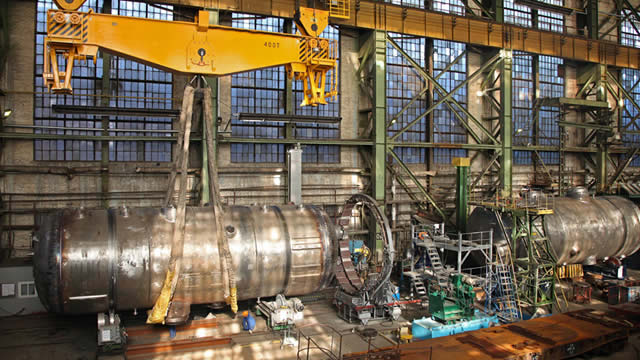
VALE delivers iron ore production of around 328 Mt in 2024. It maintains 2025 iron ore production goal to be between 325 Mt and 335 Mt.
Vale CEO meets Brazil's Lula, touts 'convergence' with government agenda
Brazilian miner Vale's CEO held his first official meeting with President Luiz Inacio Lula da Silva on Tuesday, the company said, where he highlighted that there was "enormous convergence" between its projects and the country's development agenda.
VALE S.A. (VALE) Stock Drops Despite Market Gains: Important Facts to Note
VALE S.A. (VALE) concluded the recent trading session at $9.03, signifying a -1.42% move from its prior day's close.

VALE S.A. (VALE) Increases Yet Falls Behind Market: What Investors Need to Know
VALE S.A. (VALE) concluded the recent trading session at $8.98, signifying a +0.45% move from its prior day's close.
Investors Heavily Search VALE S.A. (VALE): Here is What You Need to Know
Zacks.com users have recently been watching VALE (VALE) quite a bit. Thus, it is worth knowing the facts that could determine the stock's prospects.
Double-Digit Dividend Yield: Why Vale Stands Out
Vale's valuation is attractive, trading at a P/E of ~4.2x for 2025, with an EPS forecast implying a 24% earnings yield and a double-digit dividend yield. Despite long-term risks in iron ore, Vale's efficiency and growth in energy transition metals like copper and nickel offer promising diversification and margin improvement. Brazil's economic and legal challenges justify Vale's discount compared to peers, but the potential for high yields makes it appealing for risk-tolerant investors.
Vale Stock Hits 52-Week Low: A Buying Opportunity or Warning Sign?
Shares of Vale S.A VALE hit a 52-week low of $8.38 yesterday to close the session a tad higher at $8.51.
Vale Renegotiates Railway Concessions Deal, Commits $1.8B Investment
VALE reaches an agreement with Brazilian authorities to renew two railroad concession contracts.
Here is What to Know Beyond Why VALE S.A. (VALE) is a Trending Stock
Recently, Zacks.com users have been paying close attention to VALE (VALE). This makes it worthwhile to examine what the stock has in store.
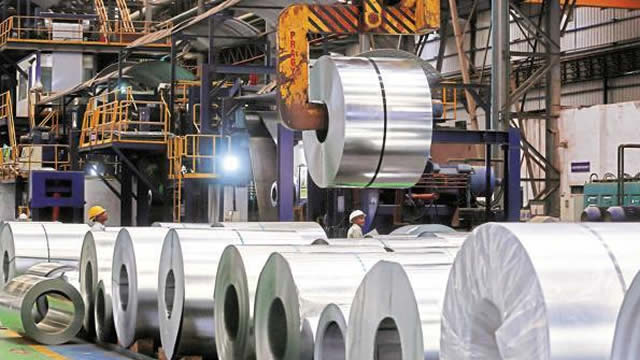
Cleveland Cliff Stock Down 50% In 2024 To Yearly Low
Cleveland-Cliffs, a vertically integrated steel mill operator, has seen its stock decline by 50% since the beginning of the year as compared to the 28% gain in the S&P 500 Index. Cleveland-Cliffs downward stock price movement is much sharper compared to that for its peers, including VALE (NYSE: VALE) which is down 42% year to date, ArcelorMittal which is down 13% year to date, United States Steel Corporation down 31% year to date, and Nucor Corp (NYSE: NUE) which is down 30% year to date.
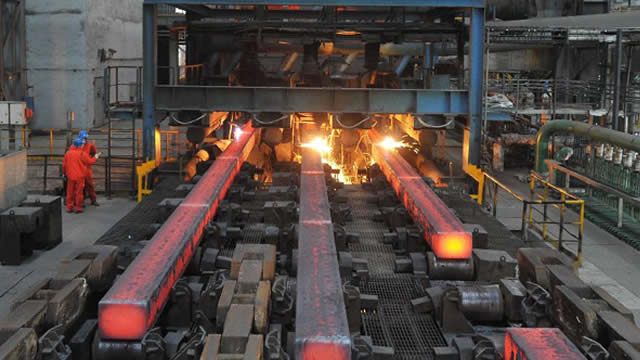
Vale: Addressing The Short-Term Struggles
Vale's stock performance is influenced by a combination of internal factors and external market conditions, including interest rates, currency devaluation, and future iron ore outlook. Despite short-term headwinds, Vale remains a long-term opportunity due to its discounted valuation, strong dividend yield, and strategic stock buybacks. Vale's low production costs and resilient operational structure position it favorably even in pessimistic iron ore price scenarios, ensuring continued competitiveness.
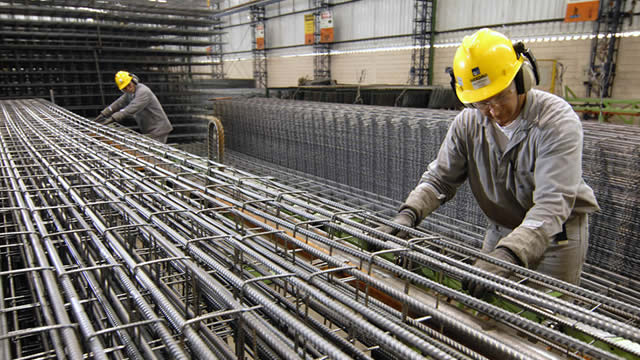
Vale: Preparing For The New Era In The Iron Ore Market
The next 5 years project a lower dependence on Chinese demand for the iron ore market, indicates Vale's Investor Day. In a scenario of lower demand and the same supply, lower costs can be decisive for the sustainability of a mining company. Vale has made great strides in terms of environmental liabilities, and with an upside of 30%, it could be the big beneficiary in the next 5 years.




