



Whirlpool Corporation (WHR)





Whirlpool's Q3 Earnings Upcoming: What Lies Ahead for the Stock?
WHR faces margin pressure from weak global demand, higher costs and fierce competition, despite cost cuts and new product efforts.
WHR Expands U.S. Laundry Manufacturing Facility, Initiatives on Track
Whirlpool boosts U.S. manufacturing with a $300M investment to expand innovation, jobs and next-gen laundry production.
Feds Find No Evidence of Tariff Cheating Among Appliance Makers
Federal officials say they have found no evidence of widespread undervaluing of imported appliances after Whirlpool last month accused its rivals of possible tariff evasion.
Whirlpool CEO says Trump tariffs create 'level playing field' for US manufacturing expansion
Whirlpool Corp. CEO Marc Bitzer says $300 million Ohio investment will create 400-600 jobs and level the playing field amid new tariff policies.
Whirlpool: Reasons To Follow David Tepper's $27 Million Stock Buy
Whirlpool offers a compelling contrarian buying opportunity, trading at cyclical lows with a 5% yield and significant undervaluation versus peers. WHR is poised to benefit from proposed 100% China tariffs, as its U.S.-centric manufacturing gives it a major cost advantage over Asian competitors. Potential catalysts include a housing market recovery, takeover interest, asset sales, and a possible short squeeze due to heavy short interest.
How Will Whirlpool's Focus on Cost Control & Innovation Boost Profitability?
WHR's disciplined cost control and bold product innovation aim to build resilience and fuel sustainable long-term profitability.

Whirlpool (WHR) Stock Falls Amid Market Uptick: What Investors Need to Know
Whirlpool (WHR) concluded the recent trading session at $89.93, signifying a -2.36% move from its prior day's close.

My Top Dividend-Paying Deep Value Stock to Buy in September
Whirlpool (WHR -2.82%) stock is fraught with near-term risk and may not suit most investors, but if you are looking for a classic "deep value" investment opportunity and an excellent dividend, then it may be a suitable fit.

Whirlpool (WHR) Declines More Than Market: Some Information for Investors
In the closing of the recent trading day, Whirlpool (WHR) stood at $93.15, denoting a -1.39% move from the preceding trading day.

Whirlpool: We Maintain Our Buy Rating Despite The Macroeconomic Headwinds
WHR faces significant near-term headwinds from poor consumer confidence, weak home sales, and high interest rates, impacting demand and financial performance. Recent quarterly results showed declining sales and lowered 2025 guidance, reflecting ongoing macroeconomic challenges. WHR is well-positioned to benefit from U.S. tariff policies due to its domestic production footprint, unlike many competitors.

The Score: Meta Platforms, Whirlpool, Novo Nordisk and More Stocks That Defined the Week
Here are some of the major companies whose stocks moved on the week's news.
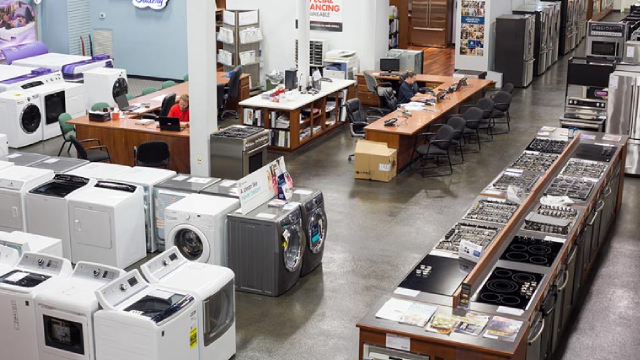
Whirlpool: Likely A Value Trap Hiding Behind Low Valuations
Whirlpool appears to be a value trap despite its relatively low valuation, as structural issues overshadow cyclical challenges. Revenues and cash flows are deteriorating, with 2025 sales down further after a multiyear decline, now at levels last seen 20 years ago. Chinese competitors like Haier and Midea are gaining rapid market share, growing sales and profitability, while Whirlpool struggles.




