



Toyota Motor Corporation (TM)









Why Did Toyota's Global Vehicle Sales Fall for a Fourth Month?
TM's global vehicle sales fall for a fourth month as weaker demand in China and the Middle East offset stronger Japan sales.

Toyota sales fall for fourth month in May as declines in China, US and Middle East weigh
Toyota Motor said on Monday that global vehicle sales slipped for a fourth consecutive month in May, as decreases in China and the Middle East weighed on overall results.

Why the Market Dipped But Toyota Motor Corporation (TM) Gained Today
In the closing of the recent trading day, Toyota Motor Corporation (TM) stood at $171.48, denoting a +2.99% move from the preceding trading day.

Will Toyota's New EV Launches Boost Its Market Position?
TM expands its 2026 ZEV lineup with new BEVs and PHEVs, highlighting broader consumer choice and an upcoming three-row EV debut.

Steep Price Slide For Toyota Motor Shares A Buying Opportunity For The Long Term
Toyota Motor Corporation faces profit pressure from U.S. tariffs and a $5.6B revenue miss, prompting a CEO change to prioritize financial discipline. TM is intensifying U.S. production, focusing on hybrid electric vehicles (HEVs) as a transitional electrification strategy, and expanding value chain revenues. Despite a 3.5% dividend yield and Seeking Alpha's F-grade for dividend safety, TM's robust A+ rating, $93B net cash, and low 9.1x P/E support dividend stability.

A Humble 3-Wheel Electric Vehicle Lands Toyota in Federal Court
A lawsuit filed in California claims the automaker's philanthropic arm stole technology intended to help poor farmers, but it is not clear to what end.

Toyota Motor Corporation (TM) Declines More Than Market: Some Information for Investors
The latest trading day saw Toyota Motor Corporation (TM) settling at $178.19, representing a -1.13% change from its previous close.

Tariffs Have Crushed Toyota But We Say Buy the Dip
Toyota's (NYSE:TM | TM Price Prediction) American depositary receipts have taken a beating in 2026, sliding 18.27% year to date as U.S.

Is Toyota Motor (TM) a Buy as Wall Street Analysts Look Optimistic?
Investors often turn to recommendations made by Wall Street analysts before making a Buy, Sell, or Hold decision about a stock. While media reports about rating changes by these brokerage-firm employed (or sell-side) analysts often affect a stock's price, do they really matter?
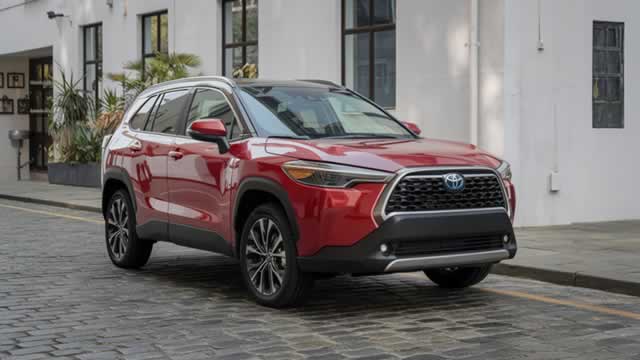
Why is Toyota Investing $2B in a New Manufacturing Facility in Texas?
TM plans a $2B Texas facility with a new assembly line as it expands U.S. production amid tariffs and rising vehicle demand.

Toyota sales drop for third month on declines in China, Middle East
Toyota Motor on Thursday said global vehicle sales fell for a third consecutive month in April, hit by sharp declines in China and the Middle East.

Brokers Suggest Investing in Toyota Motor (TM): Read This Before Placing a Bet
When deciding whether to buy, sell, or hold a stock, investors often rely on analyst recommendations. Media reports about rating changes by these brokerage-firm-employed (or sell-side) analysts often influence a stock's price, but are they really important?




