











VNQ Vs. SPY: REIT's Case In 2 Charts
The Vanguard Real Estate ETF now offers a more attractive return profile versus the SPDR S&P 500 ETF due to macroeconomic shifts. Historically, REITs have outperformed the S&P 500 over full-rate cycles, and current conditions suggest this trend could continue. I expect the rate cycle is starting its downward phase, which could turn REIT's reliance on debt financing to an advantage compared to the S&P 500.

VNQ: Sell Your REIT ETFs
Vanguard Real Estate Index Fund ETF faces risks from high valuations, interest rate sensitivity, and economic weakness, despite its long-term popularity and low fees. VNQ, IYR, and XLRE have underperformed the S&P 500 and Financials over 5- and 10-year periods, with concentration risks in top holdings. Rising rates or a weakening economy could significantly impact VNQ, which currently trades at 2.4x book value and is over 21% below its 2022 high.

Persistent REIT Mispricing Presents Opportunity: Gaining An Edge Assessing This Sector
REITs are prone to significant mispricing due to their complexity and small market caps, creating opportunities for skilled stock pickers. The sector's complexity stems from diverse property types, varying locations, and inconsistent non-GAAP financial metrics like FFO and AFFO. Currently, REITs trade at notable discounts to NAV and earnings multiples, making them attractive compared to the broader market.

VNQ: What Net Lease Improvements Mean For Real Estate
Net lease REITs faced headwinds as rising interest rates drove up cap rates and pressured property values, but market conditions are stabilizing. Cap rates plateaued in Q2, signaling a shift from years of increases; Federal Reserve policy hints at possible rate cuts, boosting investor sentiment. Transaction activity is accelerating, with a flight to quality and tightening spreads, suggesting renewed appetite for net lease assets.

REIT Lost Decade: The Long-Tail Effect Of Free Money
REITs have underperformed since 2015, but history shows this is a cyclical 'lost decade,' not a permanent flaw in the asset class. Zero Interest Rate Policy (ZIRP) led to real estate oversupply, hurting REIT fundamentals; higher rates are now restoring market equilibrium. New construction is sharply declining, setting the stage for improved REIT fundamentals and potential outperformance in the coming years.

VNQ: Why REITs Are Great Amid The Tariff Havoc + My Favorite REIT Pick
REITs provide dependable, high dividends, crucial for both young and retired investors, enhancing returns during market declines through reinvestment. Long-term interest rates significantly impact REIT prices; declining long-term yields can boost REIT valuations, making them a hedge against recession-driven market sell-offs. Amid current market conditions, REITs make a great portfolio addition for their income and upside potential.

The Biggest Risks to Vanguard's VNQ 4% Yield
When it comes to Vanguard ETFs, investors shouldn't fret too much about the safety of the yield, given that many names that hold up the high-quality ETFs have distributions that are on some pretty solid footing.

VNQ: Volatility Makes Commercial Real Estate A Buy
Investor psychology and market volatility have significantly impacted REITs, particularly VNQ, despite commercial real estate's historically stable nature. VNQ remains a top choice for real estate ETFs, offering cost efficiency, liquidity, and broad exposure to commercial real estate, despite recent price drops. Publicly traded REITs' prices are driven by operating performance, not net asset value, leading to greater volatility compared to private REITs and direct real estate investments.
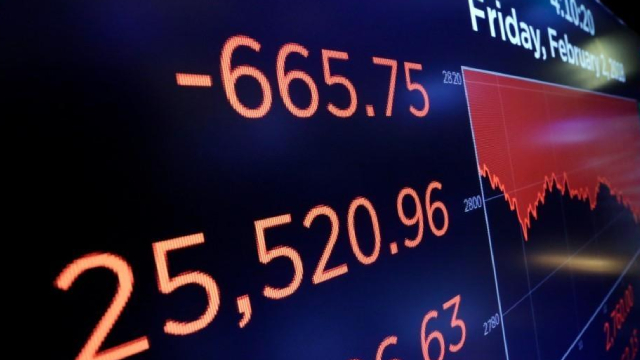
Stock Market Volatility Got You Down? Buy These Top Vanguard Dividend ETFs to Help Lessen the Blow.
The stock market has been rocked by volatility this year. The S&P 500 was recently down by about 10% since the calendar flipped the page to 2025.

Why Running for REITs Could Be a Solution to Market Woes
Escalating tariff threats are continuing to lead to whipsawing market prices, creating a murky near-term horizon for investors. Long-term risks are certainly bubbling up as well.

We’ve got $700k in cash, $1.6 million in brokerage, and $400k in unused land – is 2025 the year to cash out or keep building?
It’s a common dilemma for many folks who’ve inherited a big chunk of land: should one sell it and add to their retirement nest egg, or double down by building something on it to produce another cash flow stream? Indeed, it’s a tough call for many, and while the latter move may be the wisest decision, it doesn’t come without its fair share of risks. Also, someone who’s looking to retire with adult children in college may not wish to take the path that entails heftier near- to intermediate-term expenses. In this piece, we’ll look at a well-off Reddit user in their 50s with plenty of assets and a $400,000 patch of unused land. They’re wondering if they should sell the land or build on it. Whichever route they choose to go, it’s likely to be the wiser move than standing pat with so much wealth tied into an asset that’s not effectively being put to work. Of course, there are opportunity costs that accompany selling off the patch of land, especially if stagflation and recession are in the cards. Key Points This Reddit user is weighing what to do with their big plot of unused land. Building isn’t always the right move, especially given the magnitude of expenses that could be incurred. Are you ahead, or behind on retirement? SmartAsset’s free tool can match you with a financial advisor in minutes to help you answer that today. Each advisor has been carefully vetted, and must act in your best interests. Don’t waste another minute; get started by clicking here here.(Sponsor) What to do with the big patch of land? Turn it into a cash-producing property, sell it off, or leave it as-is? In any case, I think the right move is more a matter of lifestyle than anything else. In addition to costing a fortune (the Reddit user will likely need to borrow a considerable sum), rebuilding a patch of land entails a lot of effort. And for someone who’s looking to wind down for retirement, selling the land may be the more convenient move, especially for those who aren’t comfortable with putting too much of one’s net worth into one asset class: real estate. Though there’s no one-size-fits-all solution, the Reddit user should sit down with a financial planning pro who’s well-versed in real estate projects. Indeed, the inherent costs could easily exceed one’s original budget, especially if one has zero experience with ambitious real estate builds. As such, consulting a pro is a way to better gauge the full extent of the costs and risks one will have to bear by moving ahead with an ambitious project at a time when one should be putting the finishing touches on one’s retirement nest egg. In any case, the big question is whether passive income (rental payments) from the property that one will receive in the future outweighs the hefty bills one will need to put up in the near term. In the interim, perhaps it’s best not to rush a decision. Leaving the land unutilized may be less than ideal, but making a rash, costly decision at a whim seems like the far worse move, at least in my view. In any case, I’d think very carefully about the decision and hire the right folks (specifically, advisors and builders) to give you a better gauge of final costs so that you can better gauge the risks prior to signing the dotted line. There are simpler, more efficient ways to bet on real estate. There are easier ways to bet on real estate that doesn’t entail going into debt, selling off a portion of one’s investments, and taking on costly projects. If the Reddit user can sell their land at or around market value ($400,000 or so), they can use the proceeds to bet on a diversified portfolio of real estate investment trusts (REITs), which, I view as a more efficient, liquid, and less intensive way to bet on real estate. Why put it all on one investment property when one can bet on a broader basket of real estate projects at a low cost? The Vanguard Real Estate ETF (NYSEARCA:VNQ) boasts a mere 0.13% expense ratio and allows investors to bet on close to 150 names across a wide range of real estate sectors. Indeed, it’s not just residential where there’s rental income to be made! Still down around 20% from its 2021 highs, the VNQ stands out as a fantastic pick-up while it’s yielding 3.66%. For a retiree who’s looking for less stress and more efficiency, selling the land and using the proceeds to invest in such an ETF makes a lot of sense, in my opinion. The post We’ve got $700k in cash, $1.6 million in brokerage, and $400k in unused land – is 2025 the year to cash out or keep building? appeared first on 24/7 Wall St..

Sell VNQ And Buy These 2 Quality REITs
VNQ is highly diversified across various REIT sectors, but includes some underperforming segments and poorly managed REITs. The current macroeconomic outlook is very favorable for quality REITs. I present two of my favorite REIT picks to BUY.




