



Stock Market Trading & Investing Blog
Loading...

Marketlog vs Sharesight: What Serious Investors Notice
Serious investors rely on accurate and reliable tools to manage and analyze their portfolios effectively. Among the many options available in the market today, Marketlog and Sharesight have emerged as popular choices for portfolio tracking and performance analysis. However, discerning investors recognize key differences between these two platforms that significantly influence their decision-making process when selecting the most suitable tool for their investment needs. Core Functionality and User Experience Both Marketlog and Sharesight provide essential portfolio tracking capabilities, allowing users to monitor the performance of their investments over time. Sharesight is widely appreciated for its user-friendly interface and automated data import features, which can be particularly appealing to investors who seek simplicity and conveni
The Psychology of Checking Your Portfolio Too Often
In the realm of investing, keeping an eye on one’s holdings is undeniably important. However, a growing trend among investors is the compulsive and frequent checking of their portfolios. This behavior is often driven more by psychological impulses than by sound investment strategies. Such frequent monitoring may lead to unintended consequences that negatively impact decision-making and ultimately, long-term portfolio performance. Gaining a deeper understanding of the psychological factors behind this tendency is vital for investors who aim to maintain discipline and avoid emotional mistakes that can derail their financial goals. Behavioral Finance and Investor Psychology Behavioral finance is the study of how cognitive biases, emotions, and psychological influences affect financial decision-making. One prominent bias that contributes to f

What Is CAGR and Why Long-Term Investors Care
Compound Annual Growth Rate, commonly known as CAGR, is a crucial metric that long-term investors rely on to assess how their investments have grown over a period of time. Unlike simple averages that can be skewed by fluctuations in returns, CAGR provides a smoothed, annualized growth rate that accounts for the impact of compounding. This makes it an invaluable tool for gaining a clearer and more accurate understanding of an investment’s true growth trajectory. For anyone serious about portfolio management and performance analysis, mastering the concept of CAGR is essential. Defining CAGR CAGR stands for Compound Annual Growth Rate and represents the constant rate at which an investment would have grown if it had expanded steadily over a given timeframe. Essentially, it eliminates the distortions caused by year-to-year volatility by prese

Dividend Dates Explained Without Confusion
Dividend investing remains a foundational strategy for investors aiming to generate steady income streams while building long-term wealth. By systematically acquiring shares of companies that distribute earnings through dividends, investors can enjoy both passive income and the potential for capital appreciation. However, the process of dividend distribution involves several key dates, namely, the declaration date, ex-dividend date, record date, and payment date, that can often lead to confusion for those new to dividend investing. Understanding these dates is critical for maximizing returns, avoiding common mistakes, and efficiently managing investment portfolios. This article provides a clear and detailed explanation of each dividend date, enabling investors to confidently navigate the dividend payment cycle. What Are Dividend Dates? Di


Why Tracking Small Accounts Still Matters
In the world of investing, the size of an account often influences the level of attention it receives. Large portfolios with substantial capital tend to dominate headlines and investor focus. However, small accounts, those with limited initial capital, deserve just as much consideration. Dismissing these accounts as insignificant overlooks the valuable lessons and long-term benefits they offer. Tracking small accounts remains a crucial practice for investors committed to disciplined portfolio management and steady growth over time. The Importance of Discipline in Small Accounts One of the primary advantages of managing and tracking a small account is the opportunity to develop disciplined investing habits. When capital is limited, every decision carries more weight because mistakes have a relatively larger impact on the overall portfolio.

How Exchange Listings Affect Your Investments
Exchange listings play a significant role in shaping the investment landscape for both individual and institutional investors. Understanding how the choice of stock exchange impacts the performance, liquidity, and regulatory environment of a security is essential for effective portfolio management. Many investors tend to focus primarily on the fundamentals of stocks themselves, such as earnings, growth prospects, and dividends. However, the exchange on which these stocks trade can influence risk, costs, and opportunities in subtle but meaningful ways that deserve careful consideration. The Importance of Stock Exchange Listings When a company decides to go public, the choice of the exchange for its initial listing is a strategic decision that can affect its future trajectory. Major exchanges like the New York Stock Exchange (NYSE) and NASD

Time-Weighted vs Money-Weighted Returns (Without Math Panic)
Understanding investment performance is a critical skill for both professional portfolio managers and individual investors. When assessing how well an investment has done, it is important to use the right metrics. Among the various ways to measure returns, time-weighted and money-weighted returns are two fundamental approaches that provide distinct insights. Each method serves a unique purpose and reveals different aspects of an investment’s performance. This article aims to clarify these concepts in straightforward terms, avoiding complex mathematics, so that investors can interpret their results with greater confidence and accuracy. What Are Time-Weighted Returns? Time-weighted return (TWR) is a performance measure that calculates the compound rate of growth of one unit of currency invested over a specific period, regardless of any addi

What Drawdown Feels Like and What It Actually Means
Drawdown is a term every investor encounters but few fully grasp beyond the immediate emotion it evokes. It refers to the decline from a portfolio's peak value to its lowest point over a certain period. While the concept is straightforward, the experience of a drawdown often triggers anxiety and doubt, especially during volatile markets. Understanding what drawdown truly means for portfolio management and risk assessment is essential for any serious investor seeking to build resilience and achieve long-term financial goals. The Emotional Impact of Drawdowns Experiencing a drawdown can feel like a setback or even a failure. For many investors, watching account values fall below previous highs stirs worry about permanent losses and financial security. This emotional response is natural but can cloud judgment and lead to irrational decision-

From Random Picks to Real Strategy
Investing without a clear plan often leads to inconsistent results. Many new investors begin their journey by selecting stocks on impulse, influenced by fleeting trends or hearsay rather than a well-considered strategy. Over time, experienced investors come to understand that a deliberate approach to portfolio management is essential for achieving long-term growth while controlling risk effectively. The transition from making random picks to adopting a structured investment strategy starts with grasping the fundamentals of portfolio construction and recognizing the importance of aligning investments with personal financial goals. An effective strategy takes into account crucial factors such as asset allocation, diversification, risk tolerance, and investment time horizon. This approach replaces guesswork and impulsive decisions with infor

When Dividend Income Looks Better Than It Is
Dividend income has long been a favored metric for many investors seeking steady cash flow from their investments. The allure of regular payments can create a perception of consistent returns and financial security. However, this perception often obscures the complex realities behind dividend payouts and their true contribution to overall investment performance. Understanding when dividend income looks better than it truly is can help investors make more informed decisions and avoid common pitfalls that may negatively impact their financial goals. The Appeal of Dividend Income Dividends offer a tangible cash return that investors can either reinvest to grow their holdings or use as a source of passive income. This feature makes dividend-paying stocks particularly attractive, especially for retirees or individuals who seek a reliable incom

Why Investors Overestimate Their Returns
Many investors hold the belief that their portfolios consistently outperform the market or generate impressive returns over time. However, extensive research and practical experience demonstrate that most investors routinely overestimate their investment performance. This common misjudgment stems from a combination of behavioral biases, flawed methods of performance analysis, and inadequate portfolio tracking practices. Gaining a thorough understanding of these contributing factors is crucial for investors who aim to achieve accurate self-assessment and attain long-term success in the markets. Behavioral Biases Affecting Return Perception Behavioral finance provides valuable insights into why investors often misjudge their returns. Cognitive biases such as overconfidence and confirmation bias play a significant role in skewing investors’

What Trading Hours Mean for Global Portfolios
Understanding the trading hours across global financial markets is crucial for investors who manage diversified portfolios spanning multiple countries and time zones. Each market operates according to its local schedule, and these variations significantly impact liquidity, price discovery, and the overall valuation of assets. Investors and portfolio managers who grasp these nuances can optimize their strategies, improving both portfolio tracking accuracy and asset allocation decisions. This article delves into the complexities of trading hours worldwide and their effects on managing global portfolios. The Structure of Global Trading Hours Financial markets around the world operate within defined hours closely tied to their geographic locations and local regulations. For instance, the New York Stock Exchange (NYSE) functions from 9:30 a.m.

Why Portfolio Value and Total Return Don’t Match
Investors often encounter a puzzling situation: the portfolio value they see does not align with the total return they expect. This disconnect can lead to misunderstandings about performance and misguided decisions. Understanding why portfolio value and total return don’t match is essential for any serious investor aiming to accurately assess their financial progress and make informed investment choices. Defining Portfolio Value and Total Return Portfolio value represents the current market value of all holdings within an investment account. It reflects the sum of all assets based on their latest prices, including any cash balances or equivalents held within the account. This value essentially provides a snapshot of the investor’s assets at a specific point in time. In contrast, total return measures the overall gain or loss on investment

What “Portfolio Weight” Really Shows About Risk
Understanding the role of portfolio weight is fundamental for effective risk management and asset allocation. While many investors tend to focus primarily on the absolute value of individual holdings within their portfolios, portfolio weight provides a deeper and more nuanced insight into how risk is distributed across an entire investment portfolio. This article explores what portfolio weight truly indicates about risk and why it is an indispensable concept for investors who aim to balance potential growth opportunities with the need for security and capital preservation. Defining Portfolio Weight Portfolio weight refers to the percentage that a specific asset or security represents within the total portfolio value. To illustrate, if an investor holds $10,000 worth of an asset within a portfolio valued at $100,000, that particular asset

What After-Hours Trading Means for Your Portfolio
After-hours trading has become an increasingly relevant aspect of the stock market for investors aiming to manage their portfolios effectively. Unlike regular market hours, which typically run from 9:30 a.m. to 4:00 p.m. Eastern Time, after-hours trading extends the opportunity to buy and sell securities beyond these conventional boundaries. Understanding the implications of after-hours trading is essential for investors who seek to navigate market volatility and optimize risk management strategies in an ever-changing financial landscape. The Nature of After-Hours Trading After-hours trading occurs outside of the standard exchange hours and generally includes the period from 4:00 p.m. to 8:00 p.m. ET. This session allows investors to react to news releases, earnings reports, and other market-moving events that happen after the closing bel

Understanding Dividend Yield Without Overthinking It
Dividend yield is a fundamental metric that every investor interested in dividend investing and passive income should understand. It provides a straightforward snapshot of the income generated by an investment relative to its price. Yet, many investors tend to overcomplicate the concept, which often leads to confusion and sometimes poor decision-making. This article aims to clarify dividend yield, how it is calculated, and its practical role in portfolio management without adding unnecessary complexity. What Is Dividend Yield? At its core, dividend yield measures the annual dividends paid by a company relative to its current stock price. It is expressed as a percentage and offers insight into how much cash return an investor might expect based on the current market price of the stock. This makes dividend yield a useful tool for comparing

The Danger of One “Hero” Stock
Investors often find themselves enamored with a single “hero” stock one that outperforms the market, captures headlines, and inflates portfolio returns. While such success stories can be alluring, relying heavily on one stock exposes portfolios to significant risks. This article examines the dangers of concentrating too much capital in a single equity and highlights the importance of disciplined asset allocation and risk management to build a resilient investment portfolio. The Allure of the Hero Stock In the world of stocks, standout performers occasionally transform portfolios overnight. These exceptional stocks, often dubbed “hero” stocks, can deliver spectacular gains that far exceed broader market averages. It is tempting for investors to allocate a disproportionate share of capital to these winners, hoping their momentum continues i

What Happens to Your Portfolio During Market Hours?
Investors frequently contemplate the shifts their portfolios undergo during market hours. Gaining a thorough understanding of these fluctuations is vital for effective portfolio management and making well-informed investment decisions. Market hours refer to the specific timeframe when stock exchanges such as the New York Stock Exchange (NYSE) and the NASDAQ are operational for trading activities, generally from 9:30 AM to 4:00 PM Eastern Time on regular trading days. Within this period, the prices of stocks change constantly in response to the forces of supply and demand, breaking news, and prevailing market sentiment. Intraday Price Movements and Volatility One of the most prominent characteristics of market hours is the continuous fluctuation of stock prices throughout the trading day. These intraday price movements are influenced by a

Realized vs Unrealized Gains: Why the Difference Matters
In the complex landscape of investing, grasping the difference between realized and unrealized gains is a cornerstone for effective portfolio management and precise performance analysis. Both realized and unrealized gains play a significant role in shaping an investor’s decisions, influencing how success is perceived, and guiding future investment strategies. However, these two types of gains carry distinct implications, especially in areas such as taxation, risk assessment, and overall portfolio strategy. Defining Realized and Unrealized Gains Realized gains occur when an investor sells an asset for more than its original purchase price, thereby converting a potential profit into actual income. This sale locks in the profit, making it a tangible financial event that often triggers tax obligations. In contrast, unrealized gains refer to t

Marketlog vs Excel: When Spreadsheets Stop Working
For decades, Excel has been the go-to tool for individual investors managing their portfolios. Its flexibility and familiarity make it a viable option for simple tracking and basic analysis. However, as portfolios grow in complexity, the limitations of spreadsheets become increasingly apparent. This article examines why Excel may no longer suffice for certain investors and how platforms like Marketlog offer a more robust alternative for portfolio tracking and performance analysis. The Appeal of Excel for Portfolio Management Excel’s versatility allows investors to create custom templates tailored to their specific needs. It supports a wide range of functions, from simple arithmetic to advanced formulas, enabling users to build personalized dashboards and track their investments according to individual preferences. Many investors appreciat

What Your Allocation Chart Is Trying to Tell You
Asset allocation remains one of the most fundamental concepts in portfolio management. Yet, many investors glance at their allocation charts without fully grasping the insights these visual tools offer. An allocation chart is more than a colorful pie or bar graph; it is a concise representation of how capital is distributed across various asset classes, sectors, and individual holdings. Understanding what these charts reveal can significantly enhance decision-making and risk management, providing a clearer pathway to long-term investment success. The Role of Asset Allocation in Portfolio Management Asset allocation serves as the backbone of any investment strategy. It defines the proportion of capital invested in different asset categories such as equities, bonds, cash, and alternative investments. This distribution balances risk and retu

Why Most Investors Misread Their Own Returns
Understanding investment returns is fundamental to assessing portfolio performance, yet many investors consistently misinterpret their own results. This misreading largely arises from behavioral biases, flawed performance measurement techniques, and inadequate portfolio tracking methods. Clarifying these issues enables investors to make more informed decisions and avoid costly mistakes when evaluating their investments. The Common Pitfalls in Interpreting Returns One of the primary reasons investors misread returns is the frequent confusion between nominal and real returns. While nominal return reflects the raw percentage gain or loss on an investment, real return adjusts for inflation and taxes, offering a clearer measure of actual growth in purchasing power. Ignoring this distinction often causes investors to overestimate the success of

The Silent Power of Reinvested Dividends
Reinvested dividends represent one of the most effective yet often overlooked strategies in long-term investing. For investors seeking steady passive income and sustainable portfolio growth, harnessing the compound effects of dividend reinvestment can lead to substantial wealth accumulation over time. This approach leverages the power of compounding by using dividends to purchase additional shares, which in turn generate their own dividends, creating a cycle of growth that can significantly outperform simple dividend collection. Dividend investing has long been a cornerstone of many successful portfolios. Companies that consistently pay dividends often demonstrate financial stability, robust cash flow, and a commitment to returning value to shareholders. However, many investors simply collect dividend payments as cash income, missing the

What “Cost Basis” Really Means in Your Portfolio
Understanding the concept of cost basis is fundamental for anyone involved in investing, portfolio management, or performance analysis. Despite its importance, many investors overlook or misunderstand what cost basis truly represents and how it impacts their investment decisions and tax obligations. This article delves into the meaning of cost basis, its calculation methods, and its significance in managing a portfolio effectively. Defining Cost Basis Cost basis refers to the original value or purchase price of an investment asset. It serves as the starting point to determine gains or losses when an asset is sold. Essentially, it is the total amount an investor has invested in a particular security, including the purchase price and any additional costs such as commissions, fees, or taxes paid at acquisition. For example, if an investor bu

NASDAQ vs NYSE: Why the Exchange Actually Matters
When investors consider trading or investing in equities, the choice between the NASDAQ and the New York Stock Exchange (NYSE) often arises as a significant decision point. Both exchanges are prominent and influential stock markets in the United States, each with its own distinguished history, operational structure, and market focus. For anyone serious about long-term investing or managing stocks effectively, understanding the differences between these two exchanges is essential. This knowledge enables investors to tailor their strategies according to their risk tolerance, investment horizon, and sector preferences. Historical Context and Market Role The NYSE, established in 1792, holds the distinction of being the oldest and largest stock exchange globally by market capitalization. It has traditionally been viewed as the home for some of

Why I Thought I Was Making Money
Investing is often perceived as a simple and straightforward activity: purchase assets, watch their value appreciate, and enjoy the resulting profits. However, this common perception rarely reflects the true complexity of managing investments effectively. Many investors, including those with years of experience, can be misled about their actual financial progress due to cognitive biases, incomplete or inaccurate data, and inadequate tracking methods. This article delves into the reasons why investors frequently believe they are making money when, in fact, their portfolios may not be performing as well as they think. It also highlights the crucial role of rigorous portfolio tracking in achieving clear and accurate insights. The Illusion of Profits It is a widespread phenomenon for investors to maintain a confident outlook about their finan

Best Stock Portfolio Trackers in 2026: Why Marketlog Outperforms the Rest
Portfolio trackers used to be “nice to have.” In 2026, they’re close to essential. Many investors hold assets across multiple brokers, combine stocks and ETFs with a small crypto allocation, and want a single, reliable view of performance without living inside spreadsheets. The challenge is that portfolio trackers are no longer a single category. Some prioritize dividends and tax reporting. Others focus on all-asset net worth tracking. Some are trader-first platforms where portfolio tools are secondary. Choosing the “best” option depends on what you actually want to accomplish. This guide compares leading portfolio trackers and explains what to look for, what investors commonly ask when they’re shopping around, and which tools fit different styles of investing. Marketlog is presented first because it offers a balanced approach that works
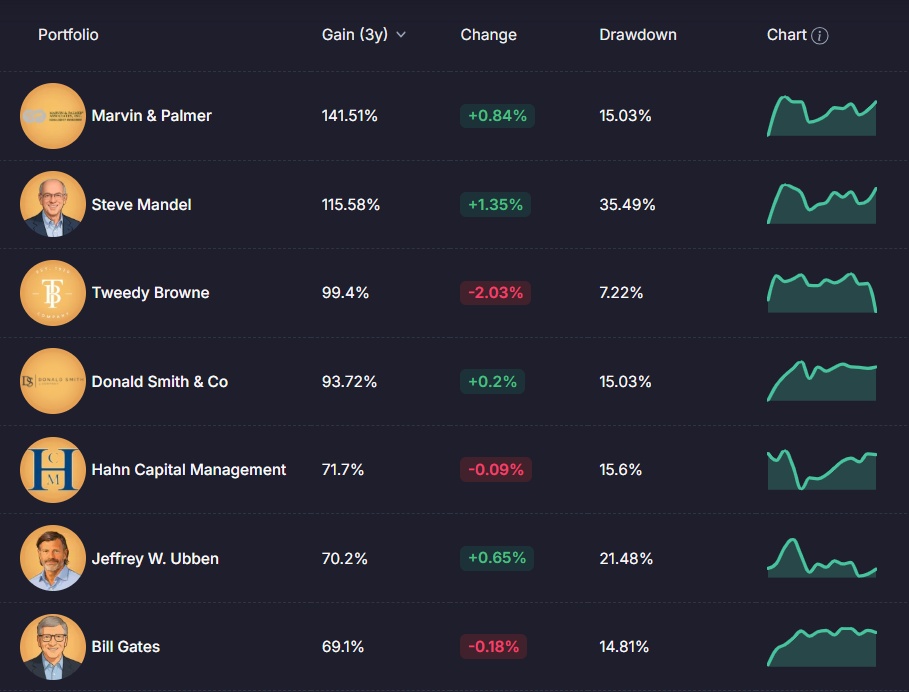
What You Can Learn by Studying the Portfolios of Established Investors
After more than twenty years in the market, I can say this clearly: reviewing real portfolios teaches more than reading interviews or investment books. Allocations reveal discipline. Position sizes reveal conviction. Drawdowns reveal character. If you want to study real portfolios in detail, you can explore all tracked investors here: https://www.marketlog.com/investors. Below are three well-known examples, followed by a practical overview of what Marketlog lets users track and review on each portfolio page. Bill Gates — Concentration and Structural Allocation Portfolio: https://www.marketlog.com/investors/5bb112423ec045b6 When reviewing the Bill & Melinda Gates Foundation Trust portfolio, concentration stands out immediately. Berkshire Hathaway represents roughly 25% of the portfolio. Waste Management and Canadian National Railway also c

2026 © Marketlog. All Rights Reserved.



