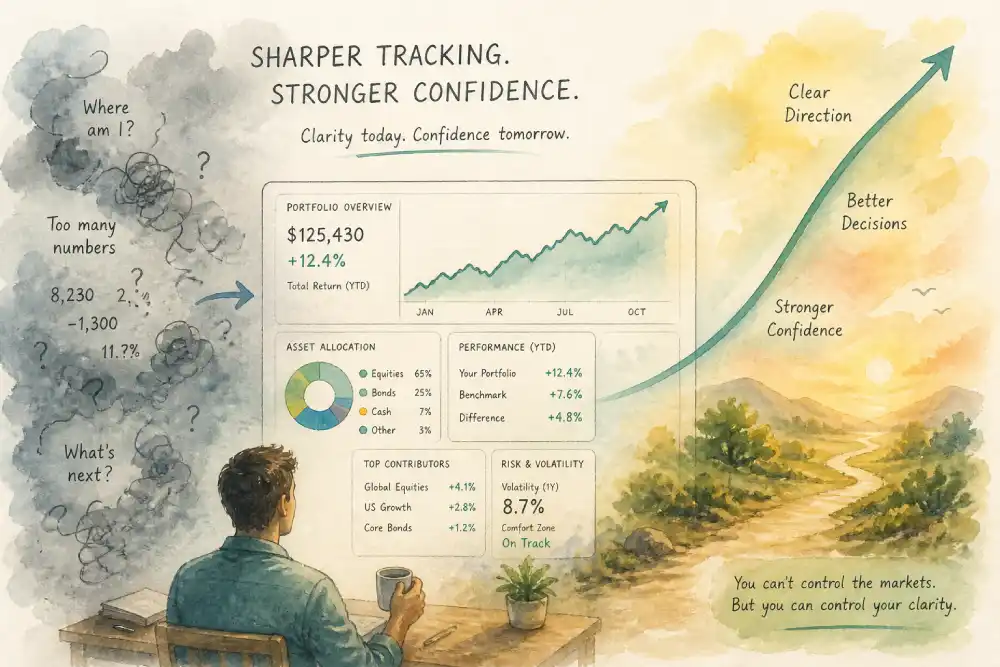
Understanding investment returns is fundamental to assessing portfolio performance, yet many investors consistently misinterpret their own results. This misreading largely arises from behavioral biases, flawed performance measurement techniques, and inadequate portfolio tracking methods. Clarifying these issues enables investors to make more informed decisions and avoid costly mistakes when evaluating their investments.
The Common Pitfalls in Interpreting Returns
One of the primary reasons investors misread returns is the frequent confusion between nominal and real returns. While nominal return reflects the raw percentage gain or loss on an investment, real return adjusts for inflation and taxes, offering a clearer measure of actual growth in purchasing power. Ignoring this distinction often causes investors to overestimate the success of their portfolios, leading to misguided expectations for future performance.
Another widespread error occurs when investors focus solely on absolute returns without considering the level of risk taken to achieve those returns. For example, a portfolio that gains 15% in a year may initially seem impressive until one recognizes that such returns were attained through excessive volatility or high concentration in a few assets. This oversight can create a false sense of achievement, encouraging imprudent risk-taking behaviors that may jeopardize long-term wealth preservation.
Additionally, investors frequently fall prey to recency bias, a cognitive tendency to place disproportionate emphasis on recent performance rather than analyzing returns over an appropriate time horizon. Short-term market fluctuations can distort investors’ perceptions, causing them to misjudge the effectiveness of their strategies and potentially make reactive decisions that undermine portfolio goals.
Behavioral Finance Factors That Skew Perception
Behavioral finance provides valuable insights into why investors often misread returns due to cognitive biases. For instance, the disposition effect causes investors to hold losing positions too long and to sell winning investments prematurely. This behavior distorts realized returns compared to what is reflected on paper and can adversely impact overall portfolio performance.
Overconfidence is another critical factor influencing return misinterpretation. Many investors overestimate their skill in timing the market or selecting stocks, interpreting positive returns as validation of their abilities rather than acknowledging the role of luck or favorable market conditions. This overconfidence often leads to excessive trading, increased transaction costs, and ultimately lower net returns.
Anchoring bias also plays a significant role in skewing return perception. Investors may anchor their expectations to a specific benchmark or a past portfolio value, causing them to misread current performance relative to realistic goals or prevailing market contexts. Depending on the nature of the anchor, this can result in either unwarranted disappointment or complacency, both of which hinder disciplined investment decision-making.
Challenges in Portfolio Tracking and Measurement
Effective portfolio tracking is essential for accurately assessing investment returns. Unfortunately, many investors rely on incomplete data or inconsistent calculation methods, which can cause misleading performance evaluations. For example, failing to account for cash inflows and outflows, such as contributions, withdrawals, or dividend reinvestments, can significantly skew performance metrics and provide an inaccurate picture of true returns.
Two standard methodologies for measuring returns are the internal rate of return (IRR) and the time-weighted rate of return (TWR). Each serves different purposes and has distinct limitations. IRR is particularly useful for portfolios with multiple cash flows, but can be misleading if applied without understanding its nuances. Conversely, TWR isolates investment performance from external cash movements, offering a cleaner measure of manager skill. Investors frequently confuse these methods or apply them improperly, leading to inaccurate conclusions about their portfolio’s performance.
The complexity of a portfolio also contributes to the difficulty in correctly interpreting returns. Portfolios that contain a mix of asset classes, derivatives, or alternative investments require sophisticated tracking tools. Without these tools, investors might overlook hidden fees, tax drag, or correlation effects that impact net returns. Properly accounting for these factors is crucial in obtaining a realistic understanding of portfolio performance.
Strategies to Improve Return Interpretation
To address these challenges, investors should adopt a disciplined approach to performance evaluation. Establishing clear benchmarks that align with investment objectives helps provide the necessary context for interpreting returns. Comparing performance against relevant indices or peer groups can reveal whether results stem from genuine skill or simply reflect broader market movements.
Regular, comprehensive portfolio reviews that incorporate all cash flows, fees, and taxes are necessary to maintain accurate performance assessments. Leveraging reliable portfolio tracking platforms can ensure both accuracy and transparency in this process. Investors managing diversified holdings can particularly benefit from consolidated portfolio views that adjust for reinvested dividends and cost basis, topics explored in depth in the article What 'Cost Basis' Really Means in Your Portfolio.
Moreover, embracing a longer-term perspective helps smooth out short-term volatility and reduces emotional reactions that can cloud judgment. Investors should emphasize risk-adjusted returns rather than focusing solely on raw gains. Metrics such as the Sharpe ratio or Sortino ratio provide important insights into the efficiency of returns relative to the volatility faced and downside risk taken, respectively, offering a more nuanced view of performance quality.
Leveraging Insights from Established Investors
Studying the portfolios and strategies of experienced investors can also aid in developing realistic expectations and a deeper understanding of performance nuances. Marketlog highlights this approach in the article What You Can Learn By Studying The Portfolios Of Established Investors. It examines how seasoned professionals balance risk and reward, interpret their returns objectively, and maintain discipline over market cycles. Emulating such practices can help investors avoid common pitfalls and enhance their own portfolio management skills.
Conclusion
Misreading investment returns is a pervasive issue that undermines effective portfolio management. It stems from a combination of behavioral biases, inadequate measurement practices, and insufficient portfolio tracking. By adopting rigorous evaluation methods, leveraging advanced technology, and learning from the experiences of established investors, individuals can gain a clearer understanding of their true investment performance and make better-informed decisions.
For investors seeking tools to enhance their tracking and analysis capabilities, Marketlog offers advanced solutions designed to provide clear, accurate insights into portfolio performance. Managing my portfolio with reliable data and objective metrics is a crucial step toward improving investment outcomes and achieving long-term financial goals.