Comparing Marketlog and Yahoo Finance Portfolio is more than a matter of interface preferences or brand loyalty. For investors who care about accurate portfolio tracking, meaningful performance analysis, and actionable insights, the differences run deep. Here’s a side-by-side look at what truly separates Marketlog from Yahoo Finance Portfolio—and why those differences matter when your money is on the line.
Portfolio Tracking: Beyond Just Holding Lists
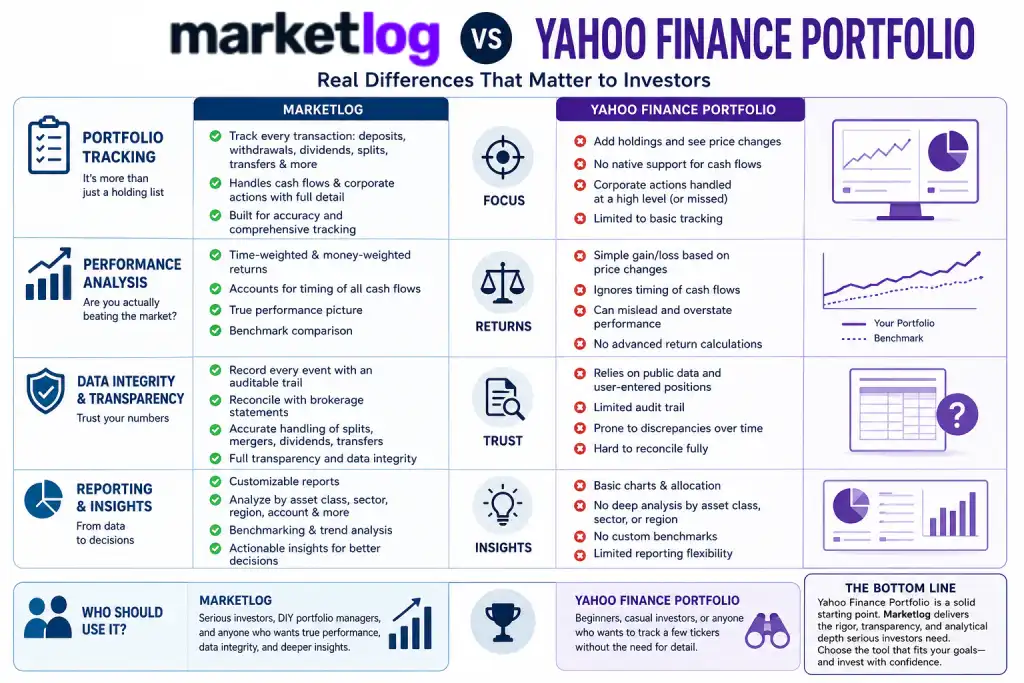
Yahoo Finance Portfolio’s appeal lies in its simplicity. You can quickly add stocks, ETFs, or mutual funds, see current prices, and get a snapshot of your holdings. For casual tracking or a basic watchlist, this approach is fine. But for investors who want to track every deposit, withdrawal, dividend, split, or transfer, Yahoo’s tool falls short. It doesn’t natively handle cash flows or corporate actions with the granularity required for true performance measurement.
Marketlog, on the other hand, is built for detail-oriented investors. Every transaction—no matter how minor—can be logged and categorized. This level of precision is essential for accurate portfolio tracking, especially if you’re rebalancing, making regular contributions, or managing multiple accounts. If you’ve ever wondered why your spreadsheet feels like it’s “almost right” but never quite matches your brokerage statements, you’re not alone; see Marketlog vs Excel: When Spreadsheets Stop Working for a deeper dive.
Performance Analysis: Are You Actually Beating the Market?
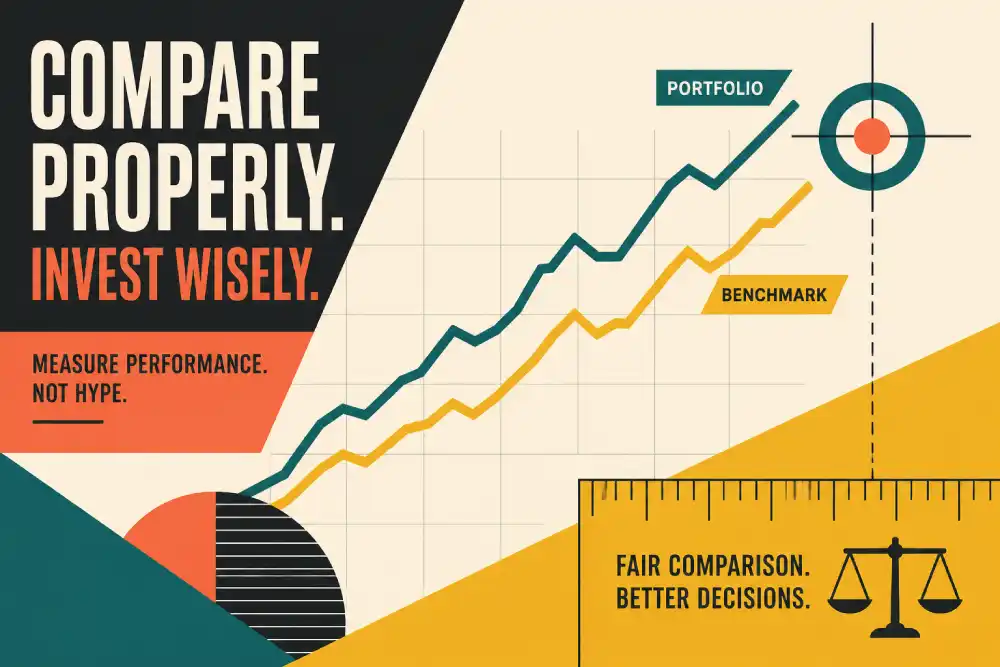
Perhaps the most critical difference lies in how each platform calculates returns. Yahoo Finance Portfolio typically shows simple gain/loss percentages based on price changes and cost basis. This method ignores the impact of timing—when you added money, when you withdrew, and how those flows affect your real return.
Marketlog uses both time-weighted and money-weighted return calculations, giving you a true picture of your performance. Why does this matter? Because the distinction between time-weighted and money-weighted returns can dramatically change your understanding of how well you’re actually doing—especially if you’re making frequent transactions. Many investors are surprised to learn that their “gains” are largely a mirage once proper performance analysis is applied. For a cautionary tale, read Why Most Investors Misread Their Own Returns.
Data Integrity and Transparency
Yahoo Finance Portfolio relies on public market data and user-entered positions. However, it lacks robust audit trails or the ability to reconcile with brokerage statements. This can lead to discrepancies—especially if you reinvest dividends, transfer assets, or experience corporate actions like splits and mergers. Over time, these small mismatches can add up, eroding trust in your results.
Marketlog addresses this by letting you record every event that affects your portfolio. You can see exactly how each transaction impacts your returns, and you always have a clear, auditable trail. This transparency is crucial for investors who want to avoid self-deception or accidental errors—issues that often lead to overestimating returns, as discussed in Why Investors Overestimate Their Returns.
Reporting and Insights: From Data to Decisions
Yahoo Finance Portfolio provides basic charts and allocation breakdowns, but its reports are limited. There’s no way to analyze performance by asset class, sector, or region, nor can you easily compare your results to custom benchmarks. If you’re managing more than a single account or want to see consolidated performance, you’ll quickly hit the ceiling.
Marketlog offers customizable reporting, benchmarks, and the ability to drill down into your performance by any dimension you choose. This empowers you to spot trends, identify strengths and weaknesses, and make informed decisions—rather than relying on gut feel or guesswork. If you want to ensure you’re reading your graphs correctly, see How to Read Your Performance Graph Correctly.
Who Should Use Each Tool?
- Yahoo Finance Portfolio is ideal for beginners, casual investors, or anyone who just wants to keep an eye on a handful of tickers without tracking every detail.
- Marketlog is built for serious investors, DIY portfolio managers, and anyone who wants to understand their true performance, optimize their strategy, and avoid common behavioral traps.
If you’re considering other advanced portfolio tools, you might also want to compare Marketlog vs Sharesight.
The Bottom Line
While Yahoo Finance Portfolio is a solid entry point for tracking investments, it lacks the rigor, transparency, and analytical depth that Marketlog provides. For investors who care about accurate performance measurement, data integrity, and actionable insights, Marketlog is a clear step up. Ultimately, the right tool depends on your goals—but understanding these real differences can help you avoid costly mistakes and make your investing journey more rewarding.