When investors check on their portfolios, the first thing they often notice is the current price of their holdings. Did that stock go up or down today? Has the value increased since last month? While price changes are easy to track and can feel like the most important measure of performance, they only tell part of the story. To truly understand how your investments are working for you, it's essential to focus on total return—not just price.
What Is Total Return?
Total return is a comprehensive measure of your investment’s performance. It includes not only price appreciation but also any income generated, such as dividends or interest payments. For example, if you own a stock that pays dividends, your total return reflects both the rise (or fall) in share price and the cash you’ve received along the way.
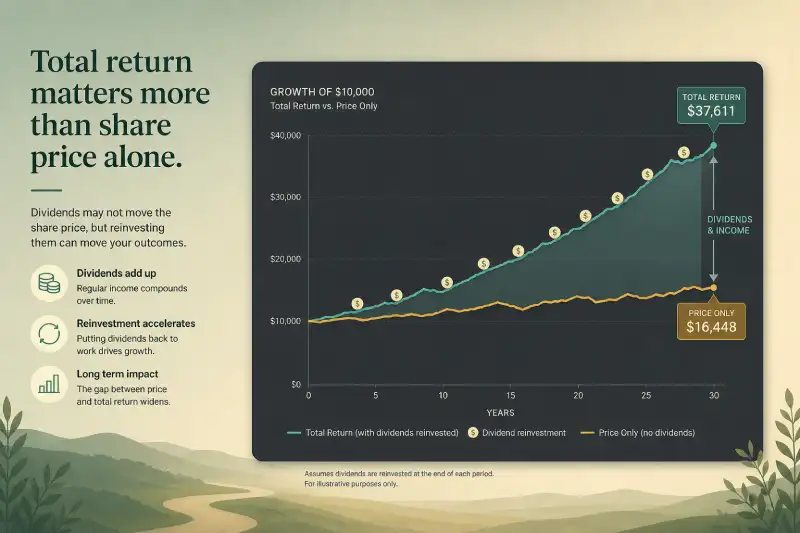
This distinction is crucial, especially for long-term investors. Over time, dividends and interest can make up a significant portion of your total gains—even if the price of your investment barely moves. Ignoring these components risks underestimating how much you’re actually earning.
Price Change vs. Total Return: Why the Difference Matters
Imagine two stocks: Stock A rises from $100 to $110 in a year but pays no dividend. Stock B stays at $100 but pays a $5 dividend. If you only look at price, Stock A appears to be the winner. But when you factor in the dividend, Stock B’s total return is 5%, while Stock A’s is 10%. Now, consider if Stock B’s dividend was $11—suddenly, its total return outpaces Stock A, despite no price movement.
This example highlights why focusing solely on price can be misleading. Total return gives you the full picture of how your money is working, whether your gains come from price appreciation, income, or both. For a deeper dive into how different forms of gains affect your outcomes, see Realized vs Unrealized Gains: Why the Difference Matters.
Why Total Return Is Essential for Long-Term Investors
Over the long haul, reinvesting dividends and interest can significantly boost your portfolio’s growth through compounding. Many investors underestimate this effect if they only focus on price changes. Studies of the S&P 500, for example, show that a large portion of its historical returns comes from dividends, not just price appreciation.
Understanding total return is also key for setting accurate expectations and comparing investments. Two funds might have similar price histories, but if one pays higher dividends, its total return—and your actual earnings—could be much greater. To see how total return fits into broader performance analysis, check out What “Annualized Return” Actually Tells You.
How to Track Total Return
Total return can be calculated by adding any income received (like dividends or interest) to the change in price, then dividing by your initial investment. Many brokerages and financial platforms report total return, but not all do—so it’s important to check. If you’re managing your own records, be sure to include all sources of income, not just price changes.
It’s also helpful to understand why your portfolio’s value and its total return might not always match exactly, especially if you’re making deposits or withdrawals. For more on this nuance, see Why Portfolio Value and Total Return Don’t Match.
Beyond Price: Smarter Performance Analysis
Focusing on total return helps you make better decisions, avoid common pitfalls, and set more realistic goals. It also makes it easier to compare different types of investments—stocks, bonds, funds, or even alternative assets—on an apples-to-apples basis.
For those interested in long-term investing, understanding metrics like CAGR (Compound Annual Growth Rate) can further clarify how your total return compounds over time. You can learn more in What Is CAGR and Why Long-Term Investors Care.
Key Takeaways
- Total return includes both price changes and income (dividends/interest), giving you a true picture of investment performance.
- Price alone can be misleading, especially for income-generating assets.
- Tracking total return is essential for long-term investors who want to maximize compounding and accurately compare investments.
- Make sure your performance analysis tools or reports include total return, not just price movements.
By shifting your focus from price to total return, you’ll gain a clearer, more complete understanding of your portfolio’s real progress—and make smarter investing decisions for the future.